Get Full Government Meeting Transcripts, Videos, & Alerts Forever!
Get email alerts on the Swicap Cost Allocation topic
No spam. Unsubscribe anytime.
State official explains SWICAP: how Idaho recovers central service costs across agencies
Summary
Budget staff explained the statewide cost allocation plan (SWICAP) and how the attorney general, state controller and state treasurer and certain direct‑billing services allocate central costs; the plan works on a two‑year lag and recovers most but not all central agency costs to the general fund.
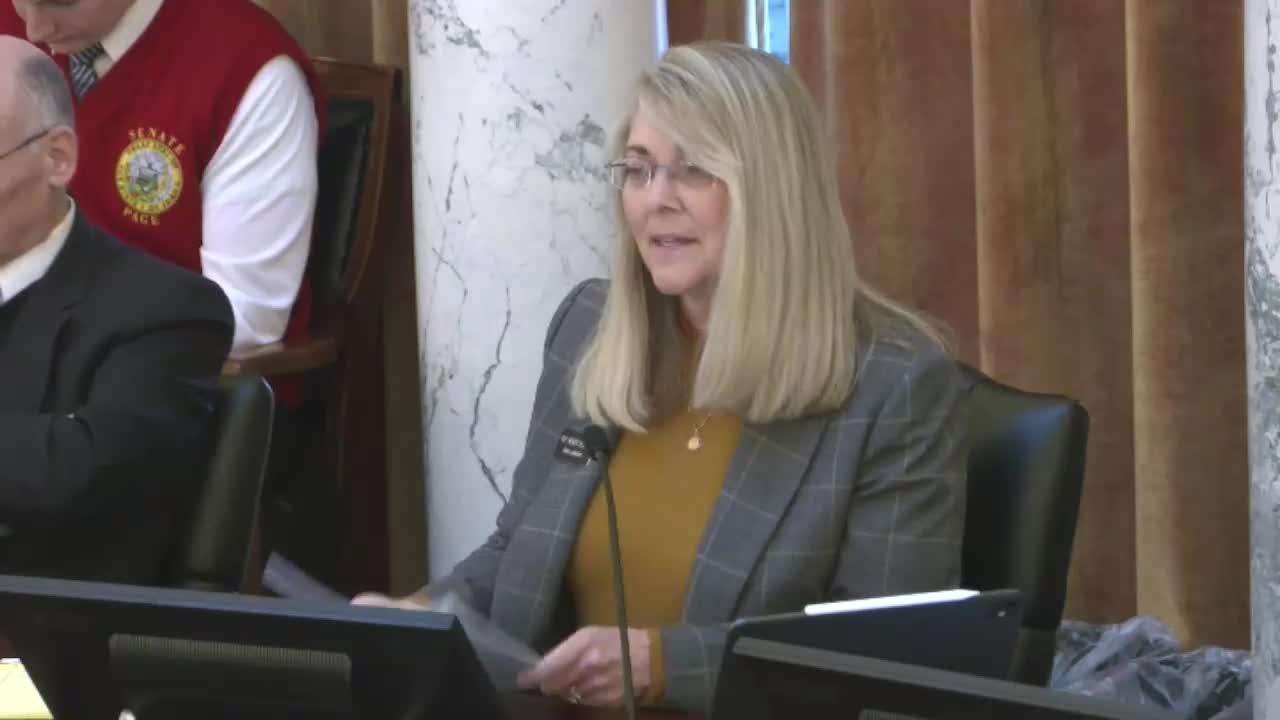
Jared Tetrault, budget analyst with the Legislative Services Office, briefed the Joint Finance and Appropriations Committee on Jan. 7 on the statewide cost allocation plan (SWICAP), the formula the state uses to recover central service costs from agencies and fund sources.
Tetrault said SWICAP is a documented plan the Division of Financial Management submits to the federal cognizant agency (for Idaho, HHS) to show how the state shares central costs equitably across fund sources when federal programs benefit from statewide services. The plan identifies how to allocate allowable costs for the attorney general, the state controller and the state treasurer and also covers several direct billing services such as risk management, building services, Legislative Services Office audits and Information Technology Services.
How it works: a two‑year recovery cycle Tetrault told the committee the legislature appropriates funding to the central service agencies in one year; actual usage and costs are measured that fiscal year; and the following budget cycle recovers the measured costs for use in the next appropriations round — a two‑year lag.
He outlined allocation drivers for each central agency: attorney general charges are driven by billable hours (excluding the criminal division); the controller’s share is based on accounting transactions and the number of active employees per pay period; and treasurer fees are driven by the number of warrants issued. DFM runs calculations and notifies agencies by October of the adjustments to include in their budget submissions.
Amounts and examples cited Tetrault provided the committee with recent figures to illustrate scale and recovery rates: the state controller’s appropriation in 2023 was listed as about $4,800,000 with near‑full recovery; the treasurer’s billings were cited near $966,000; and the attorney general’s recoverable costs were shown in the mid‑teens of millions (figures discussed in testimony included $16,000,000 with approximately $14,000,000 recovered in practice). The combined general‑fund appropriation to the three central agencies was listed at about $21.8 million, with roughly $19.8 million recovered in the cited cycle. Direct‑billing items noted included a Legislative Services Office audit charge of about $1.5 million that, based on current calculations, would fall to roughly $1.1 million. Risk management billings were described in testimony as dropping from about $18.3 million to $16.2 million in the current adjustments; Information Technology Services billing was cited around $39.7 million falling toward $36.8 million.
Tetrault emphasized that not every cost is allowable for recovery under federal guidance: costs that benefit only a single agency (not statewide) are not eligible for SWICAP recovery. He also said agencies may question the split and provide adjustments — for example, an agency that added general‑fund positions may ask that those costs be charged to general fund rather than other fund types.
Why it matters to appropriators Committee co-chairs and members said SWICAP adjustments show up in every agency’s budget and can materially change an agency’s net appropriation by shifting costs across fund sources. Tetrault said the program aims to keep cost sharing fair and transparent and to ensure agencies have authority to pay necessary central costs such as insurance or rent. He offered to provide a more precise percentage breakdown to the committee on request.
Ending The co-chairs thanked Tetrault for the overview and said the committee would examine SWICAP adjustments in upcoming agency hearings where the allocations affect the agencies they are reviewing.