Get Full Government Meeting Transcripts, Videos, & Alerts Forever!
Get email alerts on the Agriculture Farmland Preservation topic
No spam. Unsubscribe anytime.
House committee advances Tennessee Farmland Preservation Fund after hours of testimony
Summary
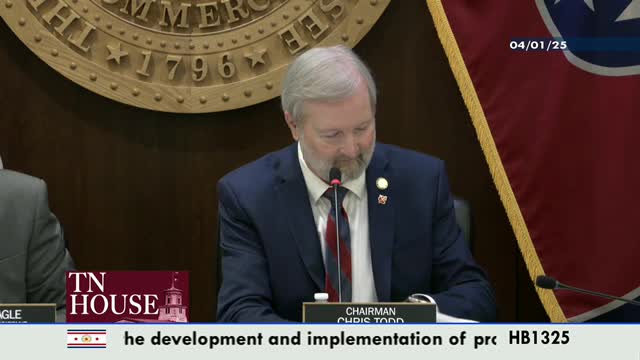
The House Agriculture and Natural Resources Committee approved House Bill 1325, creating a voluntary farmland preservation fund to support conservation easements and cover associated costs for farmers; the bill passed 13-3 after extended testimony from farmers, foresters and the governor's office and questions about valuation and program design.
The House Agriculture and Natural Resources Committee voted to approve House Bill 1325, the Tennessee Farmland Preservation Fund, after hearing more than an hour of testimony from farmers, forestry professionals and a governor’s office representative. The bill passed the committee 13-3 and advances to government operations.
Supporters said the measure would give farmers financial tools to preserve working farmland by helping pay legal, appraisal and transaction costs associated with voluntary conservation easements. Representative William Bridal, the bill’s sponsor, told the committee the program would create the Farmland Preservation Trust and provide funds to assist farmers and forest owners who choose to place conservation easements on their property.
Farmer and eighth‑generation landowner Anna Kern described the burden of easement costs on family farms and said the program would help keep land in agricultural production and in families over generations. Emily Stefanik, a conservation project manager and member of the Tennessee Forestry Association, said fragmentation and development pressure are the largest threats to forest land and welcomed a state tool to encourage generational ownership of timberland. Sam Kennedy, a cattle producer and planning commissioner, urged the committee to provide the department with resources to study best practices used in other states and to include conservation easements as an initial tool.
Alex Lewis, representing Gov. Bill Lee’s office, told members the program would pay landowners — not nonprofit land trusts — the difference between a property’s market value and its appraised “use value” after a conservation easement is placed, and that payments would be administered through nonprofits that hold easements. Lewis said the legislation leaves implementation details to the department and rulemaking, including eligibility, prioritization and specific payment calculations, and that many of those details would be developed after appropriation and rulemaking.
Committee members repeatedly questioned valuation, program prioritization and whether state funds would go directly to landowners. Representative Curtis Fritz pressed for an example dollar figure; witnesses and the governor’s office advised that compensation varies by parcel and is based on appraisals comparing highest-and-best-use market value with restricted use value under an easement. Representative Tim Hart asked whether climate criteria or other priorities used in other states would be adopted; Lewis said the department would study other programs and build Tennessee’s implementation from those examples.
The bill includes an amendment adopted in committee. Members also debated permanence: witnesses and the sponsor repeatedly said easements are voluntary and permanent and that the program would not force landowners into an easement. Lewis said participation is voluntary and that the easement process includes a long runway of negotiations, appraisals and surveys. The committee approved House Bill 1325 as amended 13-3; the bill moves next to government operations.
Supporters said the program would reduce the financial barriers to placing conservation easements and help slow farmland loss. Critics cautioned the committee about leaving implementation details to rulemaking and asked for clearer criteria for prioritizing funds across regions.