Get Full Government Meeting Transcripts, Videos, & Alerts Forever!
Get email alerts on the Administrative Rules Behavioral Health Medicaid topic
No spam. Unsubscribe anytime.
Senate Health & Welfare approves a package of administrative rule changes; hears public concern on children—s mental-health medical-necessity language
Summary
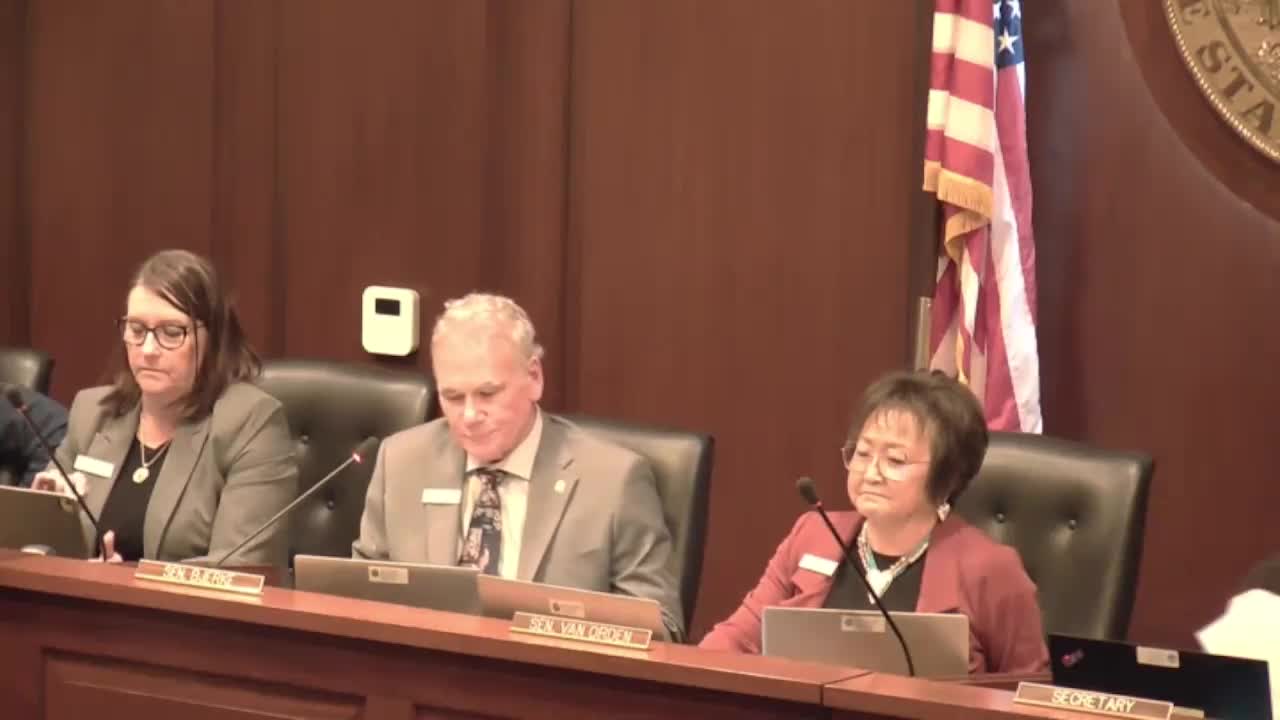
The Idaho Senate Health & Welfare Committee on Thursday approved a package of administrative rule dockets that removed or updated duplicative rules, adjusted laboratory fees and aligned behavioral-health rules with a contract the state executed July 1, 2024.
The Idaho Senate Health & Welfare Committee on Thursday approved a package of administrative rule dockets that removed or updated duplicative rules, adjusted laboratory fees and aligned behavioral-health rules with a contract the state executed July 1, 2024. Committee members also heard public testimony raising concerns about how a proposed change about "medical necessity" could affect children already involved with courts and other systems.
The committee, chaired by the Madam Chair (name not specified in the record), approved multiple rule dockets by voice votes. Jared Larson, Legislative and Regulatory Affairs Chief for the Department of Health and Welfare, presented most dockets and said many were the result of "ZBR" reviews to remove outdated, duplicative or unnecessary language and to improve readability. Larson and Department officials repeatedly told the committee the changes were not intended to alter substantive program delivery where federal law or statute already controls.
The package included rule changes or repeals for: newborn screening; Idaho Drinking Water Laboratory certification and fee changes; consumer-directed services; Medicaid Basic Plan consolidation and clarifications; repeal of various child-welfare-related chapters; changes to rules for substance use disorder services, adult mental-health services and children—s mental-health services that reflect a shift from direct provision by the Department to contract-managed services under Magellan; and an update to records use and disclosure rules intended to make the Department—s posture more permissive when sharing information to support foster placements.
Why it matters: The rules cover multiple state programs that affect clinical laboratories, foster-care workers and families, Medicaid participants and behavioral-health service delivery. Several changes are administrative clarifications; others reflect the Department—s operational move to contract management under a statewide contract with Magellan that took effect July 1, 2024.
Major items and details
Newborn screening (Docket 16-2122-2401): Jared Larson told the committee the requirements for newborn screening have been in Idaho Code since 1921. The docket was described as a ZBR review that removes outdated or duplicative language and reorganizes sections. Larson noted internal procedural language was softened in places from "must" to "should," and said those edits were intended to reflect internal laboratory processing guidance rather than alter substantive screening requirements. Senator Shippy asked whether informed parental consent is required; Larson said he was not certain whether "informed consent" language appears in the rules but that Idaho Code does provide a religious exemption.
Drinking-water laboratory certification and fee changes (Docket 16-213-2401): Dr. Christopher Ball, chief of the Bureau of Laboratories, explained the rule incorporates by reference EPA Supplement 2 to the Manual for Certification of Laboratories Analyzing Drinking Water, Fifth Edition, adding certification guidance for giardia and Cryptosporidium testing. He said no Idaho laboratories are currently certified for those parasite tests. The docket also proposes fee increases: the annual base certification fee for Idaho chemistry testing would increase from $50 to $100 per chemistry discipline; microbiology labs would move to a flat annual fee of $150; and out-of-state chemistry lab fees would increase from $50 to $200. The Department estimated net additional receipts of about $8,300 annually and reported no public comments during the extended comment period.
Use and disclosure of Department records (Docket 16-501-2401): Larson presented a rule intended to shift the Department—s posture toward sharing information "to the maximum extent possible without violating law or rule," particularly in child-welfare contexts. Larson and Juliette Sharon, Deputy Director for Medicaid and Behavioral Health, said the goal is to ensure foster parents and others have the information they need to care for children. Senator Wintrow and others emphasized the need to safeguard confidential details and to ensure training and protections for foster families. Senator Blalock asked whether the change would apply to schools or health providers; Larson said the Department has discretion to release information as allowed by law.
Behavioral-health rule series tied to Magellan contract (multiple dockets): Larson said the Department no longer functions as the direct service provider for substance-use disorder services, adult mental-health services and children—s mental-health services after the Idaho Behavioral Health Plan contract with Magellan went into effect July 1, 2024. The committee approved rule changes or repeals reflecting that operational shift. Larson said one substantive change for substance-use disorder services was to permit certification from an additional certifying body (in addition to the previously recognized organization) to address workforce shortages; he named IBADCC and NCCAP as certifications the Department found substantially similar. Peyton Darst of the Idaho Behavioral Health Association testified in support of adding reciprocity for certifications to increase the workforce.
Children—s mental-health medical-necessity language and public testimony: Britney Shipley, testifying as a private citizen and parent advocate, urged the committee to clarify who determines medical necessity and to ensure that determinations are made by clinicians with expertise in Idaho's children's mental-health system of care. She expressed concern that medical-necessity determinations could complicate or override judicial orders in complex cases where families rely on courts to obtain services. Juliette Sharon said the proposed medical-necessity language clarifies practice that already exists: Medicaid and state funds require medical necessity determinations by clinicians (for example, child psychiatrists) and that those determinations aim to place children at the most appropriate level of care while also working with courts when applicable.
Medicaid Basic Plan consolidation (Docket 16-309-2401): Larson described a large consolidation and ZBR effort to remove duplication with federal rules and to leave policy levers the Legislature controls. He said one substantive change was a new definition of "provider" intended to respect legislative scope-of-practice decisions rather than have rule language second-guess statutory determinations. Juliette Sharon affirmed the Department—s intent that the consolidation not create new coverage changes. The docket also clarified claims and program-integrity expectations (for example, the Department will not pay claims for services rendered after a participant's date of death and will recover inappropriate payments) and restated which categories Medicaid does not cover (for example, most educational and some vocational services) as clarifications of existing policy.
Votes at a glance (motions approved by voice vote unless noted)
- Docket 16-132401 (EMS chapter repeal; combined with previous dockets) — approved (voice vote) - Docket 16-2122-2401 (Newborn screening) — approved (voice vote) - Docket 16-213-2401 (Drinking Water Lab Certification; fee changes) — approved (voice vote; one recorded opposition noted) - Docket 16-501-2401 (Use and disclosure of Department records) — approved (voice vote) - Docket 16-605-2401 (Chapter repeal tied to child-welfare rules) — approved (voice vote) - Docket 16-0418-2401 (Foster care licensing changes reflecting final rule) — approved (voice vote) - Docket 16-0407-2401 (State hospital fee chapter repeal) — approved (voice vote) - Docket 16-0717-2401 (Substance Use Disorder Services: repeal/reciprocity for certifications) — approved (voice vote) - Docket 16-0730-2401 (Adult Mental Health Services rule change to reflect contract) — approved (voice vote) - Docket 16-7737-2401 (Children's Mental Health Services) — approved (voice vote) - Docket 16-0313-2401 (Consumer Directed Services ZBR) — approved (voice vote) - Docket 16-309-2401 (Medicaid Basic Plan consolidation and clarifications) — approved (voice vote)
Committee discussion and next steps
Committee members asked multiple clarifying questions during the presentations. Senators who moved and seconded motions included Senator Harris, Senator Wintrow, Senator Blalock, Senator Van Orden and Senator Ziderfeld (as recorded in the hearing). Jared Larson and Deputy Director Juliette Sharon repeatedly told senators the rule changes were the product of negotiated rulemaking or had been vetted with program staff and that the changes were intended to reflect current practice or federal/state requirements rather than to change access or eligibility.
The committee closed the meeting with an administrative announcement and adjourned. Several dockets included extended public-comment periods or negotiated rulemaking, and department staff said they had received little to no negative public comment on most rules. The committee's actions put the rule changes on the path for final administrative adoption consistent with Idaho's rulemaking process.
Ending note: When public testimony raised concerns about clarity for medically necessary determinations, Department officials acknowledged those concerns and described existing clinical review processes. The committee approved the dockets as presented and will not meet Friday; committee members were invited to an adoption kickoff and legislative briefing on adoption policy the following day.