Legislative auditors report dozens of uncorrected findings, cite delays from new financial system
Loading...
Summary
April Renfro of the Legislative Services Office told the Joint Finance and Appropriations Committee that most uncorrected audit findings are recent, highlighted compliance gaps in foster-care placements and agency travel policies, and warned that late financial statements tied to the LUMA system will likely delay statewide audits.
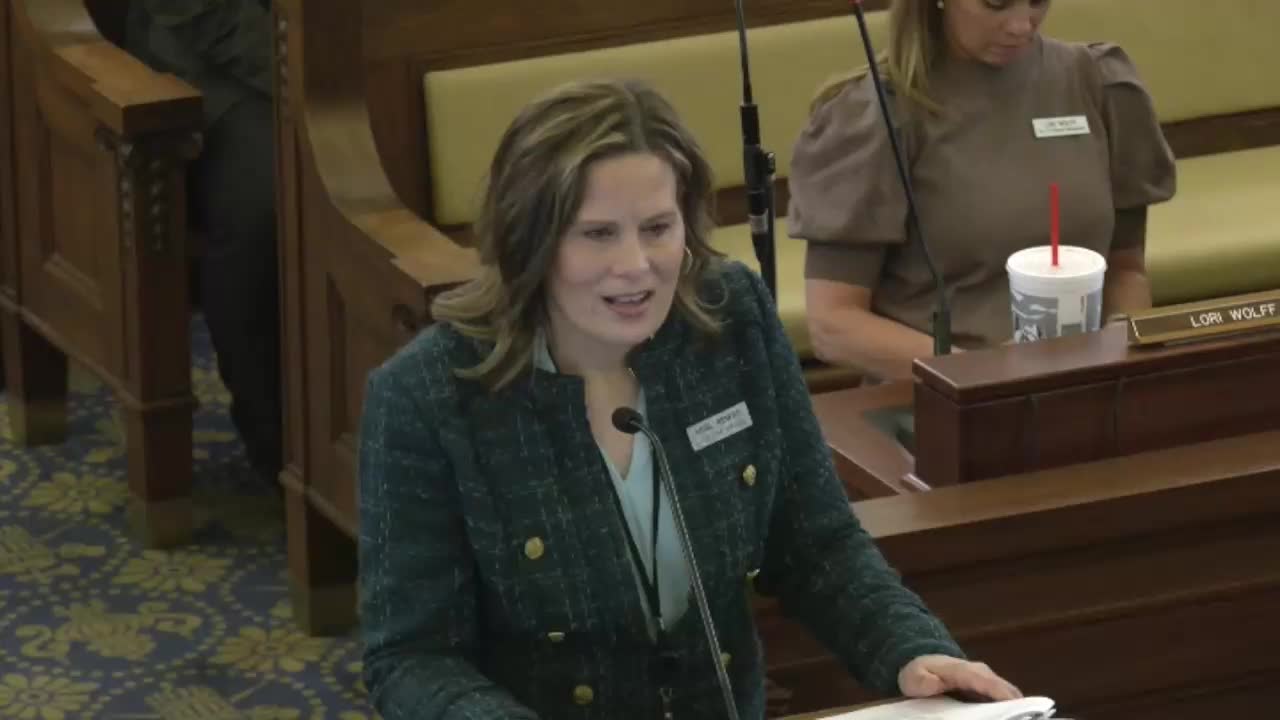
April Renfro, division chief for legislative audits at the Legislative Services Office, told the Joint Finance and Appropriations Committee on Jan. 7 that the office is reporting a substantial number of audit findings that remain uncorrected and that audit work this year is delayed by late financial statements tied to the state’s new LUMA system.
Renfro said the audit division — which the committee’s co-chairs release to the legislature under Idaho code referenced in testimony — has 30 financial and IT auditor positions and one administrative assistant and conducts the annual audit of the state’s comprehensive financial report, the single-audit reporting package and accountability reports for agencies. “We are required to present a report, annually to the legislature of uncorrected findings,” Renfro told the committee.
The audit office’s uncorrected-findings report (delivered to co-chairs before the hearing and distributed to committee members the same day) shows that about 70% of currently open items are from the most recent reporting period, meaning most are awaiting the routine 90-day and one-year follow-up work auditors use to verify corrective action. Renfro said roughly 30% predate the current reporting cycle and have remained open longer.
Why it matters: open or systemic audit findings can affect legislators’ willingness to increase an agency’s appropriation and can trigger further action ranging from tightened internal controls to referral for criminal investigation, the co-chairs said during the hearing.
Major findings highlighted - Department of Health and Welfare: The audit division reported deficiencies tied to qualified residential treatment program (QRTP) placements for foster youth. In a sample of 19 QRTP placements, auditors found 10 cases lacking a required assessment, about 21% with missing court orders, 84% without retained court-placement notices that list placement date and recommended level of care, and 42% lacking required 30‑day case consultation documentation. Renfro described these lapses as “qualitatively significant” because they affect the oversight and care of children in state custody. - Department of Fish and Game: An older, unresolved accountability finding involved noncompliance with state travel policy and inadequate travel documentation. Renfro said the agency initially implemented partial fixes but later reverted to an “uncorrected” status during follow-up work because records were not available or could not be tested after a systems transition.
Systemic and IT risks Renfro told the committee that many problematic findings are systemic — for example, information system controls that allow segregation-of-duty weaknesses or lack documented review and approval of annual program‑benefit updates. She cited a single-audit finding tied to the low‑income home energy assistance program in which the review and approval of benefit-matrix updates were not documented; auditors found no actual payment errors but said the missing documentation increased the risk that errors could go undetected.
Audit timing and LUMA Renfro said the audit division audits the annual comprehensive financial report (ACFR) and issues an internal-control report within 60 days of its opinion. The ACFR is typically due in draft by Nov. 1 and final to the legislature by Jan. 1 under the timetable auditors described; single-audit reports are usually due March 31. This year, Renfro said, the office received the financial statements from the State Controller’s Office only on Dec. 30 — nearly two months later than expected — and that delay is likely to push the ACFR and single‑audit opinions beyond standard deadlines. “We knew they would be delayed this year…we didn't receive them until December 30,” Renfro said. She said the office has given the state controller an estimated March completion date for the financial statements’ audit work and warned federal grantors may require additional communications because timely single audits are an expectation of federal grantors.
Questions and committee response Committee members asked for clarification about why some findings remain open more than a year. Renfro said causes include technical limitations (reports or forms that are produced only annually), policy or statute changes that require legislative or interagency action, and operational fixes that require staff training and time to show they work. Committee members and co-chairs noted that, in previous years, the committee has used funding decisions and other oversight tools to press agencies to resolve recurring findings.
What the report will include and next steps Renfro said the audit office will issue its uncorrected-findings report to the committee members that day and that a subset of accountability reports and agreed‑upon‑procedures reports remain to be issued. She said follow-up work will continue for findings that are new (the 70% she described) and that the audit office uses 90‑day, first‑annual, and second‑annual review steps to confirm whether agency corrective actions were both implemented and effective.
Ending Committee co-chairs and members thanked Renfro and her staff for the work and noted the committee’s role in monitoring recurring problems and, when necessary, using appropriations and statutory tools to ensure agencies correct deficiencies.