Get Full Government Meeting Transcripts, Videos, & Alerts Forever!
Get email alerts on the Capital Punishment topic
No spam. Unsubscribe anytime.
Idaho committee sends bill making firing squad primary execution method to Senate floor
Summary
The Senate Judiciary and Rules Committee voted to advance House Bill 37, which would make the firing squad the first-choice method of execution in Idaho, reversing the current statutory order and prompting questions about humaneness, litigation and impacts on victims and witnesses.
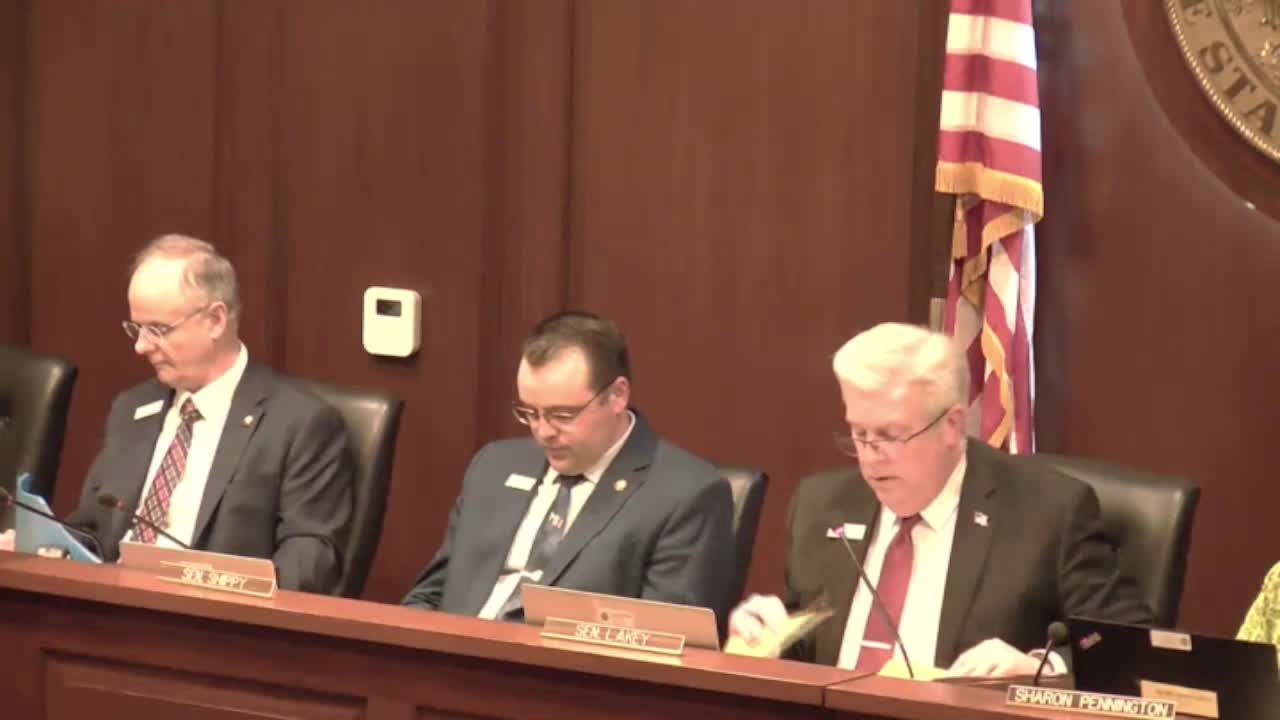
BOISE — The Idaho Senate Judiciary and Rules Committee voted to send House Bill 37 to the full Senate with a “do pass” recommendation after a hearing that included testimony from the bill sponsor, a deputy attorney general and public witnesses for and against the measure.
House Bill 37, presented to the committee by Sen. Doug Ricks (R-District 34), would change the statutory order of execution methods so that a firing squad becomes the primary method and lethal injection becomes secondary. Ricks said the change responds to recent problems carrying out lethal injections, including an execution attempt where officials were unable to secure an intravenous line.
The bill drew testimony from Lamont Anderson, deputy attorney general in the Capital Litigation Unit, who told the committee, “There has not been a botched execution by firing squad in the modern era of the death penalty.” Anderson said courts, including the U.S. Supreme Court in Wilkerson v. Utah, have treated the firing squad as legally permissible and that some justices and judges have described the method as “nearly instantaneous” or “significantly more reliable” than lethal injection. Anderson also testified that moving to a firing squad would reduce litigation tied to execution protocols and the search for lethal injection drugs and medical personnel.
Those arguments were contested by opponents who said the firing squad would be more traumatic for witnesses and prison staff. Diana David, who identified herself as the Idaho chapter lead for Survivors Empowered and a survivor of gun violence, testified: “Moving firing squad to the primary method will make Idaho the only state to do so.” She urged senators to “spare the living and vote no on H 37,” saying the method will leave visible injury and lasting trauma for witnesses.
A second public witness, Daniel Murphy of Boise, supported the bill and cited national judicial language that described the firing squad as a potentially less painful option. Several senators also spoke for and against the measure during committee debate. Sen. Michael Foreman (title not specified in transcript) described shooting someone as “cruel” and said it was “beneath the dignity of the state of Idaho.” Sen. Lenny (first name not specified in transcript) supported the change, citing the difficulty and cost associated with prolonged litigation and the state’s recent failed execution attempt. Sen. Maryanne Wintrow (title not specified in transcript) and others said they were uncomfortable advancing the bill without clearer procedural details about how the state would carry out a firing-squad execution and how witnesses and staff would be protected.
Ricks told the committee the Department of Correction would be responsible for developing specific procedures and that the Legislature previously appropriated up to $750,000 to create a facility or chamber for executions. He said witnesses are typically volunteers and that the committee should balance procedural certainty against the state’s obligation to carry out capital sentences listed on the books.
The committee voted to send House Bill 37 to the Senate floor with a due-pass recommendation. Sen. Keiser moved to advance the bill; Sen. Lenny seconded. The clerk recorded three senators as voting “no”: Senator Ruckdy, Senator Foreman and Senator Wintrow. The motion carried.
The committee hearing included multiple references to court decisions and federal appellate practice in death-penalty litigation; Lamont Anderson cited Wilkerson v. Utah and opinions by federal judges and U.S. Supreme Court justices in support of the position that the firing squad is legally permissible and less prone to certain execution-related challenges.
The bill will next be considered by the full Idaho Senate. The committee hearing record shows participants asked for more detail about operational procedures and the handling of witnesses and staff; the Department of Correction, if the bill advances, would be the agency responsible for drafting protocols and any rulemaking tied to implementation.