Get Full Government Meeting Transcripts, Videos, & Alerts Forever!
Get email alerts on the Behavioral Health topic
No spam. Unsubscribe anytime.
Senate passes bill changing ADAMH contracting rules and adding penalties for uncertified recovery housing
Summary
Senate Bill 138 passed unanimously after floor debate. The bill shortens notice periods for contracting with local alcohol, drug addiction and mental health (ADAMH) boards, mandates data-sharing planning with the Ohio Department of Mental Health and Addiction Services, and creates a criminal penalty for uncertified recovery residences.
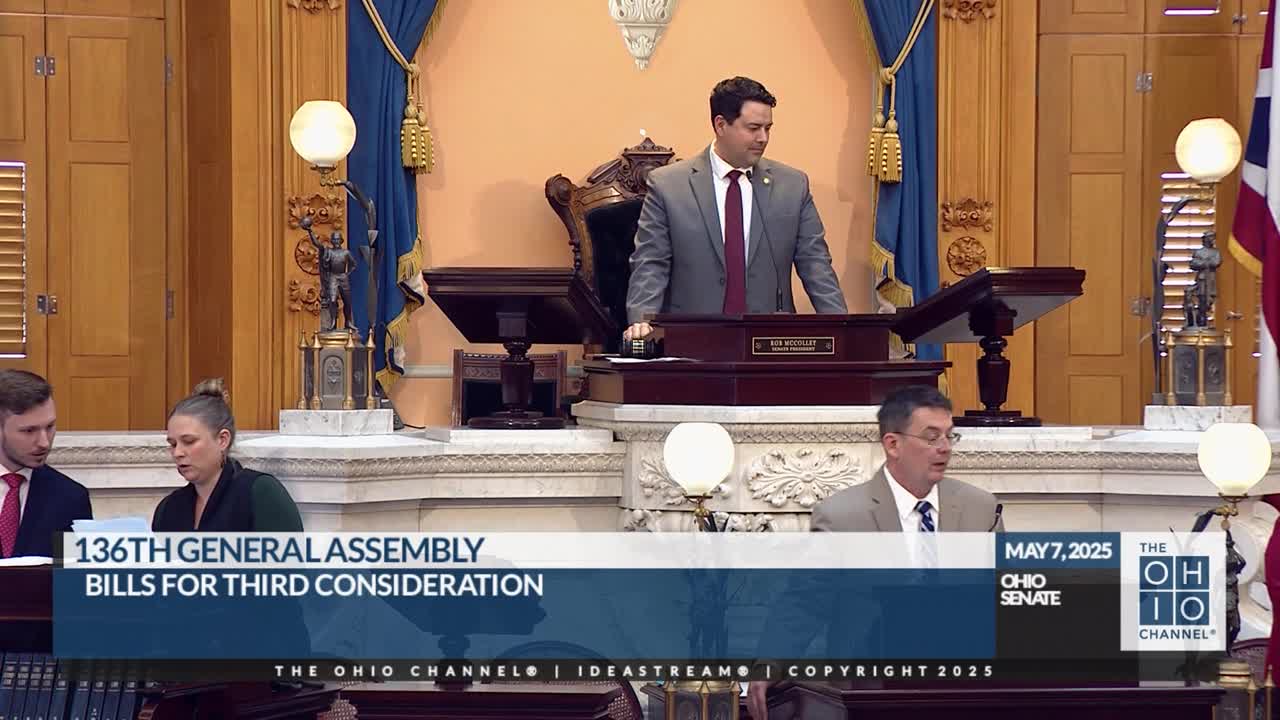
The Ohio Senate on Tuesday approved Senate Bill 138, a broadly negotiated bill that alters contracting procedures for local alcohol, drug addiction and mental health (ADAMH) boards, requires state-level data-sharing planning, and creates a misdemeanor penalty for recovery residences that operate or advertise without certification.
Senator Johnson, the bill sponsor, said the measure is the product of years of work and compromise and aims to modernize how local ADAMH boards contract for behavioral-health services. “This bill… primarily addresses three main areas,” Johnson said on the floor, describing shortened notice requirements, enhanced data integration, and criminal penalties for uncertified recovery housing.
Key provisions Johnson outlined include reducing a 120-day notice requirement to 60 days for either party that does not wish to renew a contract, a six-month transition period after the bill’s effective date to allow boards and providers time to adapt, and a requirement that the Ohio Department of Mental Health and Addiction Services (OhioMHAS) work with ADAMH boards to develop data-sharing and integration plans.
Johnson also described a new enforcement tool: making it a first-degree misdemeanor for recovery housing that operates or advertises without required certification or accreditation. He said the change seeks to curb “predatory” recovery housing providers that exploit people in recovery.
Senator Weinstein spoke in support, calling ADAMH boards ‘‘the front door’’ of the local behavioral-health system and urging colleagues to back the compromise. Johnson said the bill passed the Senate Addiction and Community Revitalization Committee unanimously and thanked committee staff and previous lawmakers who contributed to the bill’s drafting.
The Senate recorded 33 yeas and 0 nays on the measure; the clerk announced the bill was passed and entitled. Sponsors and supporters said the legislation balances local boards’ authority with protections for people seeking recovery services and includes a timeframe for implementation.