Get Full Government Meeting Transcripts, Videos, & Alerts Forever!
Get email alerts on the Geology Data topic
No spam. Unsubscribe anytime.
Idaho Geologic Survey seeks permanent funding for database manager; director highlights role in critical‑minerals data and core repositories
Summary
The Idaho Geologic Survey told lawmakers it needs persistent funding for a database manager position historically paid by grants, and described plans to expand data preservation and physical core repository capabilities to support exploration and public data access.
The Idaho Geologic Survey (IGS) told the Joint Finance-Appropriations Committee that a small, grant‑funded position that manages the agency’s geologic databases is critical and should be converted to permanent general‑fund support to avoid disruptions that would reduce federal match capacity and program continuity.
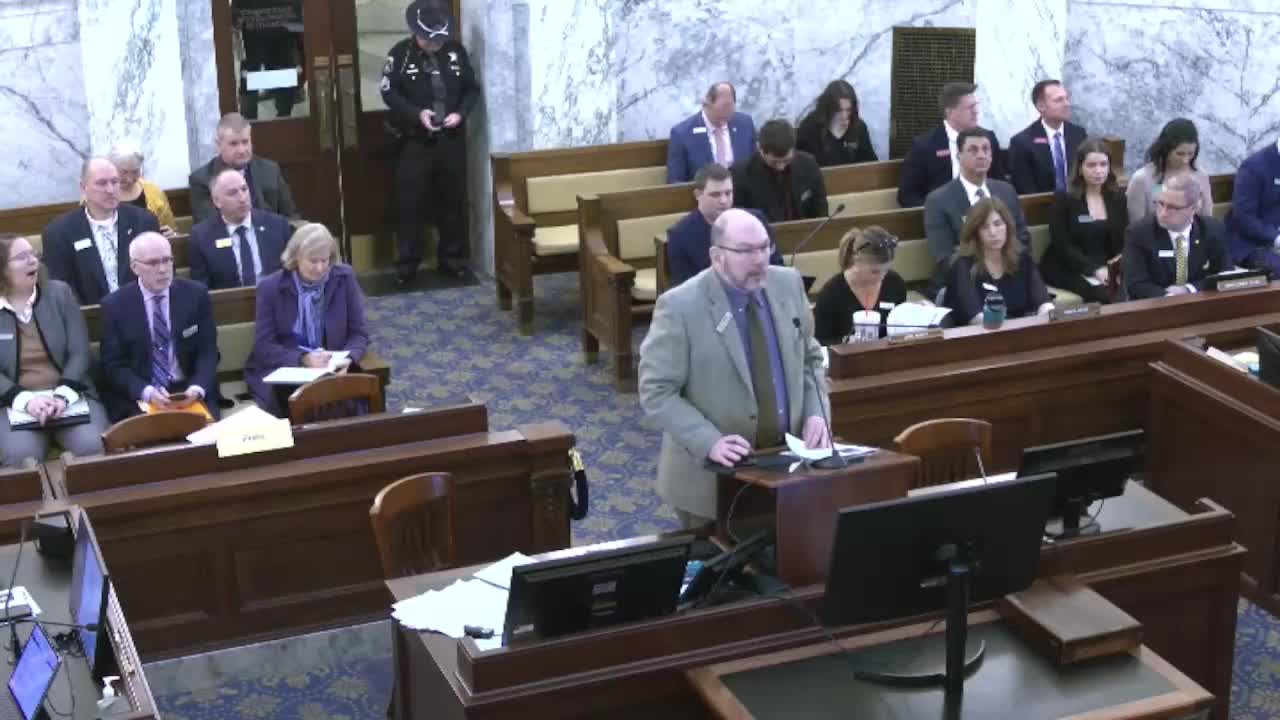
Kevin Campbell of the Legislative Services Office introduced the IGS budget; Claudio Berti, IGS director and state geologist, answered lawmakers’ substantive questions. IGS requested an additional 0.13 full‑time equivalent (FTE) in FY2026 to continue the database manager role after grant funding phases out.
Berti told the committee that the database manager position supports Idaho’s specialized geologic information systems. He said IGS has historically matched federal grants with state funds at a 2:1 ratio and that losing the database manager would jeopardize that ability. IGS has been using abandoned‑mine program funds and other grant sources to support the role; those funding streams are uncertain, Berti said, and he described the job as “fundamental” to the agency’s work.
On mineral exploration and data preservation: lawmakers asked whether IGS works with private industry and how the agency handles core samples and historical physical data. Berti said IGS does not work for mining companies but does collaborate with them; any data provided to IGS become part of the public record and are not proprietary. He described the agency’s data‑preservation program as a frequently used public service and called for expansion to include a physical core repository and additional analyses — investments that would increase the state’s ability to leverage prior exploration and avoid redundant permitting and field disturbance.
Why it matters: IGS provides statewide geologic mapping, mineral and critical‑minerals assessment, earthquake monitoring and other research used by public infrastructure, industry and land managers. Berti said IGS’s work supports decisions about water supplies, construction materials, energy and mineral resources.
Budget details: IGS reported 12.47 authorized FTPs at the time of the sampling date, with several vacancies being filled. Personnel costs account for about 76.5% of IGS’s expenses; capital items this year included research microscopes and a seismometer for Idaho Seismic Network monitoring. The FY2026 request seeks incremental general fund support to convert the database manager position to a stable funding source so IGS can sustain federal matching and data services.
What’s next: IGS will provide the committee additional information about the position’s timeline and potential grant matches; several legislators asked for return estimates and cost/location options for creating a physical core repository and related infrastructure.