Get Full Government Meeting Transcripts, Videos, & Alerts Forever!
Get email alerts on the Antisemitism Education topic
No spam. Unsubscribe anytime.
Committee backs bill to designate Title VI coordinators, citing rise in antisemitic incidents
Summary
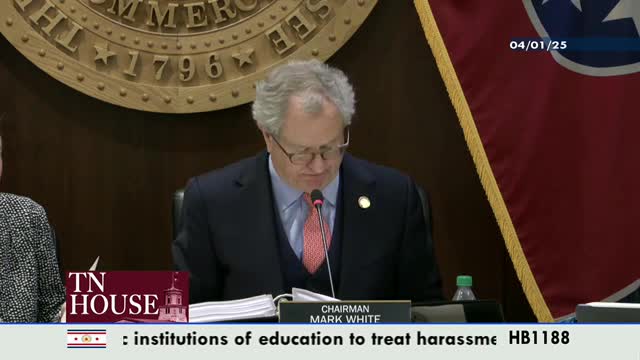
House Bill 1188 passed the House Education Committee with no votes against and three present not voting. The measure uses a working definition of antisemitism and directs Title VI coordinators at K–12 and higher-education institutions to monitor, investigate and report antisemitic discrimination and harassment.
The House Education Committee voted to advance House Bill 1188 to calendar and rules by a recorded vote of 15 in favor, none opposed and three present not voting. The bill defines antisemitism using the International Holocaust Remembrance Alliance (IHRA) definition adopted in previous state action and tasks Title VI coordinators at the State Department of Education and at each public institution of higher education to review, monitor, investigate and report incidents of antisemitic discrimination and harassment.
Representative Grylls, sponsor of the bill, told the committee the measure would integrate the IHRA definition and its contemporary examples into student, faculty and employee codes of conduct at public educational institutions and require an annual report to the General Assembly from each Title VI coordinator.
Witnesses included David Soffer of the Combat Antisemitism Movement, who told the committee antisemitic activity has risen nationally and reported incidents in Tennessee; and a student, Jason Neuner, who described harassment and threats he said he experienced while publicly displaying an Israeli flag. Neuner said, “The Holocaust did not begin with gas chambers. It began with dehumanization, with silencing of identity, and with instilling fear,” and urged lawmakers to act.
Supporters said the bill would close an enforcement gap because Title VI federal protections have limitations in addressing religion-based harassment; they argued the state-level designation would allow prompt investigation and referral to the attorney general when appropriate. Committee members debated scope and whether other targeted groups would need similar statutory hooks; supporters said the bill addresses a specific enforcement gap for antisemitism while Title VI and federal guidance remain limited.
The committee called the question; the clerk reported 15 ayes, 0 nays and 3 present not voting. The bill moves forward to calendar and rules.