Get Full Government Meeting Transcripts, Videos, & Alerts Forever!
Get email alerts on the Geoscience Data Infrastructure topic
No spam. Unsubscribe anytime.
Idaho Geologic Survey seeks steady funding for database manager, cites role in mineral data and core preservation
Summary
The Idaho Geologic Survey (IGS) requested increased general fund support to convert a grant‑funded database manager position to a permanent funded line, citing the position's central role in maintaining geologic data, enabling 2:1 federal matches and expanding a data‑preservation program that could include a physical repository for core samples.
Kevin Campbell, a budget and policy analyst with the Legislative Services Office, presented the Idaho Geologic Survey (IGS) budget request and said IGS is the lead state agency for collection and dissemination of Idaho's geologic and mineral data. Campbell said IGS has 12.47 authorized FTP and typically spends 100% of its appropriations.
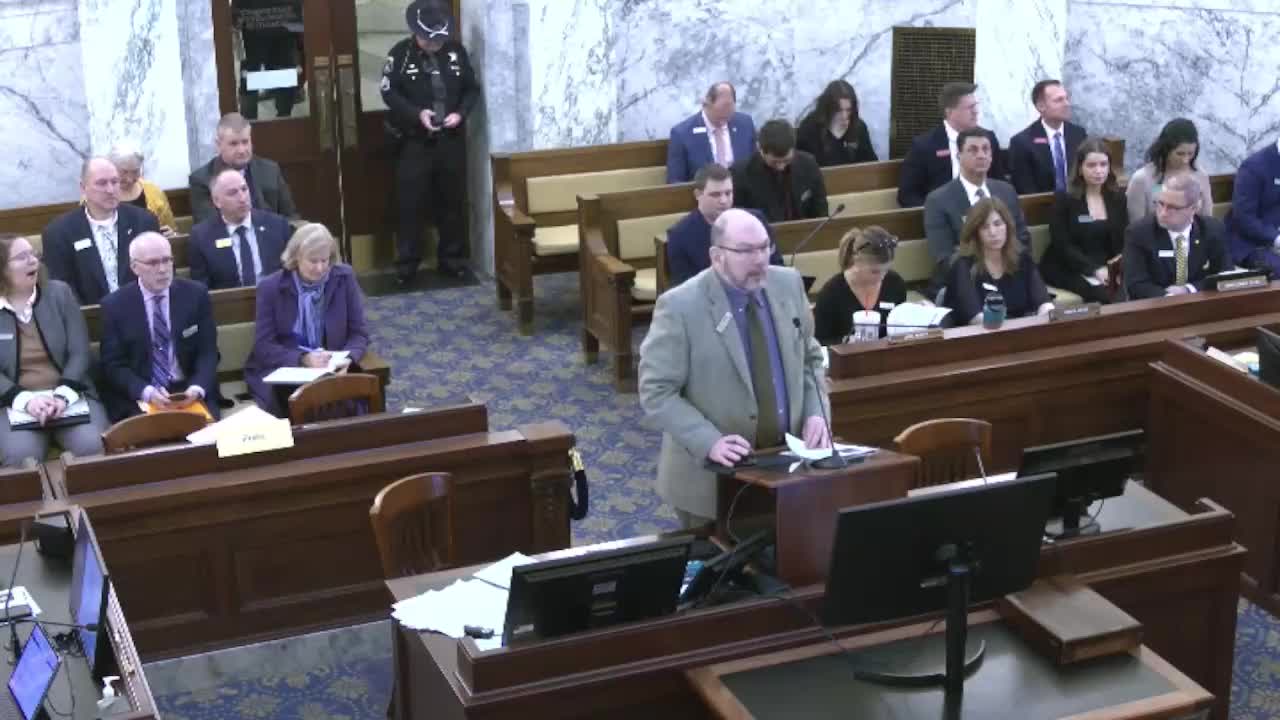
Claudio Berti, director of the Idaho Geologic Survey and the state geologist, told the committee the agency compiles statewide geologic mapping, critical‑mineral research, and operates data systems such as the Idaho Seismic Network. IGS used grant funding to support a database manager position and now requests additional state general fund support as grant revenues are running out. "This position creates 3 more position for us," Berti said, urging the committee that losing the job would be "catastrophic for the survey."
Berti explained the position helps the survey leverage federal funds: the database role has historically allowed IGS to provide state match that can be paired with federal dollars at a 2:1 ratio (two federal dollars to one state dollar) and that previous state support came via fees or grants such as abandoned‑mine lands funds administered by the Department of Lands. He said relying on uncertain grants leaves the position and the survey's data preservation program at risk.
Committee members asked how IGS engages with private exploration companies, whether the survey collects industry core samples and whether the agency assesses economic impacts of mineral development. Berti said IGS primarily provides publicly available, nonproprietary geologic data and mapping that industry and others use to evaluate potential resources. He said the survey does not operate as a consultant for private companies but sometimes partners with industry; data that companies provide for public projects would be made part of the public record.
Berti said Idaho currently lacks a centralized physical core repository for exploration cores and that establishing or expanding physical data preservation would benefit the state by preventing repeated permitting and duplicated disturbance at exploration sites. He told the committee he would provide cost and location estimates and return‑on‑investment studies from other states that have core repositories.
IGS also described capital purchases in recent years, including research‑grade microscopes and a seismometer for the Idaho Seismic Network. For FY2026, the survey requests a partial increase (0.13 FTE) for the database manager after receiving 0.19 FTE in FY2025. Berti said the survey has used abandoned‑mine lands and other grant funds to support that work but seeks a permanent funding path.
No votes were taken. Committee members requested additional information on grant timelines, possible match opportunities and the projected costs and benefits of a physical core repository before acting on the FY2026 request.