Get Full Government Meeting Transcripts, Videos, & Alerts Forever!
Get email alerts on the Environmental Waste Management topic
No spam. Unsubscribe anytime.
Committee approves 3‑year, 50¢ tire‑fee pilot to clean up abandoned tire piles; vote 5‑4
Summary
The Senate Health and Welfare Committee voted 5‑4 to send Senate Bill 1089 to the floor. The bill would impose a 50¢ per‑tire fee for three years, deposit proceeds into a DEQ‑administered fund to remove abandoned tire piles and offer partial reimbursements to recyclers; proponents said the fee would raise roughly $1 million per year.
The Idaho Senate Health and Welfare Committee voted 5‑4 to send Senate Bill 1089 to the floor with a due‑pass recommendation after testimony from recyclers, local governments and industry representatives.
Sponsor Senator Mark Harris said the bill is designed to address dozens of abandoned waste‑tire piles across Idaho, which he said pose fire, mosquito and environmental hazards. Harris described the bill as a replacement for the existing Waste Tire Disposal Act; it would create a three‑year pilot that charges a 50¢ disposal fee at the point of sale and deposits the proceeds into a new fund administered by the Department of Environmental Quality (DEQ) to contract for cleanup and provide partial reimbursement to tire recyclers.
“Thirty‑five states have statewide waste‑tire disposal fees,” Harris said, and those fees in other states range from 25¢ to $10 per tire. He told the committee the department has identified roughly 22 abandoned tire piles and that the sponsor’s estimate for tires in those piles is about 153,000.
Roy Eguerin, a lobbyist representing Liberty Tire Recycling, said DEQ’s inventory identifies multiple abandoned piles and that stakeholders — including cities, counties, the Attorney General’s office, the Tax Commission and the Idaho Association of Retailers — participated in crafting the bill. Eguerin said the legislation would allow DEQ to contract directly for cleanup or provide grants to local governments and that monies in the fund could be expended only by legislative appropriation. He estimated the fee could raise about $1,000,000 per year over the three‑year pilot.
In oral testimony stakeholders differed slightly on the number of tires and piles identified. Eguerin and a DEQ inventory were cited as identifying about 21 abandoned piles totaling “about 50,000 tires,” while the sponsor referenced a DEQ figure of 22 abandoned piles and described an estimate of roughly 153,000 tires. Committee reporting reflects both statements as they were made in testimony.
Industry representatives said the fee and recycler incentive are intended to make cleanup economically feasible across rural sites and to avoid undercutting legitimate recyclers. Rob Jarrus of Liberty Tire Recycling and Craig Hunter, CEO of Tire Reclaim (a Caldwell recycler), described how material markets absorb shredded tires into crumb rubber, tire‑derived fuel, and other uses; Hunter said his facility has invested to produce crumb rubber used on athletic fields but still ships much material out of state. Hunter told the committee fees and incentives would help make remote cleanups feasible.
Local government associations urged the committee to act. Lance Sayers of the Association of Idaho Cities and Seth Grigg of the Idaho Association of Counties said cities and counties lack sufficient funds to address the piles and supported the bill’s grant mechanism.
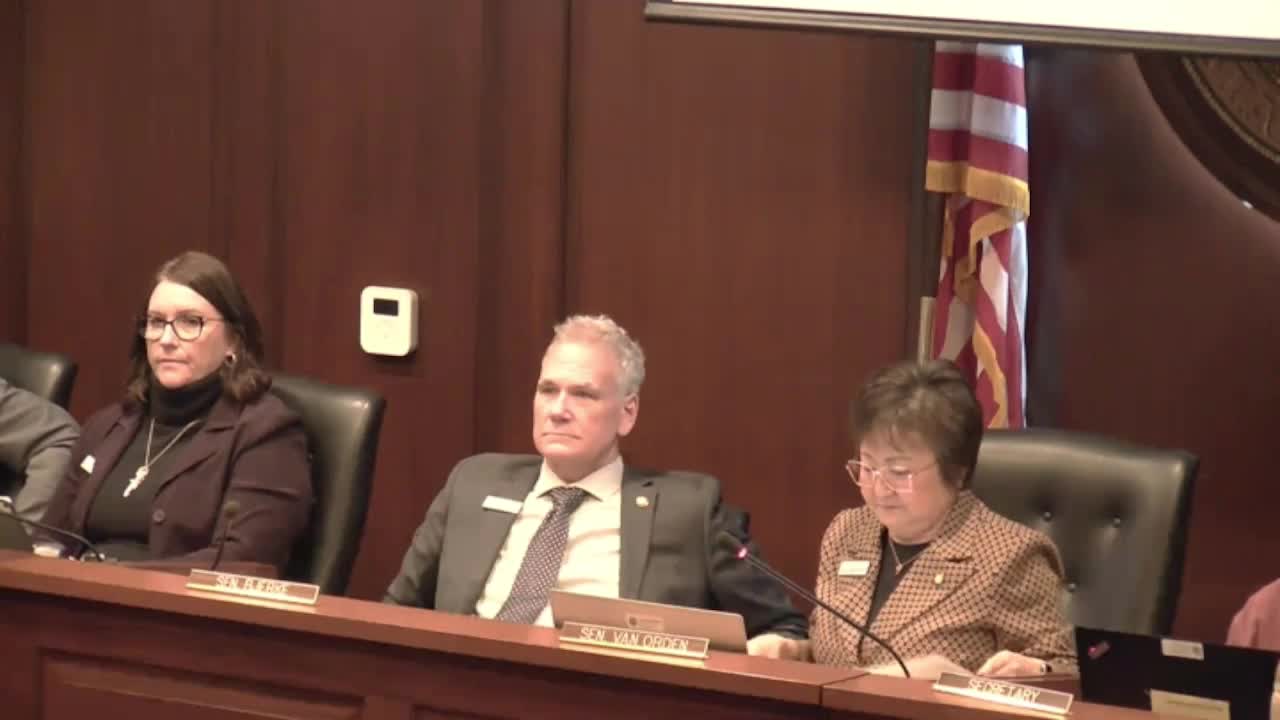
Senator Wintrow moved to send SB 1089 to the floor with a due pass recommendation; Senator Blaylock seconded. The committee approved the motion on a roll‑call vote: Senator Harris (Aye), Senator Ziderfeld (No), Senator Lenny (No), Senator Shippey (No), Senator Blaylock (Aye), Senator Keiser (No), Senator Wintrow (Aye), Senator Bjerke (Aye), Senator Van Orden (Aye). The clerk announced “there being 5 ayes and 4 nays, the motion passes.”
Under the bill the Tax Commission would collect the fee at point of sale, the DEQ would report annually to the legislature on cleanup progress, and reimbursements for recyclers would be tiered based on end‑use of recycled product. DEQ authority, local enforcement, and appropriation by the legislature would govern expenditures.
Votes at a glance: motion to send SB 1089 to the floor with due pass recommendation — moved by Senator Wintrow; second Senator Blaylock; committee vote 5 ayes, 4 nays (roll call recorded).