Get Full Government Meeting Transcripts, Videos, & Alerts Forever!
Get email alerts on the Behavioral Health Workforce topic
No spam. Unsubscribe anytime.
Committee advances bill to ease supervision for Idaho prescribing psychologists
Summary
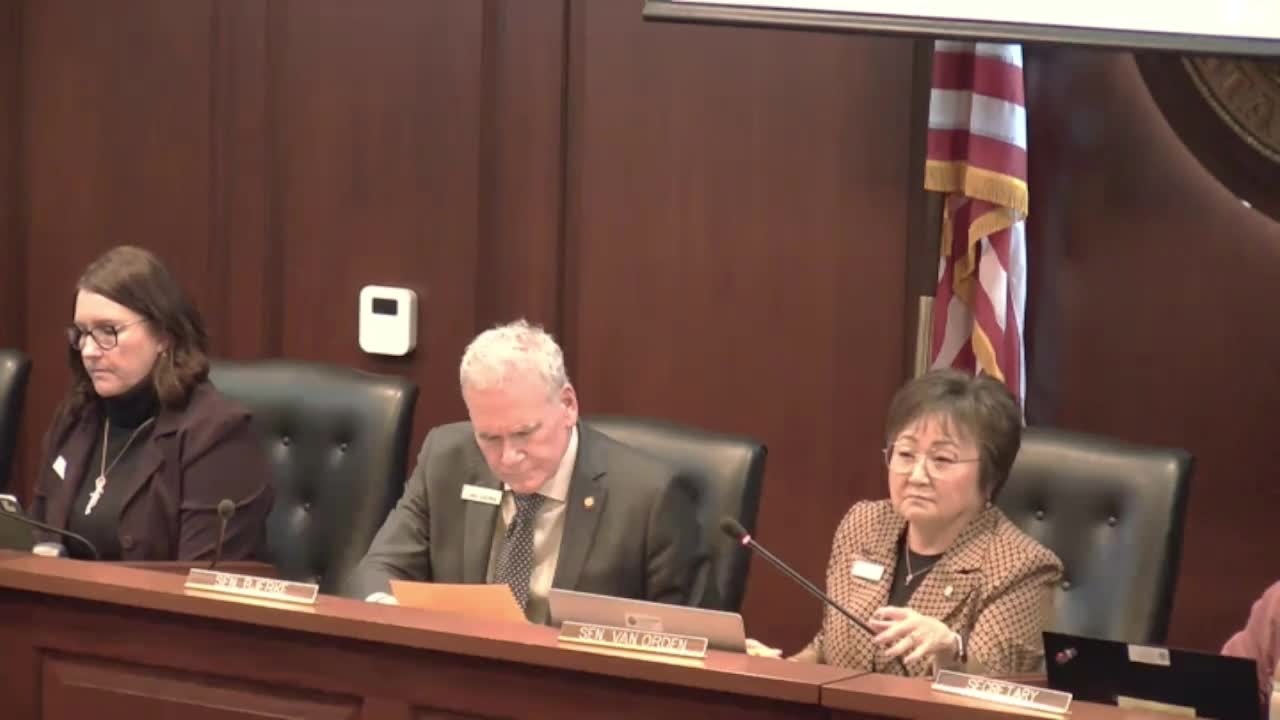
The Idaho Senate Health and Welfare Committee voted to send Senate Bill 1088 to the Senate floor with a due‑pass recommendation after testimony that the measure would broaden supervision options for provisional prescribing psychologists and add licensure safeguards.
The Idaho Senate Health and Welfare Committee voted to send Senate Bill 1088 to the Senate floor with a due‑pass recommendation after testimony from clinicians, educators and industry representatives.
Senator Mark Harris, sponsor of the bill, told the committee the measure “improves and streamlines the practice of psychology in the state of Idaho by removing unnecessary barriers and deleting obsolete redundant language and making some other changes.” He said the bill changes supervision for provisional prescribing psychologists from a physician‑only supervisory agreement to a broader collaborative agreement with experienced prescribers, including nurse practitioners, pharmacists and prescribing psychologists.
The change is intended to address what Harris and witnesses described as a bottleneck: Idaho has had eight prescribing psychologists since the authorizing law took effect about eight years ago, a rate they called insufficient to expand access to behavioral health care. “The current process of having a supervision agreement with only an Idaho or adjoining state physician has become cumbersome and a barrier to becoming a prescribing psychologist,” Harris said.
Lance Giles, a contract lobbyist speaking for the Idaho Psychological Association, told members the association worked with the Division of Occupational and Professional Licenses in drafting the bill and is unaware of organized opposition. “This legislation improves and streamlines the practice of psychology in the state of Idaho,” Giles said, summarizing the main provisions presented by the sponsor.
Practicing psychologists who testified in favor said the bill would help maintain continuity of care and increase access. Dr. Kendra Westerhouse, a licensed psychologist, described the service‑extender change: some doctoral programs do not award a separate master’s degree on the way to a PhD, but the coursework is equivalent. “Service extenders provide a vital service in our state, particularly in our underserved areas,” Westerhouse said, urging that graduates of those programs be eligible to serve as supervised extenders.
Dr. Lynn MacArthur, who said she participates in the PSYPACT interstate compact, said adding background checks for initial licensure will bring Idaho into compliance with the compact and give caregivers “peace of mind” about clinicians who work one‑on‑one with children and people with disabilities. Dr. Patrick Bartos, who described himself as a prescribing psychologist who moved to Idaho but has not been able to practice under current supervision rules, told the committee he could not secure a supervising physician because some physicians’ malpractice insurance or employer policies would not allow the supervision arrangement.
The bill also removes a permanent advisory panel for prescribing psychologists that witnesses said had served its start‑up purpose and was largely inactive. Sponsors said other provisions clean up obsolete statutory language and formally allow doctorate‑track students who do not receive an interim master’s degree to work as service extenders under supervision.
Senator Keiser moved to send the bill to the floor with a due‑pass recommendation; Senator Buerke seconded. The committee voice vote was recorded in favor and the motion passed (voice vote; exact tally not specified on the record). The bill will go to the full Senate for further consideration.
Votes at a glance: motion to send SB 1088 to the floor with due pass recommendation — moved by Senator Keiser; second Senator Buerke; outcome: approved by committee (voice vote; exact tally not specified).