Get Full Government Meeting Transcripts, Videos, & Alerts Forever!
Get email alerts on the Child Welfare topic
No spam. Unsubscribe anytime.
Idaho panel weighs $14.1 million supplemental, staff hires to reduce costly congregate care placements
Summary
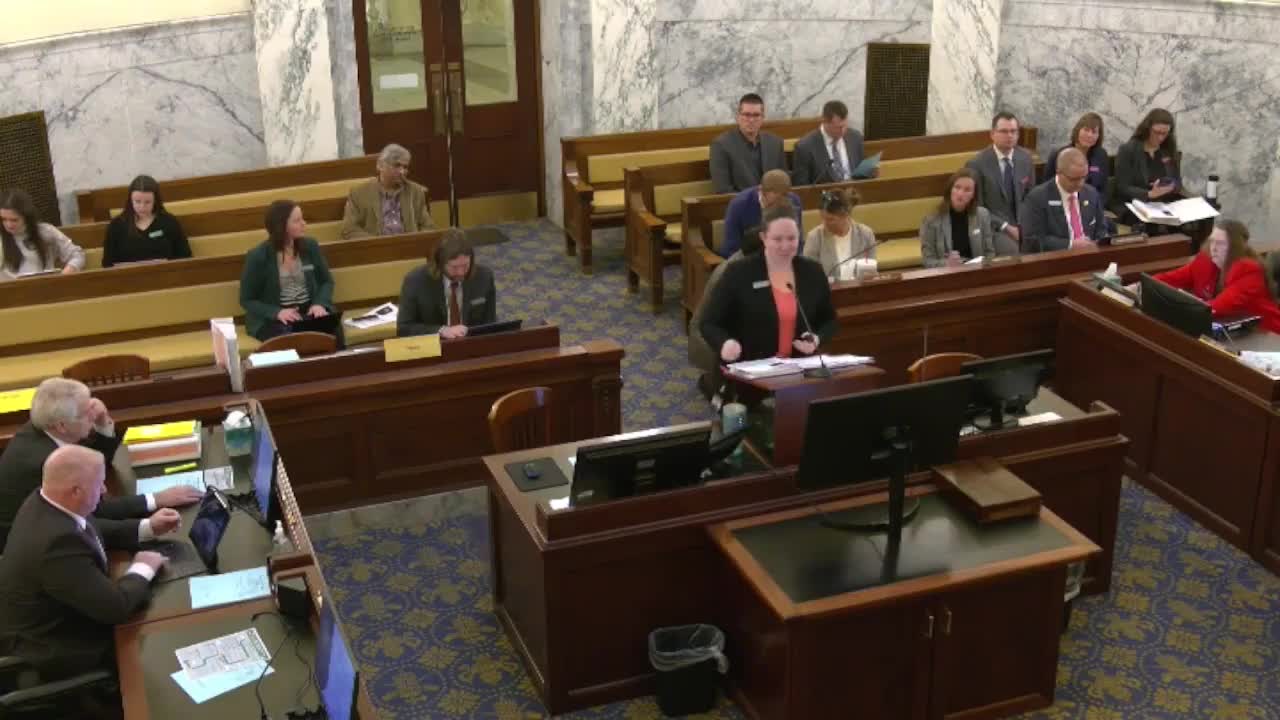
BOISE — The Joint Finance and Appropriations Committee on Feb. 20 heard a multi-part budget request for the Division of Child Welfare, which the agency has rebranded as Youth Safety and Permanency, that aims to reduce reliance on high‑cost congregate care by expanding prevention work and recruiting more foster families.
BOISE — The Joint Finance and Appropriations Committee on Feb. 20 heard a multi-part budget request for the Division of Child Welfare, which the agency has rebranded as Youth Safety and Permanency, that aims to reduce reliance on high‑cost congregate care by expanding prevention work and recruiting more foster families.
Analyst Alex Williamson told the committee the division (budget book line 20009) has 434.8 authorized full‑time positions and reported 45.8 vacancies as of Feb. 10, with roughly 25 of those in the interview process and nine posted. Williamson said recent base increases included a foster‑family monthly maintenance rate boost and 24 new in‑home caseworkers added in prior years.
The budget package presented by the Department of Health and Welfare and summarised by Director Alex Adams would add prevention specialists, clinical staff and licensing staff aimed at keeping children safely at home or placing them with families instead of congregate care. The department also seeks a supplemental and other authority to allow transfers of personnel and trustee/benefit payments across expense classes in accordance with Idaho Code §67‑35‑11.
Why it matters: Director Adams and agency staff told the committee that congregate care costs are far higher than prevention and standard foster care. "If I keep a kid in their home, in a prevention case, it's a dollar 80 a day," Adams said. "If a child is removed from their home and placed in foster care, it's $16 a day. If I don't have a foster bed available to them, congregate care is $380 a day." The department says growth in youth mental‑health and substance‑use needs and a shortage of foster parents who can serve children with complex needs are driving costs.
What the agency asked for - Prevention specialist team: 36 new FTP to expand family service worker prevention specialists (from 14 to 50 prevention specialists statewide). Williamson said the combined ongoing and one‑time cost was listed in the materials; the presentation noted roughly $3,048,200 with part ongoing and part one‑time. - Youth safety and permanency staff: agency requested 12 positions; the governor recommended nine. These would include clinicians for needs assessment and psychosocial rehabilitation family‑service worker positions and $120,000 for a family‑find tool to locate kinship placements. - Foster‑program clinical staff: agency requested 15 clinicians; governor recommended 10. Clinicians would support foster families caring for youth with significant behavioral and mental‑health needs and help establish a 24/7 support line and a monthly maintenance rate increase averaging about 5 percent. - Foster‑program licensing staff: agency requested 14 FTP to reduce licensing timelines; governor recommended three. Williamson said prospective foster parents currently take about 80 days to become licensed; at the time of the request there were 19 licensing staff averaging caseloads of 59 foster families. - Payette Assessment and Care Center (lease operations): the agency moved from pursuing a purchase to leasing and requested $2.7 million ongoing to operate the facility while evaluating long‑term options. - Supplemental: the packet includes a $14,100,000 fiscal‑year‑2025 supplemental tied to foster‑care population forecast adjustments, primarily driven by increased congregate‑care costs.
Department rationale and tradeoffs: Adams and Deputy Director Monty Pro described the effort as a "flywheel" that requires upfront investment to reduce the number of children in congregate care and generate long‑term savings. Adams said the department's placement ratio improved from 74 foster beds per 100 incoming children to 94 per 100 since he began, which he said helped remove children from short‑term rentals and Airbnbs. Deputy Director Pro described prevention workers conducting weekly home visits and preparing court‑reviewed treatment plans targeted to assessed needs; "Once a week for our prevention workers...they go into the home to build up protective factors and reduce the risk factors," he said.
Committee questions and context: Legislators pressed on several operational and financial points. Several members, including Representative Tanner and Representative Furness, praised the prevention focus and faith‑based recruitment efforts; Director Adams said the department has an Office of Faith‑Based Initiatives and is pursuing partnerships and public outreach to grow the foster pool. Representative Handy asked about children entering care because a parent is incarcerated; Deputy Director Pro said 16 percent of removals in 2024 cited parental incarceration as the reason. Senator Cook and others asked about improvements to the Payette facility and whether state or private funds paid for modifications; the director said the state paid for modifications and nonprofit partners helped with equipment.
Limits and next steps: Several presentations and questions framed the child‑welfare request as an attempt to reduce future supplemental needs. Adams noted the program is effectively an entitlement in practice because courts can commit children to the department’s custody; he said the department had reduced a projected supplemental from about $24 million to $14.1 million through recruiting and other steps but said additional investment is required to sustain the changes.
Speakers quoted or heavily relied on in this account include Alex Williamson (budget and policy analyst, Legislative Services); Alex Adams (director, Department of Health and Welfare); Monty Pro (deputy director, Child, Youth and Family Services); and other legislators and stakeholders who questioned or endorsed aspects of the plan.