Get Full Government Meeting Transcripts, Videos, & Alerts Forever!
Get email alerts on the Higher Education Budget topic
No spam. Unsubscribe anytime.
State Board of Education presents systemwide budget; requests small fund for minors‑on‑campus training
Summary
Legislative analysts and the State Board of Education described the Systemwide budget mechanism used to fund research and shared services and sought $15,000 for training materials related to minors on campus amid growing dual‑credit and campus programs.
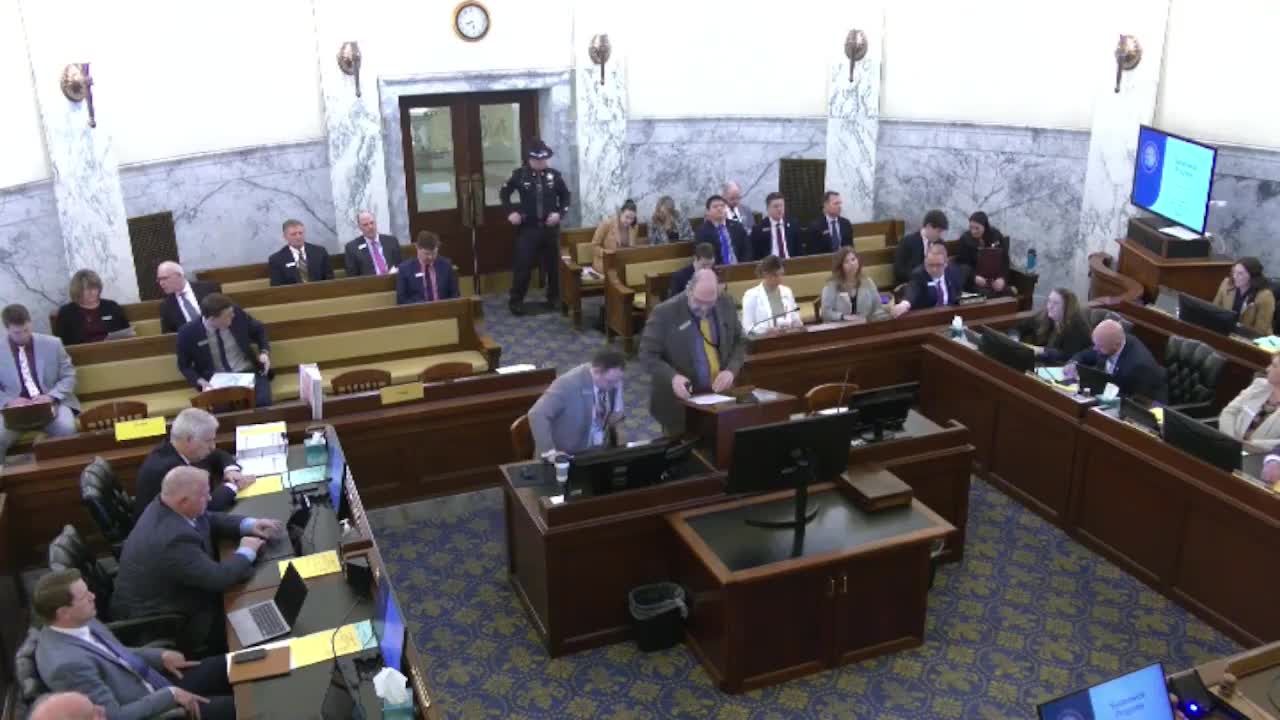
Legislative staff and the State Board of Education briefed the Joint Finance‑Appropriations Committee on the college and university systemwide budget, describing how systemwide transfers about $4 million annually to institutions for research and shared services and seeking modest funding for minors‑on‑campus training.
Kevin Campbell, a budget and policy analyst with the Legislative Services Office, explained that the Systemwide account is not a campus but a mechanism within the Office of the State Board of Education that transfers funding to colleges and universities and covers truly systemwide expenses. He said the office has 2.5 full‑time equivalent positions, a base budget of about $6,400,000, and that roughly $4,000,000 of FY2025 expenditures will be transferred to institutions for research activities.
“System wide is a mechanism for getting funding to researchers and to research projects located within the colleges and universities,” Campbell said, describing both transfers and systemwide projects that benefit multiple institutions.
For FY2026, Systemwide requested $15,000 for training materials to address the presence of younger students on college campuses arising from dual‑credit programs and other campus activities. Campbell described the request as systemwide because the training and risks apply across multiple institutions. The office also requested $3,600 to correct the FY2025 CEC calculation.
Joshua Woodworth, director for the State Board of Education, told the committee students under 18 attend campuses for support, camps and activities and that institutions need to prepare for the legal and operational aspects of those visits. The committee took no formal action during the presentation.
Members asked clarifying questions on the number and type of dual‑credit students who attend in person and on the scope of the training request. The State Board said the request is intended to provide materials to help institutions manage risk and serve younger students appropriately rather than to change statute or state policy on dual‑credit delivery.