Get Full Government Meeting Transcripts, Videos, & Alerts Forever!
Get email alerts on the Vocational Rehabilitation topic
No spam. Unsubscribe anytime.
Forensic audit, federal scrutiny and $10 million reallocation mark crisis at Idaho Vocational Rehabilitation
Summary
Legislative auditors and agency officials told the Joint Finance‑Appropriations Committee Feb. 24 that Idaho’s Division of Vocational Rehabilitation faces federal high‑risk designation, a forensic audit back to 2019, and potential federal disallowances tied to Pre‑ETS and other reimbursement requests.
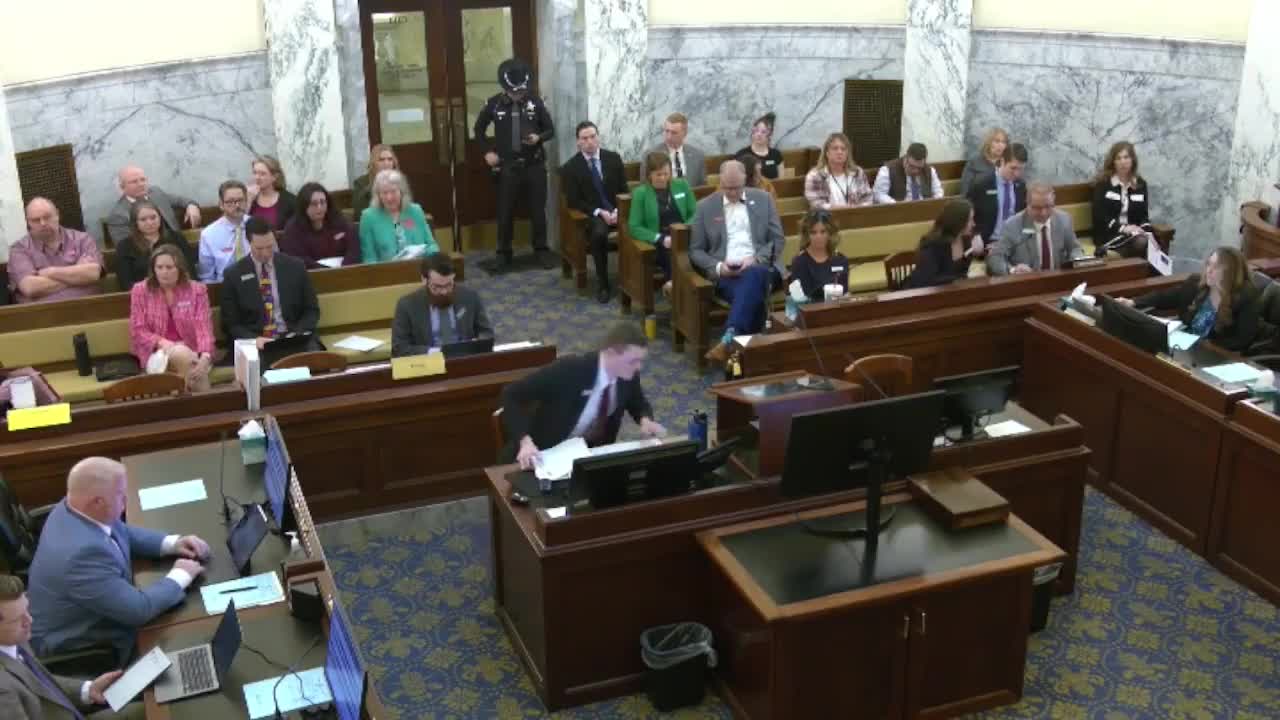
Brooke Dupree, a budget and policy analyst with the Legislative Services Office, briefed the Joint Finance-Appropriations Committee on Feb. 24 about financial problems and federal scrutiny at the Idaho Division of Vocational Rehabilitation (IDVR). Dupree said the division received a $10 million reallocated federal award and that spending the award requires state matching dollars.
Dupree described a pattern of rising trustee-and-benefit payments, an increase in clients served, and a growing backlog of commitments and invoices that complicated year-end reporting. “The money came from the Rehabilitation Services Administration… when it's getting close to the end of the federal fiscal year, they look at all the grants that they've given to states and they see who isn't going to spend their full grant and that money comes back and gets re‑allotted to states that they do expect to be able to spend that grant,” Dupree said of the $10 million non‑cognizable adjustment the governor recognized in September.
April Renfro of the Legislative Services Office audits division updated the committee on a fiscal monitoring review and an accountability report issued Jan. 13, 2025. Renfro said auditors found the division “did not establish procedures and control activities to ensure compliance with appropriation laws applicable to fiscal year 2024” and described failures in financial management, obligations accounting and federal reporting accuracy.
Renfro said Rehabilitation Services Administration (RSA), the federal grantor, designated IDVR a “high risk grantee” on May 3 and imposed specific conditions under 2 C.F.R. § 200.208. She said RSA required a corrective action plan; auditors found the division’s initial plan lacked specific, measurable actions and timelines. RSA then performed a fiscal monitoring review that produced findings including insufficient internal controls, an inadequate financial management system, unsupported federal reporting and period‑of‑performance issues.
Those findings led the division to hire a third‑party contractor to perform forensic accounting, case‑management fixes and corrective work. Dupree and Renfro described a professional services contract initially signed for $499,999 on Aug. 12, 2024 and amended in November to add about $1.9 million and extend the term into December 2025. Dupree noted the division has paid roughly $900,000 on the contract to date; Renfro added the entire contract amount charged to federal funds will require state matching under the grant rules.
Judy Taylor, interim director of IDVR, described operational drivers of the problem: a case‑management system that did not communicate with fiscal systems, commitments that were not tracked by appropriate fiscal year, and billing delays that produced an end‑of‑year invoice backlog. Taylor said improper period‑of‑performance coding and incomplete supporting documentation for reimbursement requests led RSA to reduce or deny reimbursements for pre‑employment transition services (Pre‑ETS) and other charges.
Taylor said the division’s initial draw request for Pre‑ETS reimbursements produced a high “breakage” or rejection rate from RSA; she said about 25¢ was being reimbursed for every dollar submitted in one early draw, and that extrapolations of that rejection rate contributed to the $1.7 million estimate the division provided to the legislature for potential unallowable charges. Taylor said the forensic audit will examine transactions back to 2019 for maintenance‑of‑effort considerations and that RSA has not yet specified the final federal remedy for prior unallowable charges.
Renfro told the committee the federal grantor has a range of enforcement options, from additional reporting and prior approvals to requiring repayment of funds “proportionate to the extent of harm the violation caused to an identifiable federal interest.” She said RSA could seek repayments or reductions but could also mitigate or waive amounts depending on circumstances and documentation.
Committee members asked why the division contracted without competition and whether the contractor’s work yields sufficient return on investment. Taylor said the contractor offered specialized expertise to reprogram the division’s case‑management platform and to undertake forensic restatementing that RSA and the division agreed were necessary to avoid more severe federal interventions. She said the contractor brings experienced staff—Taylor described a team of several full‑time consultants with national reputations—and that RSA encouraged the model as a path that might avoid loss of state control.
Lawmakers also discussed supplemental requests: Dupree said the division requested $2.7 million in one‑time general‑fund match to draw the $10 million federal reallocation, and the governor recommended an additional $1.7 million one‑time general fund to cover services that RSA might deem ineligible. Committee members pressed for a clearer breakdown of the match calculation and for the timeline on the forensic audit and federal response; auditors said parts of the resolution will be known when single‑audit work and the forensic review are complete, but that the process remains ongoing and timing is uncertain.
Renfro concluded by recommending continued close oversight and noting the audit contractor’s February report, which tracks error rates on plan authorizations and payments, as a place for the committee to monitor progress. The committee indicated additional oversight hearings may be needed.