Get Full Government Meeting Transcripts, Videos, & Alerts Forever!
Get email alerts on the Telecommunications Relay topic
No spam. Unsubscribe anytime.
Committee approves study of Telecommunications Relay Service fund amid falling usage
Summary
The committee approved House Resolution 590 to form a study panel examining Georgia’s Telecommunications Relay Service (TRS) fund and related programs, citing dramatic drops in relay usage and technological changes. The Public Service Commission provided background on the fund and program costs.
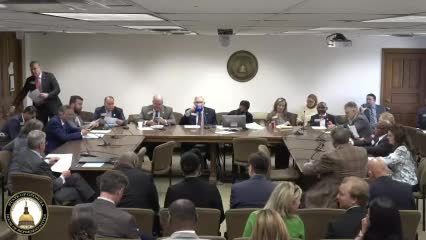
The House Energy, Utilities and Telecommunications Committee approved a resolution to create a study committee to review Georgia’s Telecommunications Relay Service (TRS) fund and related programs for the deaf, hard of hearing and visually impaired.
Chairman Dickey introduced House Resolution 590 and outlined the fund’s history, saying the General Assembly created the TRS fund in 1990 to establish a statewide relay service and later directed the Public Service Commission to administer related programs. Leon Bowles, director of telecommunications at the Georgia Public Service Commission, told the committee the TRS relay component has experienced a roughly 90% drop in usage over the last 10 years and that technological change (texting, smartphones, FaceTime) has reduced reliance on the original TTY-based relay service.
Bowles said the fund currently supports four programs: the relay service, a telecommunications equipment program, a hearing-aid program, and a service allowing blind users to access audible versions of newspapers and magazines. He said total funding for those programs is roughly $2,000,000 per year and that the relay component alone is about $500,000 annually. The TRS charge is currently assessed at 11 cents per hard-line landline; Bowles described the total receipts as “a couple million dollars a year.” Tamika Starks, a utilities regulation specialist in the telecom unit, was seated with Bowles and identified as the day-to-day operator for the TRS fund programs.
Bowles and members said a study could help determine whether to continue funding the relay service as currently structured, and whether other services or delivery methods should be funded instead. Chairman Martin and other members recounted past bipartisan efforts to expand services for visually impaired users and expressed support for reviewing the program’s scope.
The committee approved the resolution by voice vote; the transcript records members saying "aye" and the chair declaring the motion passed. The study committee will solicit stakeholder input from the deaf, hard-of-hearing and visually impaired communities, telecom providers and the commission, according to Bowles’ presentation.
No public commenters were recorded as signing up to address the item during the meeting. The vote was taken by voice; no roll-call tally appears in the transcript.