Get Full Government Meeting Transcripts, Videos, & Alerts Forever!
Get email alerts on the Pfas Drinking Water topic
No spam. Unsubscribe anytime.
Committee holds PFAS drinking‑water rule docket after DEQ presentation; sampling will be new and will cost systems for analysis
Summary
DEQ asked the committee to adopt docket 58‑0108‑2401 incorporating federal PFAS drinking‑water rules; the committee held the item until the call of the chair after DEQ said regulatory sampling will be new for most public water systems and will carry per‑sample analytical costs.
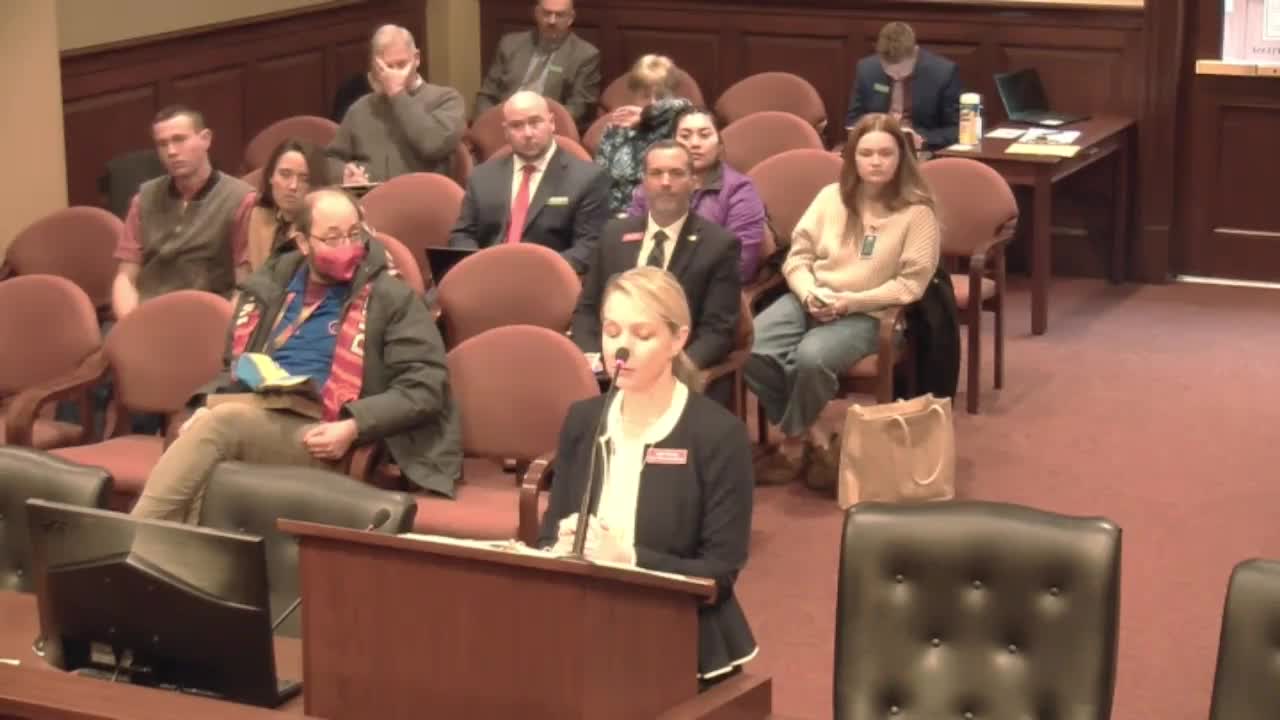
Jeri Henry, division administrator for Drinking Water Protection and Finance at the Idaho Department of Environmental Quality, and Tyler Fortunati, chief of the Drinking Water Bureau, presented docket 58‑0108‑2401 to the Senate Health and Welfare Committee. The docket incorporates federal Safe Drinking Water Act requirements for per‑ and polyfluoroalkyl substances (PFAS) — including 40 CFR part 141, subpart Z for PFOS — into Idaho's public drinking‑water rules through the July 1, 2024 reference date.
DEQ told the committee the changes ensure Idaho retains primacy under the Safe Drinking Water Act and protect roughly 1.5 million Idahoans served by about 1,000 public water systems regulated under the rule. Fortunati said the regulation will require regulatory monitoring for PFAS for the vast majority of public water systems that have not previously sampled, describing this as "new regulatory testing for the vast majority of our public water systems." He said average analytical sample cost is "right around $325," and that two approved analytical methods exist which affect the cost.
DEQ said the rule establishes enforceable maximum contaminant levels for PFOS, requires monitoring, analytical, reporting and record‑keeping requirements, and adds provisions requiring PFOS sampling results for new wells and public water systems consistent with other contaminant requirements. DEQ said it engaged stakeholder groups including the Drinking Water Advisory Committee and the Water Utility Council and that no written public comments were received during the rulemaking notice period.
Senator Blaylock asked whether the testing is new and whether there will be a cost; Fortunati confirmed testing will be new for most systems and estimated the per‑sample cost. Senator Van Orden suggested holding the docket until staff could present more detailed information at a subsequent meeting; Senator Harris moved and Senator Wintrow seconded a motion to hold the docket until the call of the chair. The motion carried on a voice vote and the committee will take the item up during the next scheduled meeting for a fuller briefing.