Get Full Government Meeting Transcripts, Videos, & Alerts Forever!
Get email alerts on the Aging Services topic
No spam. Unsubscribe anytime.
Commission on Aging requests targeted inflation increases, plans one-time ARPA spending before federal deadline
Summary
The Idaho Commission on Aging briefed the Joint Finance-Appropriations Committee on its FY2026 request, ongoing federal grant usage and plans to spend remaining ARPA funds by Sept. 30, 2025, while asking for modest general-fund inflation adjustments.
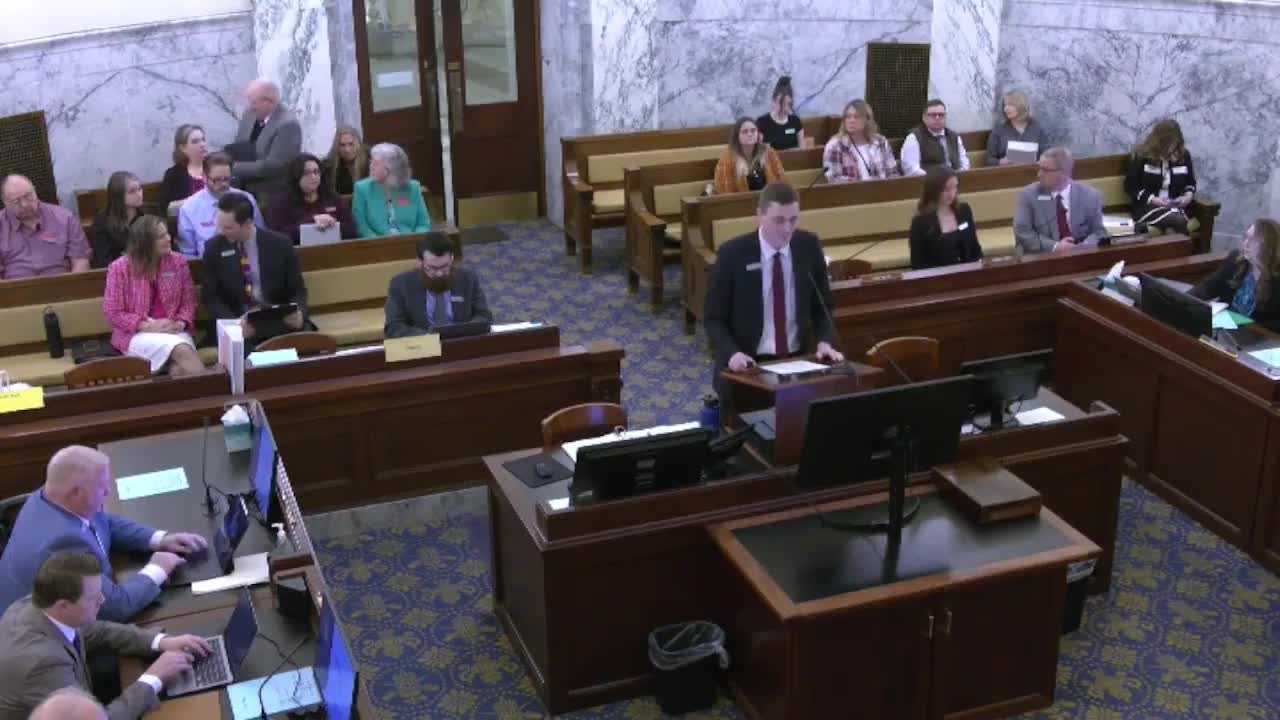
Colin McGurkin, a budget and policy analyst with the Legislative Services Office, told the Joint Finance-Appropriations Committee on Feb. 24 that the Idaho Commission on Aging’s budget centers on federal Older Americans Act funding, state appropriations under the Idaho Senior Services Act and a pattern of one-time American Rescue Plan Act (ARPA) draws.
“The Commission on Aging implements the Federal Older Americans Act and Idaho Senior Services Act,” McGurkin said, describing the agency’s role and the six Local Area Agencies on Aging that deliver meals, transportation, caregiver assistance and legal services across the state.
His presentation to the committee said the agency expended about $16.7 million in FY2024, with almost 88% of that total categorized as trustee and benefit payments. McGurkin told the committee that those trustee and benefit payments included roughly $10.4 million in federal funds and $4.2 million from the state general fund distributed to local AAAs for direct services.
McGurkin described a consistent pattern since FY2022 of the commission requesting one-time federal appropriations tied to ARPA and related federal awards. “The agency since FY2022 has consistently requested one-time federal appropriations to utilize available American Rescue Plan Act funds or ARPA for one-time purposes and modernization projects,” he said, noting about $7.4 million in ARPA-related expenditures referenced in the presentation.
Judy Taylor, the commission director, told the committee the agency used ARPA and other one-time federal funds for a range of projects including meal-service modernization, caregiver outreach and pilot programs for unpaid caregivers of people with dementia. Taylor said those one-time funds supported training, expanded adult protective services work and a pilot to expand the public health workforce with community health workers deployed through AAAs.
Taylor said the agency’s FY2026 request aligns with the governor’s recommendation and asks for $162,600 in ongoing general-fund authority to cover inflationary increases. “Of that amount, $155,000 is for a 3% increase in trust and benefit payments… and [an additional] $7,600 for a 2% increase in various operating expenditures,” she said. The request also includes a one-time federal appropriation of $500,000 to draw down remaining ARPA balances by the Sept. 30, 2025 deadline: McGurkin said $450,000 of that would go to final invoices for AAAs and $50,000 would cover staff time and operating expenditures tied to implementation.
Committee members asked for clarification about Alzheimer’s and dementia-specific spending, charging sources for staff time billed to ARPA, and whether ARPA-funded enhancements would continue after the federal deadlines. McGurkin said he did not have a specific Alzheimer’s line-item amount available at the hearing and offered to follow up. Taylor said the commission has followed guidance to use one-time federal money for one-time projects and that some items—such as adult protective services association memberships or expanded respite hours—will be reduced when ARPA funds end but that core personnel obligations are included in the base budget.
Taylor also credited recent appropriations with reducing meal-program waitlists: she said the commission used prior state funding to raise meal rates by $0.25 per meal and eliminated the home-delivered meal waitlist the commission reported last year.
The commission’s presentation and questions to staff emphasized the agency’s mix of federal grant draws and state general-fund maintenance, the planned use of remaining ARPA funds before federal expiration, and modest ongoing state support requests to cover inflationary cost increases.