Get Full Government Meeting Transcripts, Videos, & Alerts Forever!
Get email alerts on the State Public Defender Funding topic
No spam. Unsubscribe anytime.
New State Public Defender agency seeks millions in supplements, funding to cover transcripts, contracts and county onboards
Summary
Officials told the Joint Finance‑Appropriations Committee that the newly created State Public Defender needs supplemental and ongoing funding, continued transfers into a dedicated state public defense fund and authorization for dozens of positions as counties transition into the state system.
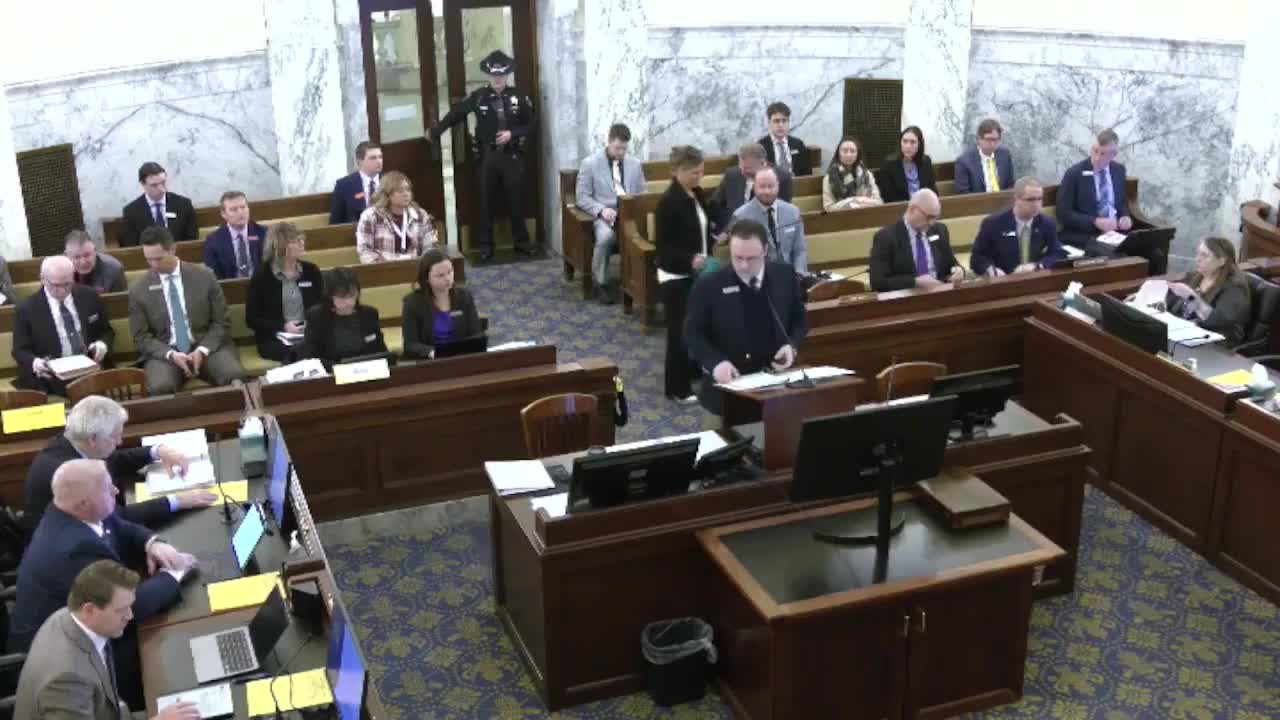
Christopher Lahoset, budget and policy analyst with the Legislative Services Office, walked the Joint Finance‑Appropriations Committee through the budget and staffing requests for the new State Public Defender — a recently created agency charged with providing and overseeing indigent defense statewide.
Lahoset cited Idaho Code 57‑8207 for the statutory transfer that directed a $39 million transfer from the tax relief fund into the state public defense fund. He said the agency requests a one‑time supplemental appropriation of $2.5 million for the current fiscal year to fully use that $39 million transfer. Lahoset also said the governor recommended a one‑time supplemental of $390,200 for transcript costs tied to the Idaho Supreme Court’s Dec. 5 decision in State v. Blasick, which assigned transcript costs to the state.
Other governor recommendations and agency requests included: a one‑time FY25 request of $5,427,600 for additional personnel and contracting costs; an ongoing FY26 request of about $16,000,380 in general funds for public defense operating costs (primary and conflict contract attorneys, investigators, experts, transcript costs and training); authorization for roughly 17.96 FTEs to open four institutional offices as counties transition (Benewah, Elmore, Jerome and Shoshone counties were listed); and a proposed $16,867,400 one‑time cash transfer from the general fund to the state public defense fund to boost recruiting and contract rates.
Eric Fredericksen, the State Public Defender, told the committee the transition to a unified state public defense system has been fast and operationally difficult. “We walked into 1,300 withdrawals and cases,” Fredericksen said, describing the volume of appointments and work the new office inherited October 1. He said the agency has faced contractor losses, flat‑fee contract issues and a need to equalize pay across counties to recruit and retain attorneys. Fredericksen said the transition exposed previously unbudgeted costs the counties had borne, including psychosexual evaluations (which he said can run about $2,500 each) and other court valuations.
Fredericksen and staff also described practical and statutory limits: the 2021–2022 legislation created the office and funded it on forecasts that later proved low once case work normalized after COVID‑era lulls. He said the statute still requires counties to provide facilities until 2029, even as personnel and services move to the state; that statutory detail, he said, will require further legislative clarification. The director said the office has been appointed to matters beyond traditional criminal defense — including private terminations and custody matters when no private counsel is available — and that clarifying the office’s appointment scope may require legislative action.
Committee members pressed on whether the supplemental funds can be spent in the current fiscal year, on the breakdown of “miscellaneous expenditures” in the operating request, and on how the statewide case management system will be phased in. Fredericksen said his office aims to spend FY25 supplementals this year but acknowledged some funding needs will persist into FY26, and that hiring in rural counties requires higher pay and benefits to attract attorneys.
Why it matters: The new State Public Defender is the central element of Idaho’s plan to meet constitutional and professional standards for indigent defense. The budget requests and the statutory transfer of $39 million will determine how rapidly the office can staff institutional district offices, pay contract rates, cover transcript and expert costs, and relieve counties of previously assigned responsibilities.
The committee did not take a vote at this hearing; staff and the director provided follow‑up data commitments, including breakdowns of projected operating expenditures and county facility arrangements.