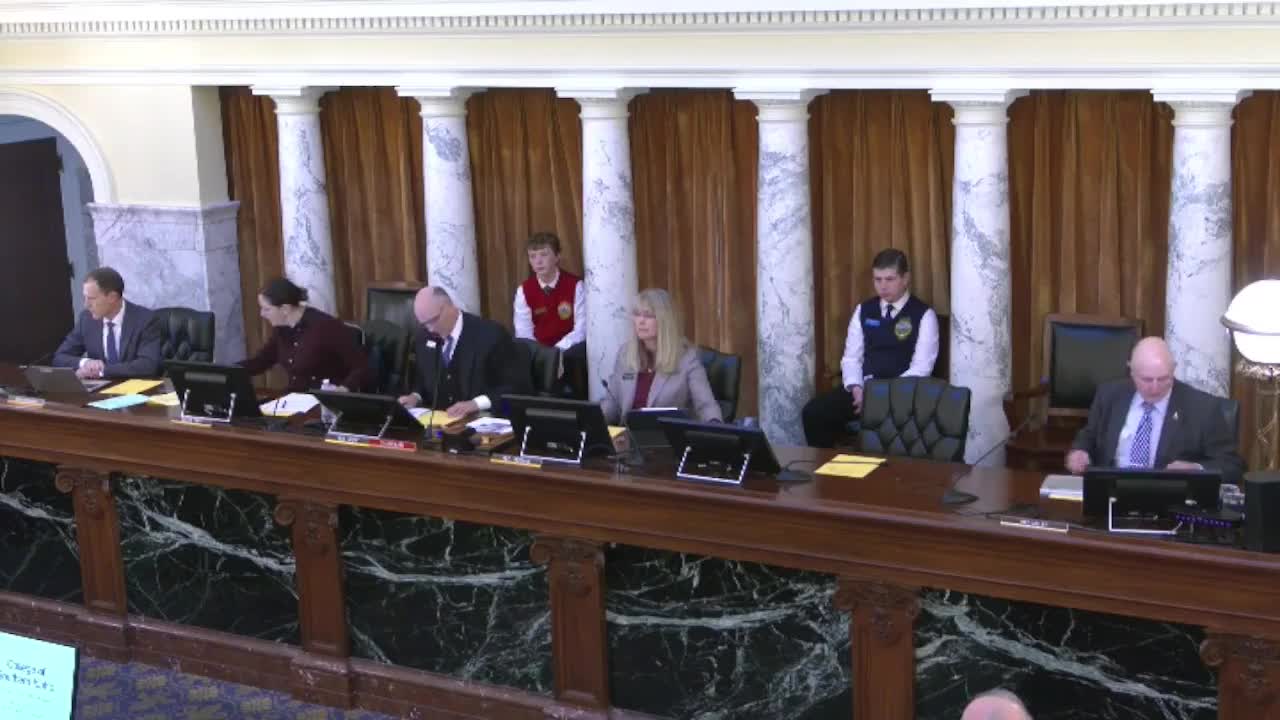
College of Southern Idaho urges state support as enrollment jumps 20%
Loading...
Summary
College of Southern Idaho leaders told the Joint Finance-Appropriations Committee that rapid enrollment growth tied to Idaho Launch has stretched instructional capacity and prompted a FY2026 request for an enrollment workload adjustment of $475,700 to hire five faculty and reduce wait lists.
The College of Southern Idaho asked the Joint Finance-Appropriations Committee for targeted funding to ease instructional bottlenecks after reporting a sharp increase in enrollment.
Kevin Campbell, a budget and policy analyst with the Legislative Services Office, told the committee that CSI’s FY2026 request includes an enrollment workload adjustment totaling $475,700. "CSI's 2026 request is for the enrollment workload adjustment in the amount of $475,700," Campbell said.
The request follows a 20% year-over-year increase in CSI's fall enrollment, which President Aldine Fisher attributed largely to Idaho Launch. "Last fall ... we had 579 launch recipients matriculate to the College of Southern Idaho. We ultimately experienced a 20% enrollment growth," Fisher said. She told the committee CSI has added roughly 3,800 students since fall 2021 and now faces capacity constraints in both CTE and general education courses.
Why it matters: CSI officials said the growth has outpaced faculty and clinical placements in high-demand programs. Fisher and college staff asked legislators to support the governor’s proposed capacity-building funds and a one-time infrastructure allocation to expand specialized learning spaces.
Supporting details: Campbell outlined CSI’s budget structure and past appropriations, noting state appropriations to community colleges are delivered as a single trustee appropriation. He said the college’s single appropriation in 2024 was $18,600,000 and that CSI’s base budget averaged 6.4% annual growth over five years. Fisher said historical compensation gaps persist; CSI is roughly 12% below regional community college pay scales and she estimated about $400,000 would be needed to close faculty pay gaps relative to K–12 in some comparisons.
On how the FY2026 EWA funds would be used, Fisher said the five requested instructors would serve general-education courses that support expanded cohorts in career-technical programs. "An average faculty member teaches about 150 students in an academic year ... I would estimate about 750 students," Fisher said when asked how many additional students five faculty might serve.
Program-specific capacity issues cited to the committee included radiologic technology — a program with an entering cohort of 15 and a waiting list Fisher said was 84 — and nursing, where clinical placement and faculty availability limit enrollments. CSI also reported running welding cohorts from early morning to late evening across campuses to meet industry demand, sometimes relying on part-time instructors.
What the college requested: Fisher urged support for the governor’s proposed recurring CTE capacity funding and for one-time infrastructure funds (the college referenced a $15,000,000 one-time recommendation for learning spaces) to expand specialized labs and clinical-capable space. She also recommended continued work to address compensation disparities for community college faculty and staff.
Context and caveats: Fisher estimated that more than 90% of CSI students are Idaho residents and said the enrollment spike was primarily among first-year students, not dual-credit enrollments. Several figures given to the committee were presented as estimates; where Fisher said she was "gonna guess" a percentage, the article treats that as her estimate rather than a verified count.
Looking ahead: CSI leaders asked JFAC to consider the college’s EWA request and governor-recommended capacity funds to reduce wait lists and expand training pipelines in health care, welding and other demand-driven fields. "We are at a critical juncture and we do need your help to handle some of that growth," Fisher said.