Get Full Government Meeting Transcripts, Videos, & Alerts Forever!
Get email alerts on the Health Insurance Breast Cancer Screening topic
No spam. Unsubscribe anytime.
Idaho committee advances bill to require private insurers to cover supplemental breast imaging for high‑risk patients
Summary
House Health and Welfare forwarded House Bill 134 to the floor with a due‑pass recommendation after hours of testimony from lawmakers, doctors and survivors urging insurance coverage for breast MRIs and other advanced imaging for women at high risk of breast cancer.
BOISE — The House Health and Welfare Committee voted to send House Bill 134 to the full House with a due‑pass recommendation after testimony from clinicians, cancer survivors and insurers arguing that private insurance should cover supplemental breast imaging for women at elevated risk.
The bill, presented by Representative Brooke Green, D‑District 18, and introduced by Representative Healy, D‑District 15, would require private health plans regulated by the state (excluding Medicaid and self‑insured plans) to cover supplemental breast screening — including MRI, contrast‑enhanced mammography or ultrasound — for people with heightened breast‑cancer risk due to factors such as BRCA1/2 mutations, prior chest radiation, very dense breast tissue or a relevant family history.
Supporters told the committee that these supplemental tools can detect cancers mammography can miss, lower long‑term treatment costs and save lives. “This bill simply corrects inconsistencies,” Representative Green said. “While mammograms are covered with no out‑of‑pocket costs, patients requiring follow‑up imaging face significant financial barriers.”
Physicians who treat breast disease described the clinical rationale and economic case. Dr. Sushila Menon, a breast surgeon who trained at MD Anderson Cancer Center, told the committee that supplemental screening helps find cancers at stage 1 or 2 when treatment is less extensive and less costly. “An early stage breast cancer with a lumpectomy can be around $60,000,” Menon said. “Advanced stage cancer treatment can be $250,000 to half a million dollars.”
Dr. Barbara White, a fellowship‑trained breast radiologist practicing in Meridian, said mammography detects about 70–80% of cancers while adjunct screening can raise detection to about 95% for some patients. Several survivors described delays or missed diagnoses that they said would have been avoided with earlier access to MRI or other advanced imaging. “No one should have to wait nearly a year for diagnosis when clear symptoms are present,” Amber Mosling testified.
Committee members pressed sponsors on fiscal effects. The bill’s fiscal note cites an estimated $300,000 to $600,000 annual cost to the state health insurance plan; Representative Kaler asked whether the health exchange would also see increased costs. Representative Green said she did not have full details but argued that earlier detection would generate downstream savings to payers and the health system; she noted one mastectomy she cited cost about $137,000.
III A, a municipal self‑funded health trust, provided cost data and said its program of covering adjunct screenings has coincided with lower cancer treatment costs for its members: the trust reported a 10% decrease in number of cancers and a 7.5% decrease in overall cancer‑related costs year over year, and said treating cancer costs dropped by about $2 million in the most recent reporting period.
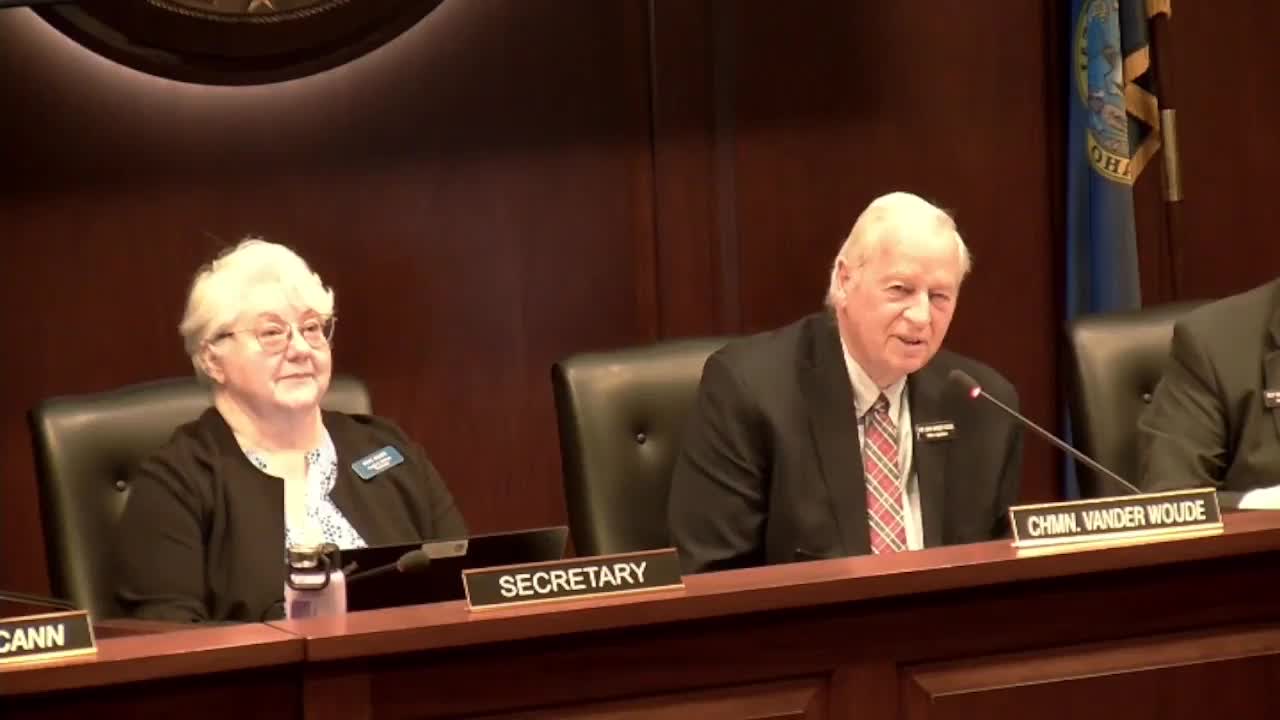
After roughly an hour of testimony, Representative Redmond moved to send House Bill 134 to the floor with a due‑pass recommendation. The motion carried; the committee recorded two nays but did not record an itemized roll‑call in the hearing transcript. The committee chair set the bill for floor consideration.
Votes at a glance: Motion to send House Bill 134 to the floor with a due‑pass recommendation — Motion by Representative Redmond; second not specified in transcript; outcome: approved (motion carries; two nays recorded; individual yes/no votes not specified in the transcript).
The bill’s text would not change Medicaid or self‑insured plans and applies to private plans regulated by the state. Sponsors and witnesses described the policy as a targeted change intended to align coverage for clinically indicated supplemental imaging with existing preventive mammography benefits. Supporters told the committee that roughly one‑third of Idaho women ages 50–74 are not up to date on breast‑cancer screening and that Idaho ranks near the bottom among states for screening rates; testimony also cited an average Idaho out‑of‑pocket share for breast diagnostic testing of about 43.7%, a high figure among states.
Representative Green and Representative Healy closed by asking colleagues to prioritize the legislation so high‑risk patients can access recommended imaging without facing large out‑of‑pocket bills. The bill moves next to the House floor for further debate and a vote.
(Reporting in this article is based exclusively on testimony and statements in the House Health and Welfare Committee hearing on House Bill 134.)