Get Full Government Meeting Transcripts, Videos, & Alerts Forever!
Get email alerts on the Child Welfare Funding And Reform topic
No spam. Unsubscribe anytime.
Health and Welfare outlines push to hire prevention specialists, expand foster supports and curb congregate care costs
Summary
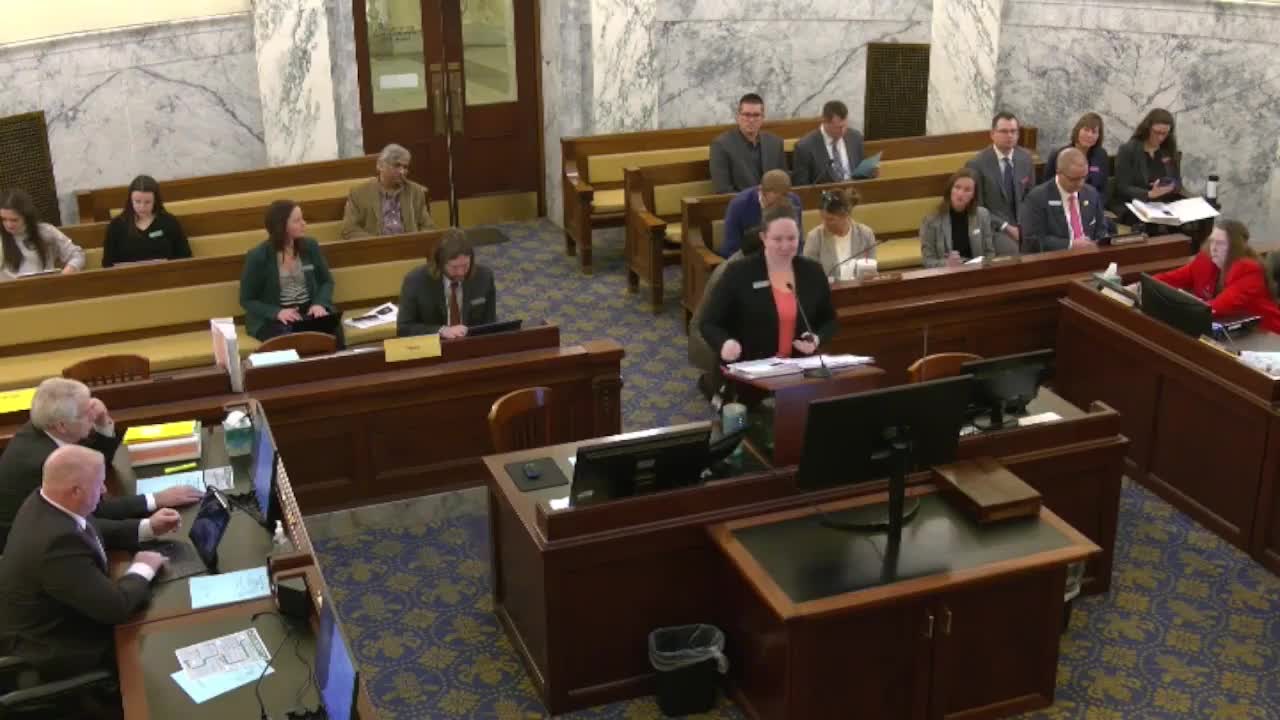
The Joint Finance and Appropriations Committee heard Thursday that the Department of Health and Welfare is proposing a set of staffing and program changes aimed at keeping more children safely in their homes, expanding the pool of foster parents and reducing placements in expensive congregate‑care settings.
The Joint Finance and Appropriations Committee heard Thursday that the Department of Health and Welfare is proposing a set of staffing and program changes aimed at keeping more children safely in their homes, expanding the pool of foster parents and reducing placements in expensive congregate-care settings.
Alex Williamson, budget and policy analyst with Legislative Services, told the committee the division now titled Youth Safety and Permanency (formerly child welfare) is authorized 434.8 full‑time positions and had 45.8 vacancies as of Feb. 10; “out of those vacancies, about 25 of those are currently in the interview process. Another 9 are posted,” Williamson said. She told lawmakers child welfare expended about $117.8 million in fiscal 2024, with roughly 60% of that going to foster care and assistance payments and the remainder to clinicians and caseworkers.
The department’s request for fiscal 2026 includes a package of new positions and one-time funding, focused on prevention work, clinical supports for foster caregivers, licensing capacity and operational support. Key elements presented to the committee include:
- A request for 36 prevention specialist family-service worker positions intended to “strengthen families and prevent the removal of children when they can safely remain in their home.” Williamson said the agency currently has 14 prevention specialists statewide who carry both prevention and foster-care caseloads; adding 36 would bring the total to 50.
- A request for additional youth safety and permanency staff (agency requested 12 positions; the governor recommended 9) to include clinicians who would provide needs assessments for children entering or projected to enter high levels of care, and staff to conduct family searches to locate kin placements.
- Foster program clinical staff (agency requested 15, governor recommended 10) to provide intensive support to foster families taking children with high emotional, behavioral or mental‑health needs. The proposal would also fund a 24/7 support line for foster parents and a proposed average monthly foster maintenance-rate increase of about 5%.
- A request for 14 foster-program licensing staff to speed licensing of prospective foster parents and kinship caregivers; the agency reported it takes about 80 days on average for prospective foster parents to become licensed, and that the 19 licensing staff at the time of the request averaged 59 foster families each.
- Case-management support to lower caseloads for workers assigned to children the court has ordered removed from the home; the division currently has 67 case-management workers with an average caseload of 32 youth and a goal to reduce that to about 26.
Director Alex Adams told members the budget items are designed to deliver “right kid, right place, right time” services and to flip the system toward more prevention and foster placements. Adams described three cost tiers for care: “If I keep a kid in their home, in a prevention case, it’s a dollar 80 a day. If a child is removed from their home and placed in foster care, it’s $16 a day. If I don’t have a foster bed available to them, congregate care is $380 a day.” He added that since the pandemic, states have fewer congregate-care beds and face a “seller’s market” for out‑of‑state placements, sometimes with per‑child prices quoted as high as $1,400 per day.
Deputy Director Monty Pro described prevention workers’ typical practice as weekly face‑to‑face visits to strengthen protective factors, create individualized treatment plans and broker services such as counseling or substance‑use treatment. “It’s once a week for our prevention workers,” Pro said. “Day 1, if a court approves a prevention case, what you’re gonna see is an assessment… Based upon those assessment results, you end up with a treatment plan for that family, reviewed by the court.”
Adams and other witnesses tied the request to a mix of drivers identified by the agency: rising mental‑health and substance‑use needs among youth, a shortage of foster parents able to take children with complex needs, and higher costs for specialized congregate care. The department also asked the committee to lift transfer restrictions in last year’s maintenance bill so child‑welfare personnel funds and trustee/benefit payments could be moved between expense classes under Idaho Code 67‑35‑11, language that both the agency and the governor’s office have recommended be exempted for the division.
Lawmakers asked about implementation and past results. Adams noted gains in foster capacity since he began as director: “When I started, we had 74 foster beds for every 100 kids coming into the system. Today, we’re at 94.” Committee members asked about recruitment strategies, including faith‑based outreach; Adams described an Office of Faith‑Based Initiatives and events aimed at faith communities, and a target of 150 foster families for every 100 children as a long‑term goal to create placement array and reduce placement instability.
Ms. Williamson also told the panel the department requested a fiscal‑year‑2025 supplemental of $14,100,000 for foster‑care population forecast adjustments, driven largely by congregate‑care cost increases; the governor recommended a version of that supplemental. The department said some of these costs had been handled in recent years through program transfers and prior supplementals.
Committee discussion emphasized the entitlement nature of child‑welfare placements (courts commit children to the department’s custody) and the timing risk of supplementals: if the legislature underfunds forecasted need, the agency may request a supplemental later in the year; if the agency over‑projects, money may revert to the general fund.
The department asked the committee to approve the requested positions and one‑time funding to accelerate the strategy of more prevention, more foster placements and fewer congregate placements; no formal vote occurred during the presentation.
Looking ahead, the department said it would prioritize filling vacancies (Williamson noted 25 of the 45.8 child‑welfare vacancies were in interview and nine were posted) and begin hiring after legislative authorization so newly added positions can be filled before July 1 to begin the work this summer.