Get Full Government Meeting Transcripts, Videos, & Alerts Forever!
Committee approves House Bill 243 to change daycare licensing; opponents warn of safety risks
Summary
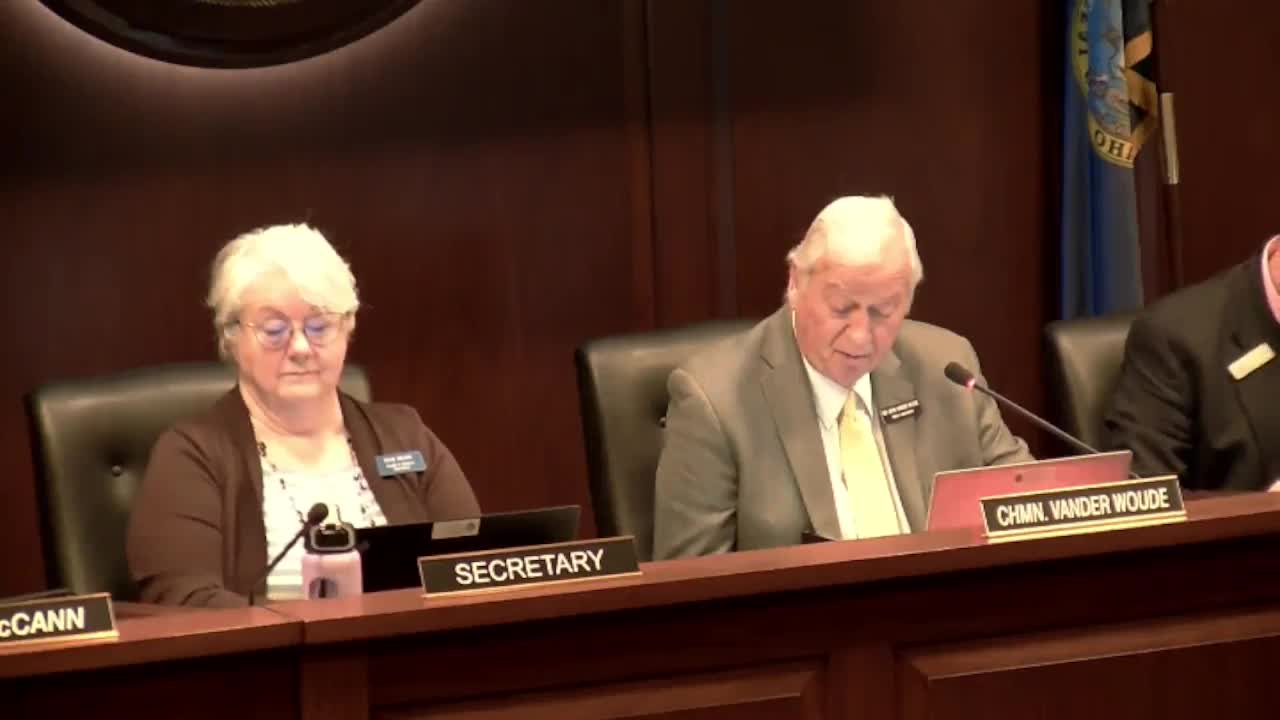
The Idaho House Health and Welfare Committee voted to send House Bill 243, a measure that would standardize daycare licensing statewide and remove a locally enforceable numeric ratio system, to the House floor with a due-pass recommendation after a roll-call vote of 11–4.
The Idaho House Health and Welfare Committee voted to send House Bill 243, a measure that would change statewide daycare licensing rules and remove a locally enforceable point-based staff-to-child ratio system, to the House floor with a due-pass recommendation after a roll-call vote concluding 11–4.
The bill’s sponsors told the committee the measure is intended to create one consistent statewide framework for daycare licensing, reduce duplicative local requirements and lower barriers for in-home and small providers to enter the market. Representative Rob Furnas (R–District 31) said the measure “helps provide the Idaho way by reducing onerous regulations and helping parents and students find affordable daycare.” Representative Josh Wheeler (R–District 35), who introduced an earlier related RS about video remote interpreters, said during closing remarks he had come to the discussion “believing that we're headed the right direction to sort of standardize this across the state.”
Supporters said the bill removes specific numeric ratios from statute and instead requires providers to adopt written ratio policies that must ensure "health, safety, and welfare" and be made available to parents. The bill also repeals Idaho Code section allowing municipalities to impose more stringent childcare licensing than the state (identified in testimony as a preemption provision) and moves some rule language into statute while directing the Department of Health and Welfare to begin a rulemaking process this summer to set standards that will apply for federal subsidy compliance.
Opponents — including childcare advocates, educators and the City of Boise — argued the changes would weaken safety protections. Christine Tibbetts, executive director of Idaho Voices for Children, told the committee,…
Already have an account? Log in
Subscribe to keep reading
Unlock the rest of this article — and every article on Citizen Portal.
- Unlimited articles
- AI-powered breakdowns of topics, speakers, decisions, and budgets
- Instant alerts when your location has a new meeting
- Follow topics and more locations
- 1,000 AI Insights / month, plus AI Chat