Get Full Government Meeting Transcripts, Videos, & Alerts Forever!
Get email alerts on the Childcare Licensing topic
No spam. Unsubscribe anytime.
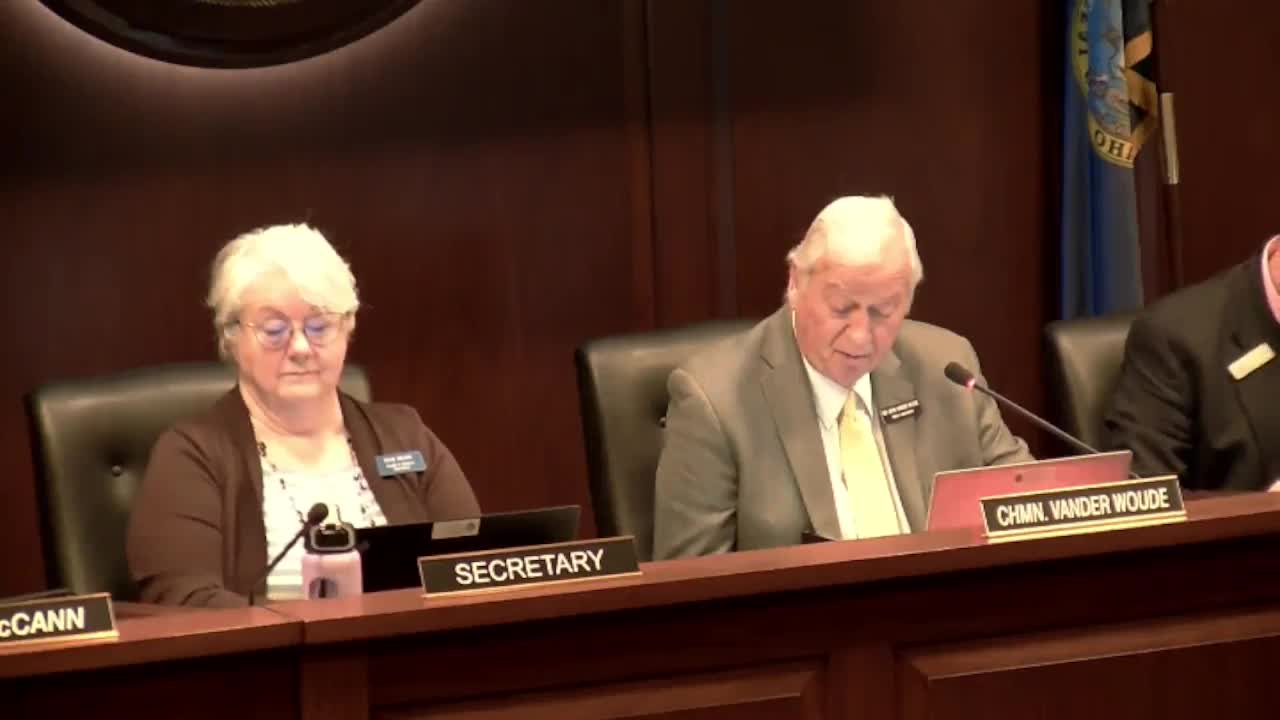
Committee approves House Bill 243 to change daycare licensing; opponents warn of safety risks
Summary
The Idaho House Health and Welfare Committee voted to send House Bill 243, a measure that would standardize daycare licensing statewide and remove a locally enforceable numeric ratio system, to the House floor with a due-pass recommendation after a roll-call vote of 11–4.
The Idaho House Health and Welfare Committee voted to send House Bill 243, a measure that would change statewide daycare licensing rules and remove a locally enforceable point-based staff-to-child ratio system, to the House floor with a due-pass recommendation after a roll-call vote concluding 11–4.
The bill’s sponsors told the committee the measure is intended to create one consistent statewide framework for daycare licensing, reduce duplicative local requirements and lower barriers for in-home and small providers to enter the market. Representative Rob Furnas (R–District 31) said the measure “helps provide the Idaho way by reducing onerous regulations and helping parents and students find affordable daycare.” Representative Josh Wheeler (R–District 35), who introduced an earlier related RS about video remote interpreters, said during closing remarks he had come to the discussion “believing that we're headed the right direction to sort of standardize this across the state.”
Supporters said the bill removes specific numeric ratios from statute and instead requires providers to adopt written ratio policies that must ensure "health, safety, and welfare" and be made available to parents. The bill also repeals Idaho Code section allowing municipalities to impose more stringent childcare licensing than the state (identified in testimony as a preemption provision) and moves some rule language into statute while directing the Department of Health and Welfare to begin a rulemaking process this summer to set standards that will apply for federal subsidy compliance.
Opponents — including childcare advocates, educators and the City of Boise — argued the changes would weaken safety protections. Christine Tibbetts, executive director of Idaho Voices for Children, told the committee, “House Bill 2 43 falls short of this intent at the expense of children's safety,” and warned that removing statutory ratios and loosening supervision language could increase injuries and deaths if flexible ratios become routine.
Childcare providers and parents who testified on both sides described a shortage of licensed seats and high operating costs. Justin Snyder, an early childhood care and education center owner in Boise, said, “I don't wanna break from licensing standards. How often do you get small business owners up here asking you to regulate them more?” He urged the committee to pursue higher reimbursement rates and expanded eligibility for state child-care subsidy programs instead of removing standards.
City of Boise officials also opposed the bill, saying local licensing provides customer service and quick enforcement for parents. Kathy Grismeyer, director of policy and government affairs for the City of Boise, told the committee the city currently licenses roughly 200 facilities and about 2,000 licensed childcare workers and carries out inspections and background-check processing. Grismeyer said she had concerns about how the workload and complaint response would transition to the state and questioned the bill’s fiscal assumptions.
Proponents — including the Idaho Freedom Foundation’s Nicholas Kleinworth — framed the bill as a deregulatory measure to expand capacity. Kleinworth cited an estimate that Idaho’s childcare seat shortage approaches 21,000 and argued the state’s prior subsidies and funding changes had not resolved access or affordability problems.
Several witnesses recommended alternatives: targeted incentives for providers, employer-supported childcare, tax or grant programs to expand facility capacity, and coordinated stakeholder rulemaking rather than immediate statutory deregulation.
What the bill would change
- Remove the statutory point/ratio system from state code and require providers to adopt and follow a written policy tying staff-to-child ratios to health, safety and welfare; providers that accept federal subsidy money would still be subject to federal-number requirements once set via rulemaking. - Repeal the Idaho code provision allowing municipalities to impose more stringent childcare licensing than the state (preemption of local ordinances for childcare licensing). - Preserve existing background-check requirements while clarifying application timelines and the department’s authority to accept completed applications and contract for inspections with local public health districts. - Remove the misdemeanor for failing to post a license while retaining the misdemeanor for operating without a license.
Public testimony and concerns
Opponents repeatedly raised safety and oversight concerns: critics said removing numeric ratios from statute risks "warehousing" children in understaffed settings, could undermine training and transportation safety standards discussed in testimony, and would reduce local governments’ ability to respond quickly to complaints or to set local standards that reflect community concerns.
Proponents said many local rules are duplicative, increase costs and have discouraged small home-based providers from opening or continuing. Representative Tanya Bergoyne (R–District 29) said the bill moves “things from local rule into statute” to create one consistent framework and that most Idaho cities do not use local licensing schemes.
Committee action and next steps
Representative Redmond moved to send House Bill 243 to the floor with a due-pass recommendation. The committee recorded a roll call with the following outcome: 11 in favor and 4 opposed. Members recorded as voting yes included Chairman Vandewater, Vice Chairman Erickson, Representatives Healy, Redmond, Beissinger, Bergoyne, Kahler, Furman, Leavitt, Raisor and Thompson. Members recorded as voting no were Representatives Wheeler, McCann, Rubel and Egbert.
The committee sent the bill to the House floor; the measure will next be scheduled for floor debate where additional amendments and votes could be offered.
Votes at a glance
- RS 32,416 (video remote interpreting providers): Motion to introduce carried on voice vote after Representative Wheeler introduced the RS. Motion to introduce moved by Representative Rubel; result: introduced (voice vote).
- RS 32,381 (daycare licensing-related statutory cleanups): Motion to introduce carried on voice vote after Representative Tanya Bergoyne introduced the RS. Motion to introduce moved by Representative Redmond; result: introduced (voice vote).
- House Bill 243 (daycare licensing, statewide framework, preemption, ratio changes): Motion to send to the House floor with a due-pass recommendation moved by Representative Redmond; roll-call result 11–4 in favor. Outcome: forwarded to floor with due pass recommendation.
Sources and evidence
The article is based on live testimony and committee discussion at the Idaho House Health and Welfare Committee meeting where sponsors, Department stakeholders and more than a dozen members of the public testified. Key verbatim statements used above are drawn from committee remarks and public testimony recorded in the hearing transcript. The committee directed a rulemaking process this summer to develop numeric standards for federal-subsidy participants; the statute change itself removes numeric ratios from code and replaces them with a provider-policy requirement.