Get Full Government Meeting Transcripts, Videos, & Alerts Forever!
Get email alerts on the Bsu Budget Lawsuit Values Institute topic
No spam. Unsubscribe anytime.
Boise State presents budget and student-success initiatives; president says university used non‑taxpayer funds to defend lawsuit
Summary
Boise State President Marlene Tromp told JFAC on Jan. 29 that the university has improved graduation rates and runs a responsibility-centered budgeting model; she said Boise State used non-state funds and has spent about $1.5 million defending a lawsuit referenced in questioning.
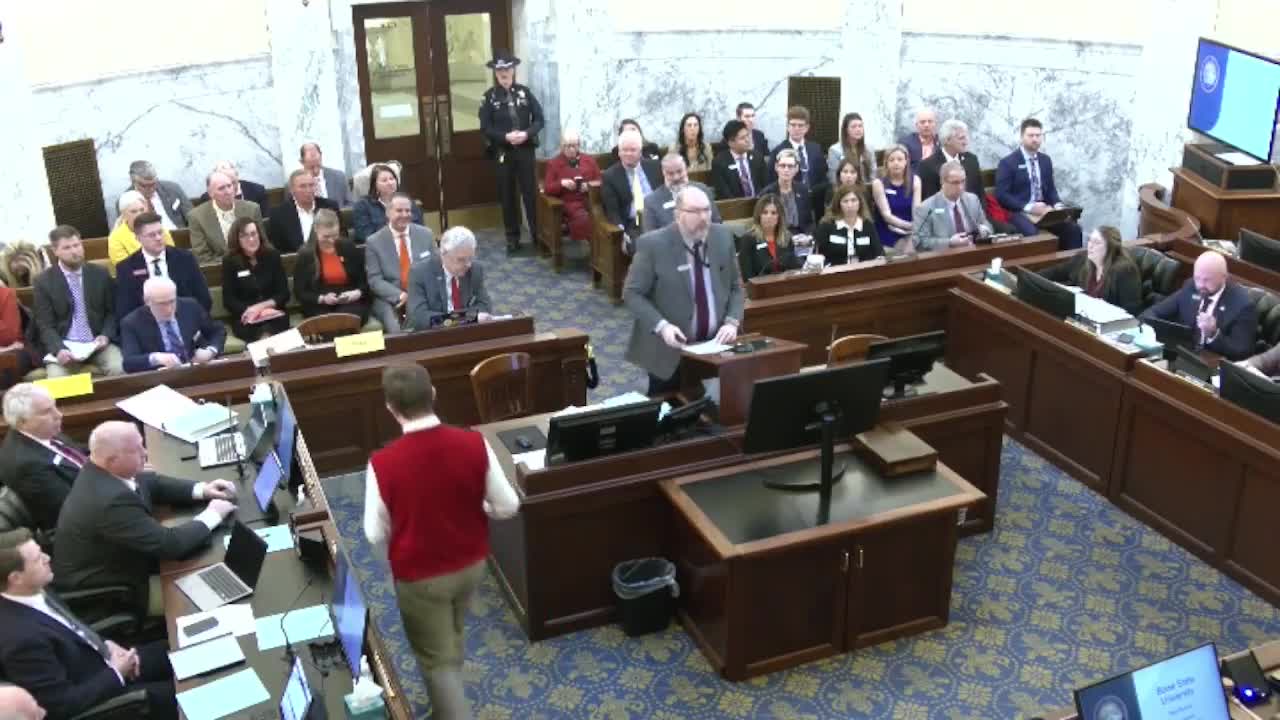
Boise State University President Marlene Tromp and Legislative Services Office analyst Kevin Campbell presented BSU’s FY2026 budget overview to the Joint Finance-Appropriations Committee on Jan. 29. Tromp highlighted student‑success gains, the university’s responsibility-centered budget model, and campus programs intended to broaden civil dialogue.
Key budget and performance details Campbell reported Boise State has more than 27,000 students and approximately 1,980.9 FTE staff. He said personnel costs represent 81.8% of the university’s expenditures, operating costs 16.5%, and capital 1.7%. Tromp said Boise State operates a responsibility-centered management model that makes academic units accountable for their revenue and expenditures; she added the university has a balanced budget and a declining administrative spend per student.
Institute for Advancing American Values and campus climate Tromp described the Institute for Advancing American Values as a campus initiative to expand exposure to a range of viewpoints and cited the adoption of the Chicago principles by faculty senate and student government. She said related programs such as “Idaho Listens” bring diverse groups together for facilitated dialogue around contested topics.
Lawsuit defense funding Asked about the cost of defending a lawsuit (referred to in committee questioning), Tromp said Boise State used only non‑taxpayer funds to pay legal costs and that the university had spent about $1,500,000 to date. She told the committee she did not expect the pending appeal to add a “significant amount” to that total and said employees who appeared at trial did so while acting within general‑counsel responsibilities or by using personal time.
DEI and curriculum questions Committee members asked about centers and staff formerly associated with DEI programs. Tromp said the university previously had eight staff and various centers and has transformed that work toward student success; she said she believes the university’s graduation rate has increased approximately 39% over five years as a result of refocusing on student success. Tromp said the university does not require a “gender” class; students choose sections of required UF 100/200 courses and may select subject matter according to interest.
Why it matters The presentation combined fiscal detail for appropriation consideration with governance and curriculum discussion that state lawmakers pressed on during questioning. Committee members asked Tromp for a written assurance that courses comply with Idaho Code sections addressing nondiscrimination and funding restrictions.
Ending Tromp closed by reiterating Boise State’s role in workforce development, citing tuition levels and student loan outcomes, and offering to provide requested financial detail on legal costs and other items to the committee in writing.