Get Full Government Meeting Transcripts, Videos, & Alerts Forever!
Get email alerts on the Vocational Rehabilitation topic
No spam. Unsubscribe anytime.
Federal audit flags and $10M federal allotment leave Idaho vocational rehabilitation facing state match, contractor costs and forensic review
Summary
Legislative auditors found control weaknesses at Idaho Division of Vocational Rehabilitation; governor recognized a $10 million federal reallotment requiring state match; agency seeks $2.7M general-fund match and has contracted consultants costing about $2.4M, prompting oversight questions.
The Idaho Division of Vocational Rehabilitation (IDVR) was designated a high-risk federal grantee after legislative auditors found the division ‘‘did not establish procedures and control activities to ensure compliance with appropriation laws applicable to fiscal year 2024,’’ and the federal Rehabilitation Services Administration (RSA) reallocated $10 million to Idaho this fall, a sum the state must match to spend.
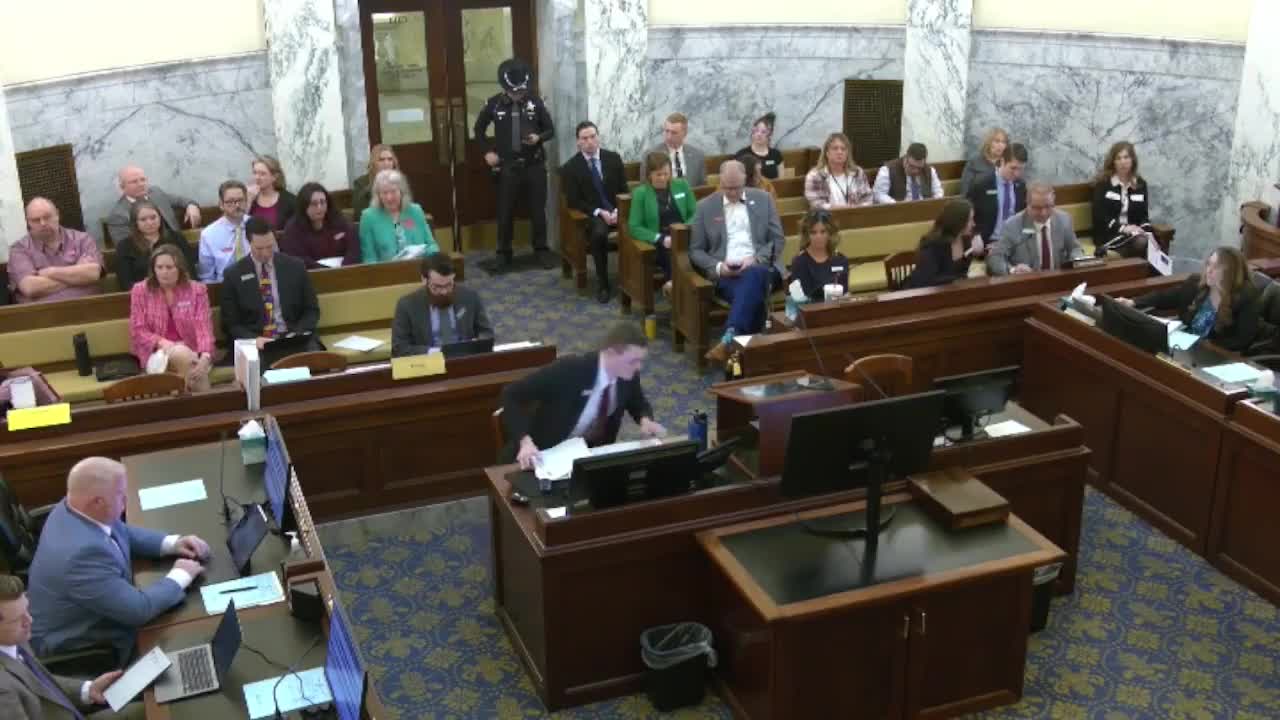
Auditors from the Legislative Services Office told the Joint Finance-Appropriations Committee on Feb. 24 that weaknesses in commitment accounting, late billing and case-management reporting left the division with obligations exceeding its appropriations at the end of FY2024 and that federal reporting in some quarters was ‘‘inaccurate and unsupported.’’ April Renfro, the LSO auditor who led the review, said RSA designated IDVR ‘‘as a high risk grantee’’ and required corrective actions and additional oversight.
Why this matters: The federal reallotment increases available federal funds only if Idaho provides the required state-match dollars and resolves control and reporting deficiencies. Lawmakers pressed officials on the financial exposure if federal partners disallow previously billed expenses.
Brooke Dupree, a Legislative Services budget analyst, explained the governor’s noncognizable adjustment: ‘‘The money came from the Rehabilitation Services Administration…when it’s getting close to the end of the federal fiscal year they look at all the grants that they’ve given to states and they see who isn’t going to spend their full grant and that money comes back and gets reallocated to states that they do expect to be able to spend that grant.’’ The governor recognized $10 million in federal funds to IDVR through that process.
IDVR requested $2.7 million in one-time state general funds as the required state match for the $10 million; the governor’s recommendation included that $2.7 million and an additional $1.7 million one-time recommendation to cover services the agency expects its federal partners might deem ineligible. Dupree told the committee those two amounts would be the decision points for the legislature and that together they could raise trustee-and-benefit payments for FY2025 to about $25.3 million.
Legislative auditors and agency staff described how the federal grant system complicates accounting: RSA grants run on a federal fiscal year cycle and states may have multiple overlapping grants and closeout periods; individual plans for employment (IPEs) can span grant years, and delays in billing can cause costs to be charged to the wrong grant year. Renfro said those timing and system mismatches were a significant factor in the FY2024 problems.
The division’s leadership reported operational impacts. Interim Director Judy Taylor said IDVR had approximately 2,735 active clients and 1,950 qualified Idahoans on a waiting list as of the committee hearing. She said the agency briefly considered and sought measures to avoid defaulting on obligations in September 2024 and that without the reallotment ‘‘we would have been defaulting on our bills and by December we wouldn't have been able to meet payroll.’’ She said the governor’s noncognizable adjustment averted that outcome.
Disallowed claims and Pre-ETS: The committee heard that IDVR’s pre-employment transition services (Pre-ETS) program — services for students transitioning from school to work under WIOA — produced a high rate of rejected federal reimbursements on an early draw request. Taylor said a draw request produced about $0.25 reimbursed for each dollar billed (a 75% shortfall) on Pre-ETS activity submitted for reimbursement, prompting a projected $1.7 million estimate for potentially unallowable charges for FY2025. Renfro noted the contractor’s February update showed a separate review sample with about a 20% disallowance or ‘‘disproved’’ rate for certain plan reviews.
Contracting and oversight: IDVR contracted a national consultant to help correct reporting, control and case-management issues. The initial professional services contract was about $499,999 and was later amended in November to add roughly $1.9 million, bringing the contract total to about $2.4 million and extending work through December 2025. Renfro said roughly $900,000 had been paid to the contractor to date and that all contractor payments had been charged to federal funds (which will require state match). She said the Legislative Services audit questioned whether the rapid use of noncompetitive exemptions to purchasing provided best value, given the division’s already strained finances.
Renfro summarized potential federal enforcement options: RSA can impose ‘‘specific conditions’’ on current awards (which it already did), require more detailed reporting, increase monitoring, or in some cases seek repayment for costs the federal agency determines harmed a federal interest; RSA may also reduce future funding or require a payment plan. The LSO audit also recommended the division implement procedures to monitor IPE commitments, strengthen financial controls and work with the legislature on long-term funding choices.
Committee members pressed for timelines and scale. Renfro said a forensic audit and the state single-audit work could identify question costs and that RSA will decide remedies after reviewing corrected reports and forensic findings. Taylor said a forensic audit will look back to 2019, consistent with federal maintenance-of-effort and period-of‑performance concerns. Committee members asked whether the $2.4 million consulting spend represented adequate return on investment; Taylor said the contractor team brought deep, specialized experience, that RSA encouraged the model the state had chosen, and that bringing control and reporting functions back in-house would be an explicit exit objective.
Next steps: The committee asked agency staff to provide follow-up detail on the state-match calculations, a timeline for the forensic work, the scope of the contractor engagement and the agency’s corrective-action milestones. Auditors indicated more oversight hearings may be needed as forensic and single-audit work progress.