Get Full Government Meeting Transcripts, Videos, & Alerts Forever!
Get email alerts on the Capital Projects Permanent Building Fund topic
No spam. Unsubscribe anytime.
Permanent Building Fund hearing focuses on $122.9M FY2026 capital recommendation and deferred-maintenance pipeline
Summary
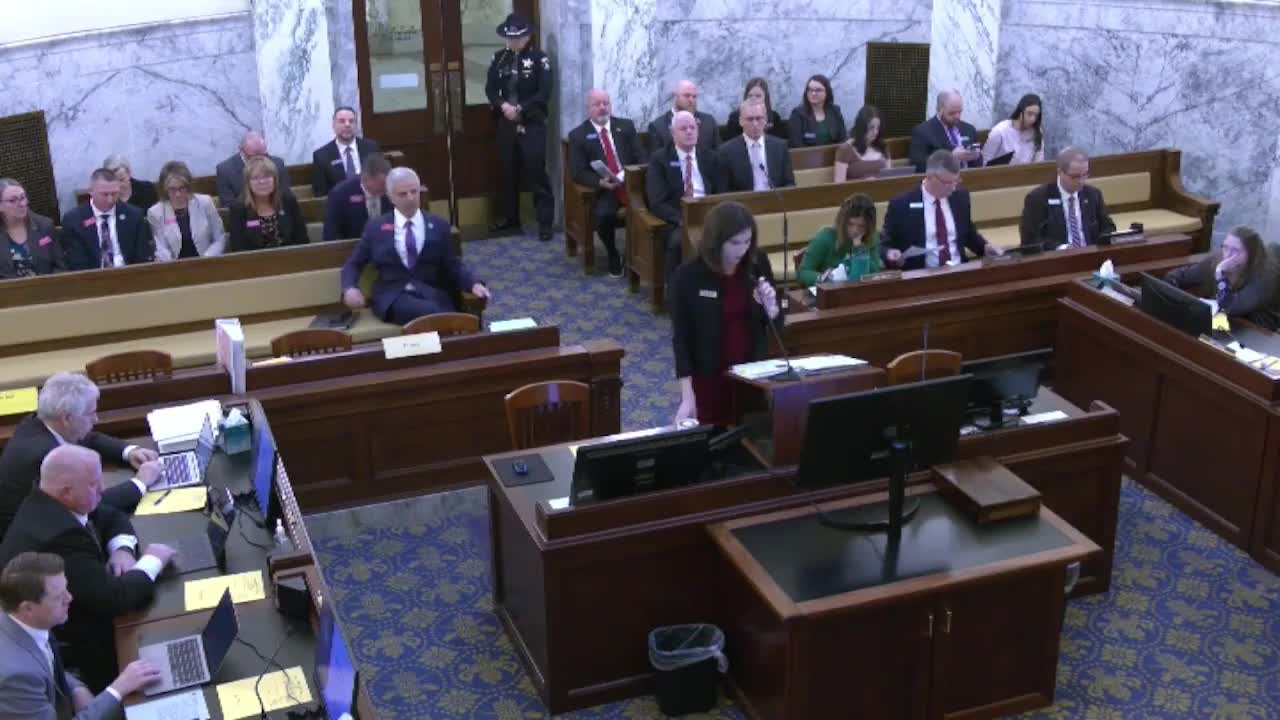
Legislative Services briefed the Joint Finance-Appropriations Committee on Feb. 17, 2025 about the Permanent Building Fund’s structure, revenue sources and the division of active capital projects.
Legislative Services briefed the Joint Finance-Appropriations Committee on Feb. 17, 2025 about the Permanent Building Fund’s structure, revenue sources and the division of active capital projects, then answered members’ questions about timelines and project prioritization.
Analyst Frances Lippett told the committee the fund is structured for multi‑year capital work and that many appropriations become continuously appropriated under Idaho Code section 57-1105, meaning unexpended balances on projects carry forward. She said the total value of active public works projects is about $1.9 billion, with $1.4 billion for capital projects and roughly 42% of capital funding already committed.
Why it matters: the Permanent Building Fund finances state construction and large maintenance projects for state agencies and higher education; multi‑year commitments and how the legislature chooses to appropriate or repurpose funds affect the timing and completion of projects statewide.
FY2026 capital and maintenance recommendations discussed
- Total recommendation: $122,861,900 for public works by the Division of Public Works, consisting of six capital projects, restoration of repurposed appropriations and $68,208,800 for alterations and repairs and maintenance projects. - Selected capital project requests reviewed by the committee included: - $6,500,000 to expand the Department of Lands Ponderosa office (to add restrooms/showers and improve reception security). - $5,560,000 for utility connections to a future readiness center in Bonneville County to support a readiness center slated for 2029 (federal construction for Idaho National Guard requires utilities on site prior to construction). - $5,525,000 for Idaho State Police District 2 (Lewiston) — the legislature previously appropriated $9,975,000 to retrofit an existing building; after attempts to purchase failed the agency returned with a request to include land purchase and new construction costs. - $2,500,000 to add laboratory space at the Micron Center for Materials Research at Boise State (to finish shelled space and add 1–3 additional labs). - $14,000,000 toward an estimated $127,770,000 life sciences complex at Idaho State University (ISU); ISU proposes $35,770,000 in agency funds and approximately $78,000,000 in bonding for the remainder. - $8,000,000 for a joint military science and veterans assistance center at the University of Idaho. - The recommendation also includes $12,500,000 to restore an appropriation that had been repurposed in FY2025 (it had been used for a minimum-security dorm at Orofino Prison and to expand physician assistant facilities at ISU). - The $68.2 million in alteration and repair / maintenance projects includes funding for accessibility projects and facilities maintenance for the Capitol Mall and Chinden Campus.
Funding sources and mechanics
Lippett summarized the fund’s statutory revenue streams: a $10 fee on each income tax filing, fixed transfers from sales and cigarette taxes, a share of beer tax proceeds, a share of lottery earnings, interest, and other sources. She said recent direct investments from the general fund increased the fund’s balance and interest earnings after the legislature invested roughly $1.1 billion to support capital projects and deferred maintenance.
Project timing, procurement and completion
Division of Public Works Administrator Dale Reynolds, introduced to the committee for project questions, said timelines vary by project type and delivery method. He said the typical multi‑year project often takes about two to four years from appropriation to completion; complex construction (for example, prisons) can take longer. Reynolds said the division currently has over 500 active projects totaling about $1.9 billion in value. For current vacancies on Chinden Campus and occupancy details he confirmed earlier Department of Administration figures (about 7% vacancy on rentable square feet at Chinden, three buildings occupied by a private tenant under a lease through 2029).
Committee concerns and follow-ups
Members asked about deferred‑maintenance definitions and about projects that had been inactive for multiple years. Co‑chair Herrmann reminded the committee that language was added to last year’s budget to make some appropriations eligible for re‑appropriation if no shovel hits the ground within four years; Lippett agreed to provide a list of projects that had not advanced within the four‑year window. Senators and representatives also pressed DPW staff on priorities given construction cost escalation, labor shortages and supply issues; Reynolds said cost escalation has moderated in some areas but availability of materials and labor remains a constraint and that some projects already under contract cannot be paused without cost consequences.
Ending
The division’s November capital budget report (the committee was told) is available on SharePoint and contains individual project status, authorized/committed amounts and remaining balances. Committee members asked DPW staff to provide the requested lists and further timetables for projects that have stalled beyond the committee’s policy time limits.