Get Full Government Meeting Transcripts, Videos, & Alerts Forever!
Get email alerts on the North Idaho College Capacity Accreditation topic
No spam. Unsubscribe anytime.
North Idaho College reports 15% growth, warns EWA cut and accreditation history complicate hiring
Summary
North Idaho College told JFAC it has reversed a long enrollment decline and posted about 15% growth, but a trailing enrollment workload adjustment (EWA) will reduce recurring funding by roughly $446,800 for FY2026, complicating faculty hiring and program expansion.
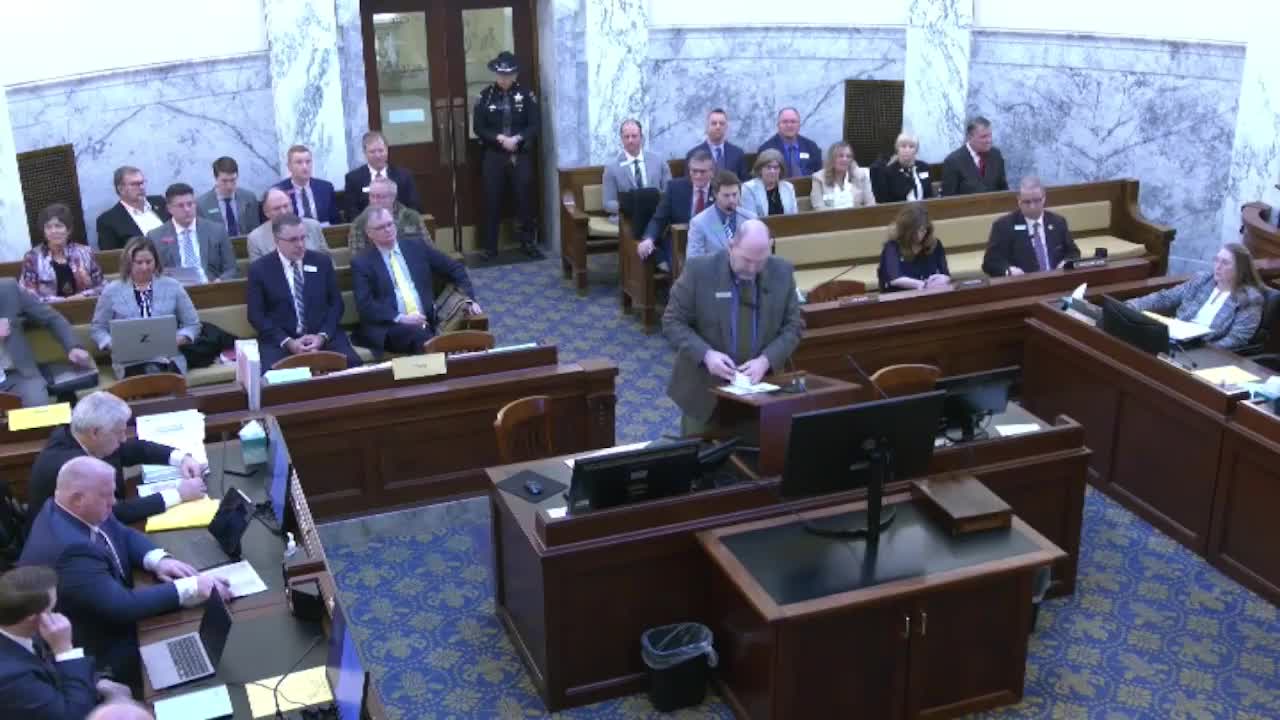
North Idaho College President Dr. Nick Swayne told the Joint Finance Corporation Committee that the college achieved double-digit enrollment gains but faces a trailing formula that produced an ongoing EWA reduction for FY2026 of about $446,800, a cut he called "a big bite" while the college is expanding enrollment.
Kevin Campbell, the Legislative Services Office analyst, summarized the college's five-year appropriations history and the EWA treatment that produced negative adjustments in recent years. Campbell told the committee that NIC's FY2026 numbers in the budget book show an ongoing EWA reduction of $446,800.
Why it matters: NIC leaders said the college's enrollment turnaround is straining instructional capacity in health-care programs, welding, and public-safety training and that the EWA formula's lagging three-year average penalizes institutions that are recovering enrollment quickly. NIC asked JFAC to consider holding the college harmless for EWA effects while capacity-building funds are deployed.
Swayne said fall 2024 enrollment rose about 15.5% and the college recorded another roughly 15% increase in the spring, adding 571 new students on campus in the spring alone. He described growth across categories: "about 5% in our traditional transfer programs, about 40% in dual credit, about 30% in our CTE program," and said the EWA reduction is painful because it is applied against ongoing costs.
Swayne and committee members discussed specific capacity bottlenecks. NIC seeks positions in nursing to grow first-year nursing cohorts from 40 to 60 students per semester (a roughly 50% increase) but cited external accreditation and clinical supervision ratios (commonly 10:1) that require more faculty and clinical supervisors. The college also identified welding demand that often leads employers to hire students after the first year, diminishing second-year retention, and a rising cybersecurity budget as NIC invests to defend institutional data after prior incidents.
Swayne discussed staff recruitment and retention. He said NIC was placed on show cause in February 2023 but "as of last night, we are officially off show cause and ... under probation." He said the accreditation episode and the region's high cost of living make recruitment difficult, noting neighboring Spokane institutions can recruit NIC employees without relocation.
On funding strategy, Swayne said the governor's capacity funds would be used primarily to add faculty positions (he estimated roughly $100,000 per faculty position including salary and benefits) rather than new buildings; NIC believes it has some facility capacity to return to earlier enrollment levels but needs faculty, clinical placements and operational supports. The college also described an arrangement for out-of-district students whereby counties outside Kootenai pay a portion of tuition through a county reimbursement process.
No formal votes were taken. Swayne asked the committee to consider support for the governor's initiative, relief from immediate EWA cuts while enrollment recovers and targeted funding for nursing, welding and cybersecurity.