Get Full Government Meeting Transcripts, Videos, & Alerts Forever!
Get email alerts on the Behavioral Health topic
No spam. Unsubscribe anytime.
JFAC approves several behavioral-health supplemental and FY2026 items, adds federal carryovers and transfer exemptions
Summary
The Joint Finance-Appropriations Committee approved multiple supplemental and FY2026 appropriations for behavioral-health programs, including federal grant carryovers for the Idaho Behavioral Health Plan, civil commitment costs, and language allowing limited transfer exemptions inside the Department of Health and Welfare.
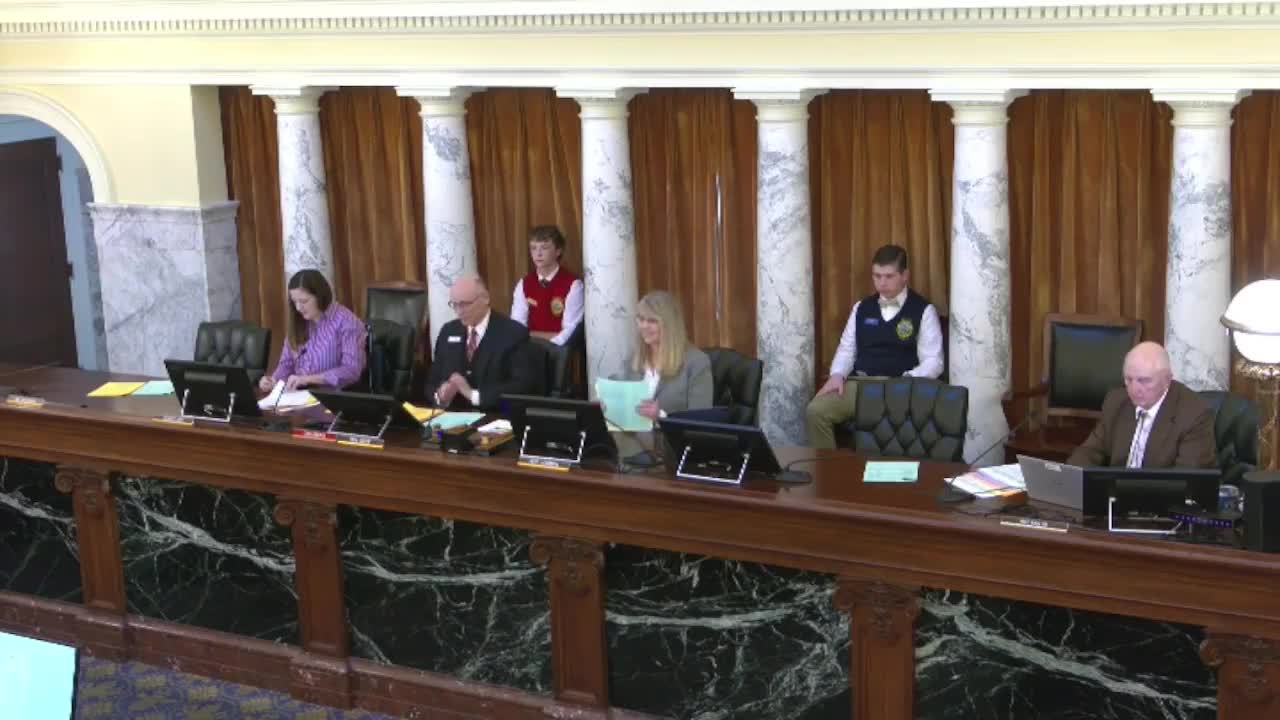
The Joint Finance-Appropriations Committee on Friday approved a package of supplemental and fiscal year 2026 budget actions for behavioral-health programs in the Department of Health and Welfare, including federal grant carryovers and language that exempts certain mental-health appropriations from the department's usual transfer limits.
The committee voted to appropriate $6,743,800 in federal Cooperative Welfare funds for contract implementation related to the Idaho Behavioral Health Plan (IBHP) and approved multiple supplemental requests to cover civil-commitment and community hospitalization expenditures and fund shifts at State Hospital West and South. Members also approved language to allow the Division of Mental Health Services and the psychiatric hospitalization division limited authority to transfer certain trustee and benefit payments and personnel costs in accordance with Idaho Code —7-35-11.
Committee staff told members the IBHP funds were previously awarded but had expired administratively because of go-live delays; the appropriation restores spending authority so the state can use the grants. Separately, psychiatric hospitalization supplementals addressed higher than expected commitment costs and an expected reduction in federal collections at State Hospital West, shifting those amounts among federal, dedicated, and general funds to keep the state hospital budgets balanced for the current fiscal year.
Key votes in the package included: - A 15-5 vote (15 ayes, 5 nays; recorded as 8-2 in the Senate, 7-3 in the House) to add $6,743,800 from the Cooperative Welfare Federal Fund for IBHP contract implementation; the motion carried with a due-pass recommendation. - A 19-1 vote (19 ayes, 1 nay) to add $2,663,500 from the Cooperative Welfare general fund for community hospitalization/civil-commitment expenditures. - Multiple FY2026 maintenance and fund-shift motions that moved federal fund authority into dedicated receipts for State Hospital West and South (net zero budget impact in some items); those motions carried with recorded majorities.
Committee analysts said the psychiatric hospitalization fund shifts were driven in part by a new managed-care arrangement that changed how federal reimbursements are recorded, turning some prior federal receipts into dedicated receipts collected by the managed-care organization. The panel also accepted related language conditioning federal funds and requiring reports if federal funding is reduced or eliminated.
"There were funds that were granted to the state. Previously, three federal grants that were designed to help with the implementation of the Idaho Behavioral Health Plan... due to some delays with the go live, that appropriation for those funds expired. And so the agency is asking for the appropriation to spend those unused funds," said Alex Williamson, a budget and policy analyst with Legislative Services, describing the IBHP request.
Members asked several procedural and fiscal questions during the debate, including whether transfer-exemption language might overlap with other budget flexibility previously granted in maintenance budgets. A member raised the concern that the federal-funding restriction language could conflict with transfer language; committee leaders said they would check and correct wording if necessary.
The committee approved the behavioral-health items as separate motions and accepted appropriation and limitation language by unanimous consent in several cases. The actions will proceed with due-pass recommendations to the next steps in the budget process.
Short-term follow-ups requested by members include a departmental report on implementation of rate increases for personal caregivers to ensure funds reach direct-care workers and a clarification of how federal reimbursements are categorized under the new managed-care arrangement for community hospital services.