Get Full Government Meeting Transcripts, Videos, & Alerts Forever!
Get email alerts on the State Budget Administration topic
No spam. Unsubscribe anytime.
Idaho Department of Administration budget review highlights governor's housing, insurance and staffing requests
Summary
Legislative analysts and the Department of Administration briefed the Joint Finance-Appropriations Committee on the agency's FY2026 requests, including a contested governor's housing stipend, staffing requests for insurance and property valuation work, and ongoing costs tied to public works and the Chinden Campus.
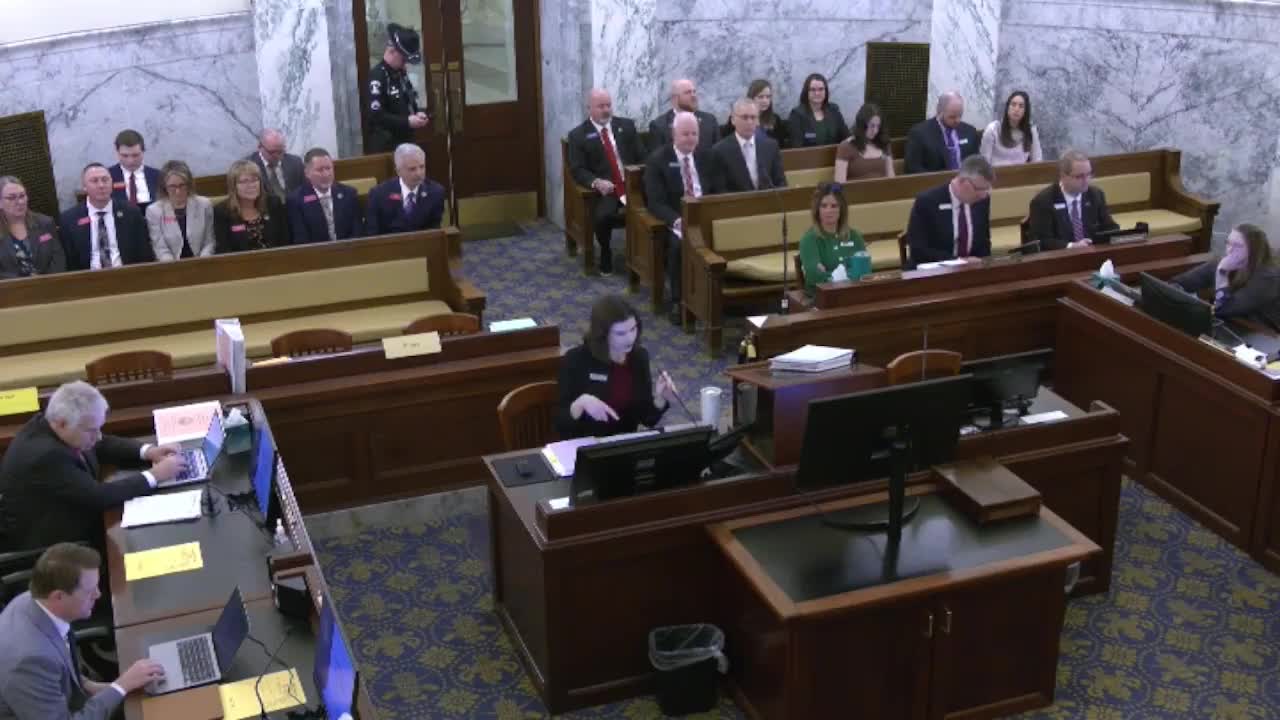
The Joint Finance-Appropriations Committee reviewed the Department of Administration’s FY2026 budget on Feb. 17, 2025, hearing from Legislative Services budget analyst Frances Lippett and Department of Administration Director Steve Bailey about program funding, staffing needs and a dwindling governor’s residence fund.
The committee was told the department’s appropriation is drawn largely from dedicated funds paid by state agencies for services; roughly 10% comes from the general fund. Lippett said the department houses five budgeted programs and maintains the Capitol Mall, Chinden Campus and other state buildings under statutory authority in chapter 57, title 67 of Idaho Code. She said the department’s dedicated fund ending free balance has ranged from about $179.4 million to $1.4 billion over the past three years as the state used direct investments to fund capital projects and deferred maintenance.
Lippett outlined multiple specific requests for FY2026 and staffing pressures. She said the department is authorized 34 full-time equivalents (FTEs) and has filled 92% of those positions over the last five years; average personnel appropriations were about $10.4 million with 92% expended on personnel.
Why it matters: the Department of Administration provides centralized services—procurement, insurance, facilities maintenance and capital project management—that affect nearly every state agency. Funding choices and staffing levels shape turnover, procurement capacity and the state’s ability to maintain buildings and process insurance claims.
Key details from the presentation
- Governor’s housing: Lippett said the Governor’s Housing Committee and the governor’s residence fund are established in statute (referenced in testimony as section 67-455 of Idaho Code). The fund provides a monthly housing stipend currently set at $4,551. Lippett said the department requested $30,000 from the general fund for FY2025 to restore the fund balance; the legislature did not fund that request. The transcript contains two different FY2026 requests attributed to the department: Lippett first said the department requested $60,600 for FY2026, and later she described a request of $660,600; the analyst said without an appropriation the fund would be fully depleted by August 2026. Director Steve Bailey told the committee the Governor’s Housing Committee meets annually and that prior discussions had favored keeping the stipend until a substantive mansion plan emerged.
- Group insurance and continuously appropriated funds: Lippett said roughly 91% of the department’s appropriation is funded by its first six funds and that some components—most notably the state group insurance fund—are continuously appropriated rather than included in the single-year appropriations table. She explained that “off budget” refers to continuously appropriated expenditures (for example, the group insurance fund and retained risk). Representative Tanner and others asked for supplemental detail on continuously appropriated fund components and direct investments; Lippett agreed to provide a breakout of those items.
- Risk, insurance and property valuation: Faith Knowlton, identified as the division administrator for the department’s insurance programs, told the committee her office has one analyst responsible for a property portfolio the office values at roughly $11 billion and about 8,500 vehicles. Knowlton said agencies currently enter property values themselves, often without insurance expertise, producing misstatements such as properties that have been demolished remaining on the rolls. She said the division has launched a four‑year appraisal process and requested an additional analyst to audit property values and reduce over-insurance; she said refunds are possible only for the current year once errors are corrected.
- Public works and Chinden Campus: Director Bailey and staff briefed the committee on the Chinden Campus, reporting about $70 million completed, $30 million in progress (roughly $100 million to date) and an estimated $145–160 million additional for deferred maintenance and upgrades if more buildings are transferred to state ownership. Bailey said roughly 7% of rentable square feet at Chinden are vacant (about 2,100 square feet of the southern portion of the third floor, building 4). He said three of eight buildings at Chinden are occupied by a non‑state tenant under an extended lease through 2029 with an option for another five‑year extension; those three buildings represent about 40% of the rental square footage.
What the department asked for
- Ongoing enhancements for FY2026 including three new positions (personnel technician for group insurance, property values analyst for risk, and a financial specialist) and $285,100 in ongoing funding (Lippett’s slide list). - A request to transfer a prior capital outlay appropriation to operating expenditures for facility condition assessment software to align appropriation categories. - One‑time requests including $175,700 for office equipment and $8,500 for a trailer after the department repurposed a vehicle it had earlier planned to purchase.
Concerns and follow-ups
Committee members pressed for clarity on continuously appropriated funds (how direct investments are shown in the fund analyses) and for a list of continuous appropriation items tied to the retained risk and group insurance funds. Representative Tanner requested the retained risk continuous appropriation detail; Lippett agreed to provide that. Senator Bjerke asked about the permanent building fund’s negative balances in 2022–2023; Lippett explained those negative free fund balances were netted against direct investments held by the treasurer.
The department’s director, Steve Bailey, told members the Governor’s Housing Committee had discussed reviving a governor’s mansion but that no definitive plan or funding has been adopted and that property set aside near Horizon Avenue remains under a revocable easement with the City of Boise.
Ending
Committee members asked the department for additional documentation (a history report on governor housing, breakouts of continuously appropriated accounts and a list of projects not started within the statutory time limits). Lippett and Bailey agreed to supply the requested materials for the committee’s review.