Get Full Government Meeting Transcripts, Videos, & Alerts Forever!
Get email alerts on the Literacy Policy topic
No spam. Unsubscribe anytime.
Committee introduces RS32615 to align literacy policy with science-of-reading standards
Summary
Lawmakers introduced RS32615, a literacy request statute to adopt science-of-reading approaches, allow district flexibility on assessments, fund digital interventions and turnaround supports for low-performing schools; members raised questions about assessment comparability, costs and vendor arrangements.
The House Education Committee introduced RS32615, a request statute presented by Representative Barbara Ehart on behalf of Representative Wendy Horman, that would align state policy with the "science of reading," give school districts options for summative and formative reading assessments, fund a curated list of digital interventions and provide intensive turnaround support and coaching for the state's lowest-performing schools.
Representative Barbara Ehart, R‑District 33, told the committee that Idaho has spent roughly $72.8 million annually on literacy intervention programs but has not seen statewide gains in early-grade reading proficiency. "When we know something works, why aren't we putting more of our money into that and less into the things that aren't working?" Ehart said, summarizing the RS's intent to focus state resources.
Key provisions described by Ehart include alignment to evidence-based "science of reading" practices, an allowance for districts to select a reading assessment that best fits their student populations rather than a one-size-fits-all test, funding for digital intervention tools on a state-curated list, and intensive, expert-guided turnaround assistance for struggling schools.
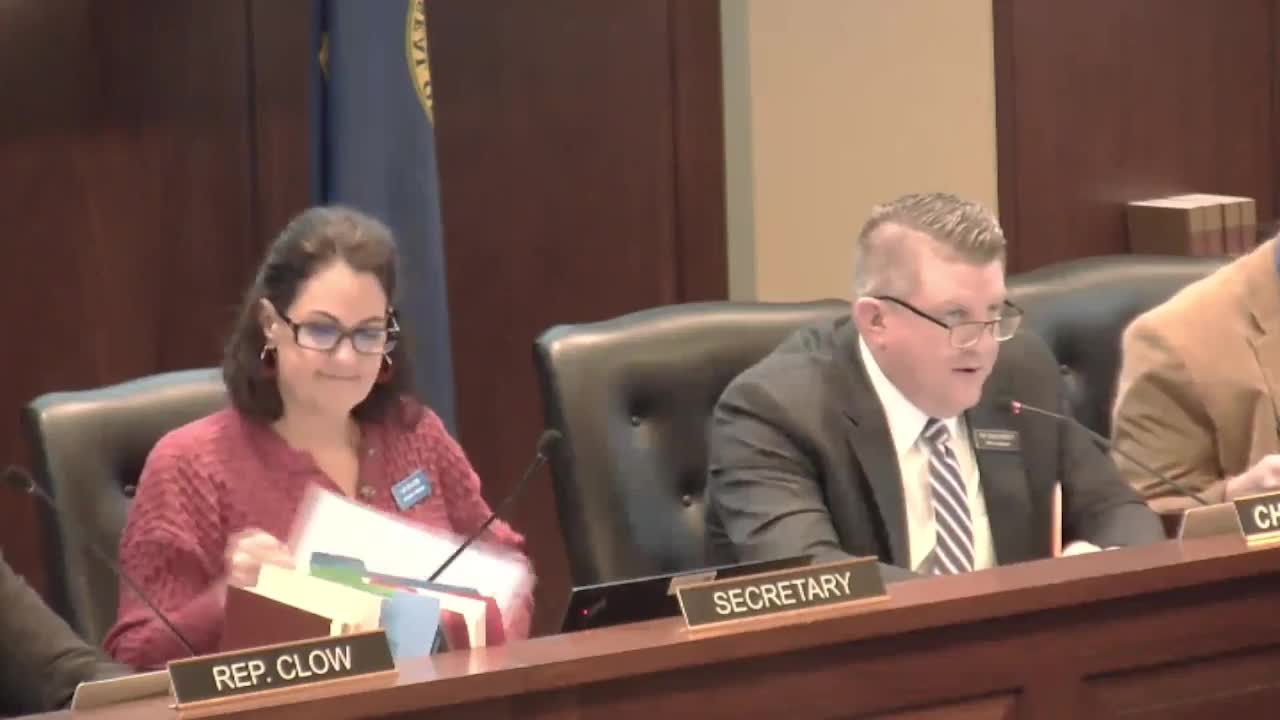
Committee members raised technical and fiscal questions during the RS discussion. Representative Mathias, citing professional-assessment practice, questioned the RS's mixing of summative and formative functions and asked for clarification of definitions. Representative Clow and others worried that allowing multiple assessments statewide could hamper year-over-year comparisons. Representative Sauter and Representative Mathias flagged procurement and contracting concerns about outside "literacy experts" and whether the RS guarantees competitive bidding or minimum volumes that affect vendor pricing. Ehart repeatedly deferred technical and procurement questions to Representative Horman, the sponsor, who was not present at the hearing.
During committee debate, a substitute motion to return RS32615 to the sponsor for further work was put to a roll-call vote and failed (5–9). The committee then approved the motion to introduce the RS; the RS was recorded as introduced by the committee and will be scheduled for a hearing where the sponsor and technical witnesses can answer outstanding questions about assessment comparability, vendor selection, and the fiscal impact of the proposal.
Next steps: RS32615 will be printed and set for public hearing. Committee members requested more detail about how the proposed changes would affect existing assessment contracts, the definition of "independent literacy experts," and potential costs beyond the RS language.