Get Full Government Meeting Transcripts, Videos, & Alerts Forever!
Get email alerts on the Medicaid Budget topic
No spam. Unsubscribe anytime.
Lawmakers Hear Overview of Idaho Medicaid Budget; Officials Cite COVID, Provider Rate Increases and Hospital Assessment Changes as Key Drivers
Summary
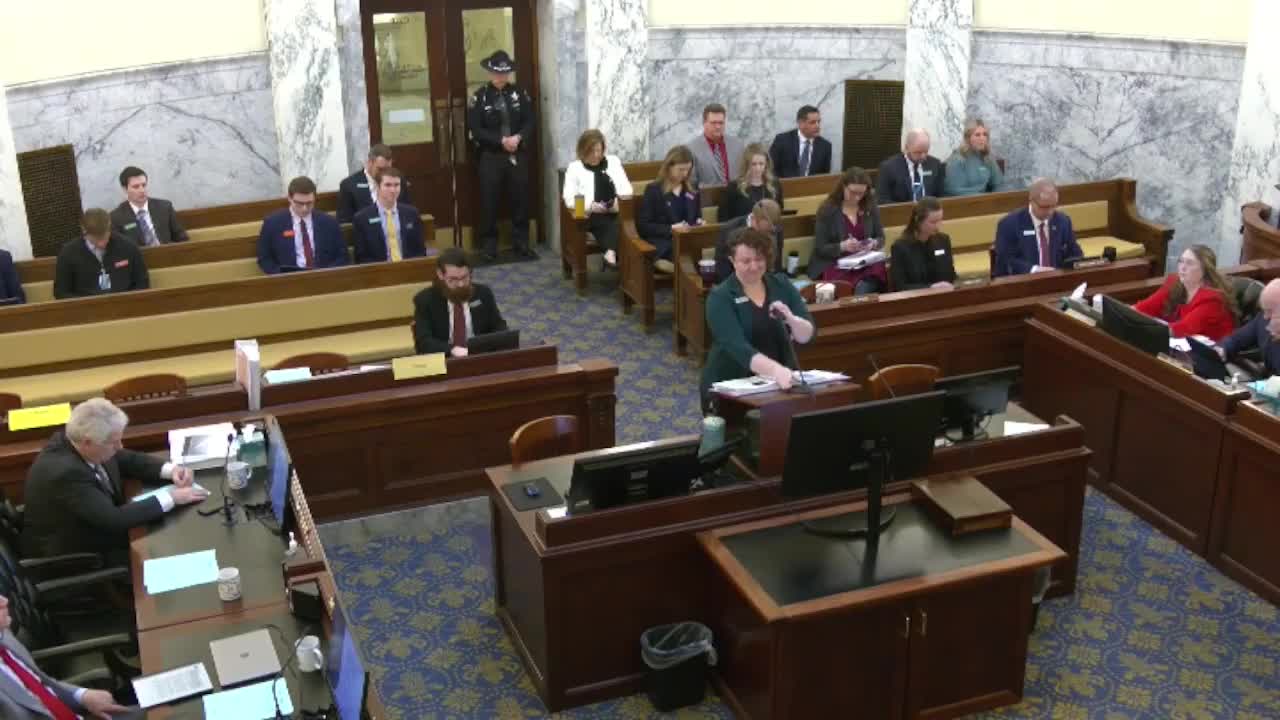
BOISE, Idaho — Department of Health and Welfare officials on Wednesday told the Joint Finance-Appropriations Committee that Idaho’s Medicaid budget has grown substantially in recent years because of multiple factors, including the COVID-19 public health emergency, provider rate increases enacted by the Legislature, changes to hospital reimbursement calculations and general caseload and utilization growth.
BOISE, Idaho — Department of Health and Welfare officials on Wednesday told the Joint Finance-Appropriations Committee that Idaho’s Medicaid budget has grown substantially in recent years because of multiple factors, including the COVID-19 public health emergency, provider rate increases enacted by the Legislature, changes to hospital reimbursement calculations and general caseload and utilization growth.
Alex Williamson, budget and policy analyst with Legislative Services, told the committee that the Division of Medicaid’s FY2024 appropriation totaled about $4.56 billion and that the division expended about $4.27 billion in FY2024. She said trust/benefit payments accounted for more than 98% of FY2024 expenditures, while personnel and operating costs for Medicaid administration totaled roughly $67 million.
Why it matters: Medicaid is an entitlement program with significant state and federal spending. Committee members repeatedly pressed department officials about what levers, if any, state policymakers can use to limit future growth as Medicaid claims and related program costs rise.
Williamson summarized the division’s program structure and described who the plans cover: a basic plan for children and pregnant women; an enhanced plan for children and adults with disabilities and children in foster care; a coordinated plan for people 65 and older and dual-eligible beneficiaries; and the expansion plan for adults with incomes at or below 138% of the federal poverty level, which began in January 2020. She noted that, by participant counts, the basic population is about half of all Medicaid enrollees but accounts for a far smaller share of costs; the coordinated and enhanced populations are smaller but account for a majority of spending because of higher acuity.
Key figures cited during the hearing include: 237.5 full-time positions allocated to the Division of Medicaid (24.5 vacancies as of Feb. 10), a one-time $1.35 million supplemental request for an external quality review required by the Centers for Medicare & Medicaid Services (CMS), a $190 million supplemental request tied to the hospital assessment fund, and a population-forecast adjustment of roughly $367 million included in enhancement requests for FY2026. Williamson also described MMIS (Medicaid Management Information System) procurement costs that include a state portion (about $11.7 million) and a federal portion (about $105 million) for an ongoing multi-year project.
On the hospital assessment supplemental: Williamson said $77 million of the $190 million request would come from the hospital assessment dedicated fund, and $113 million from federal funds. She tied the request to the implementation of Senate Bill 1350 (2022) and changes to the methodology for calculating the upper payment limit (UPL) for hospitals and skilled nursing facilities. Williamson said hospitals realized the assessment needed to be higher than originally forecast, which allows the state to draw additional federal matching funds; the department is seeking to make the adjustment ongoing beginning in FY2026.
Department response and implementation: Alex Adams, director of the Department of Health and Welfare, said the department sought a maintenance-level budget and did not request policy expansions or additional provider rate increases this cycle. Adams described Medicaid as a joint state-federal program with most costs driven by federal eligibility rules and noted the state's share varies by program: roughly 32% state share for the basic program and a 10% state share for the expansion population under current terms. He emphasized that some requested line items are federal requirements or relate to litigation settlements (for example, the KW suit) and therefore reflect "needs not wishes."
Managed-care and IBHP implementation: Committee members asked about implementation troubles and provider payment delays after the July 1 launch of the Idaho Behavioral Health Plan (IBHP), which moved significant behavioral-health services into a managed-care model. Juliette Sharon, deputy director for the department, said the IBHP contract’s scope was larger than prior contracts and required additional system changes and interfaces. Sharon said the department has imposed more than $100,000 in liquidated damages on Magellan (the IBHP contractor) for contract deficiencies, that Magellan is on corrective action plans, and that the vendor is back in compliance with payment timeliness standards. She said the department continues to monitor provider denials, timeliness and other performance measures.
On procurement and the external quality review: Williamson said the external quality review RFPs previously posted produced no viable vendor responses; an RFI revealed market rates had outpaced historical payments, which is why the supplemental request is higher than earlier amounts. The department and analysts described that the EQR work and CAHPS (Consumer Assessment of Health Care Providers and Systems) surveys are federal requirements for managed care.
Population forecast, FMAP and long-term risks: Committee members asked about the population forecast adjustment that would roll into FY2026. Williamson said part of the change includes a roughly $45 million shift from federal funds to the general fund as the state’s FMAP (federal medical assistance percentage) changed. Director Adams explained that FMAP shifts reflect broader measures of state personal income and can increase the state's share of Medicaid costs; he said that if the current expansion federal match (which is roughly a 90/10 split for expansion under current law) were tapered toward the traditional match for Idaho (about 68% federal/32% state), the shift could move more than $200 million onto the state in a single year.
Lawmakers pressing for cost containment: Several committee members, including Rep. Tanner and others, pressed department leaders for options to contain Medicaid spending and asked why the executive branch had not proposed additional cost-containment measures. Adams replied that the department is an implementer of policy and that substantive policy changes would need legislative direction; he added that the department previously provided policy committees a menu of potential cuts but that most options involve reducing populations served or limiting benefits—actions with significant downstream effects. Adams said the department is improving transparency by publishing a monthly Medicaid report and plans to provide forecasting ranges (baseline, pessimistic, optimistic) to help the Legislature anticipate variances.
Other program notes: Williamson and Adams discussed the MMIS procurement (year 3 of 5) and the KW class-action settlement work that requires a new resource allocation tool, paid partly through ongoing contract funds. The department requested ongoing funding for actuarial services, attorney fees related to the KW settlement and to support a new resource allocation tool, and for continued oversight and reporting requirements tied to managed care operations.
Postpartum coverage and federal appeal: Director Adams said Idaho’s postpartum State Plan Amendment to extend postpartum coverage is live and that about 2,800 women had used the extended coverage. He told the committee that the federal administration rejected a portion of Idaho’s plan that would have aligned coverage rules with Idaho law following elective abortion; the department filed an appeal and had a hearing scheduled in April.
What was not decided: The hearing did not include any formal votes. Committee members requested follow-up information on several items, including a detailed breakdown of postpartum coverage services and a report on the department’s work related to the KW lawsuit and the distribution of rate increases to direct-care pay. Officials agreed to follow up with more detailed materials.
The session: The budget discussion lasted through a lengthy question-and-answer period in which lawmakers from both chambers asked for clarification on forecasts, the hospital assessment, managed-care performance and potential policy levers. No formal action was taken at the hearing; House Appropriations was scheduled to meet immediately afterward.
Ending note: Department officials characterized many of the line items as responses to federal requirements, litigation obligations or contractual needs and urged the Legislature to consider policy changes if it seeks different cost outcomes. Lawmakers asked for more transparency and additional data to evaluate options for future sessions.