Get Full Government Meeting Transcripts, Videos, & Alerts Forever!
Get email alerts on the Water Resources topic
No spam. Unsubscribe anytime.
New director of Idaho Water Resources Research Institute seeks statewide research priorities and data integration
Summary
Kendra Keiser, the new director of the Idaho Water Resources Research Institute, told the committee IWIRI will develop an executive board and research advisory committee, prioritize stakeholder‑driven water research and pursue better integration of water data across agencies and sources.
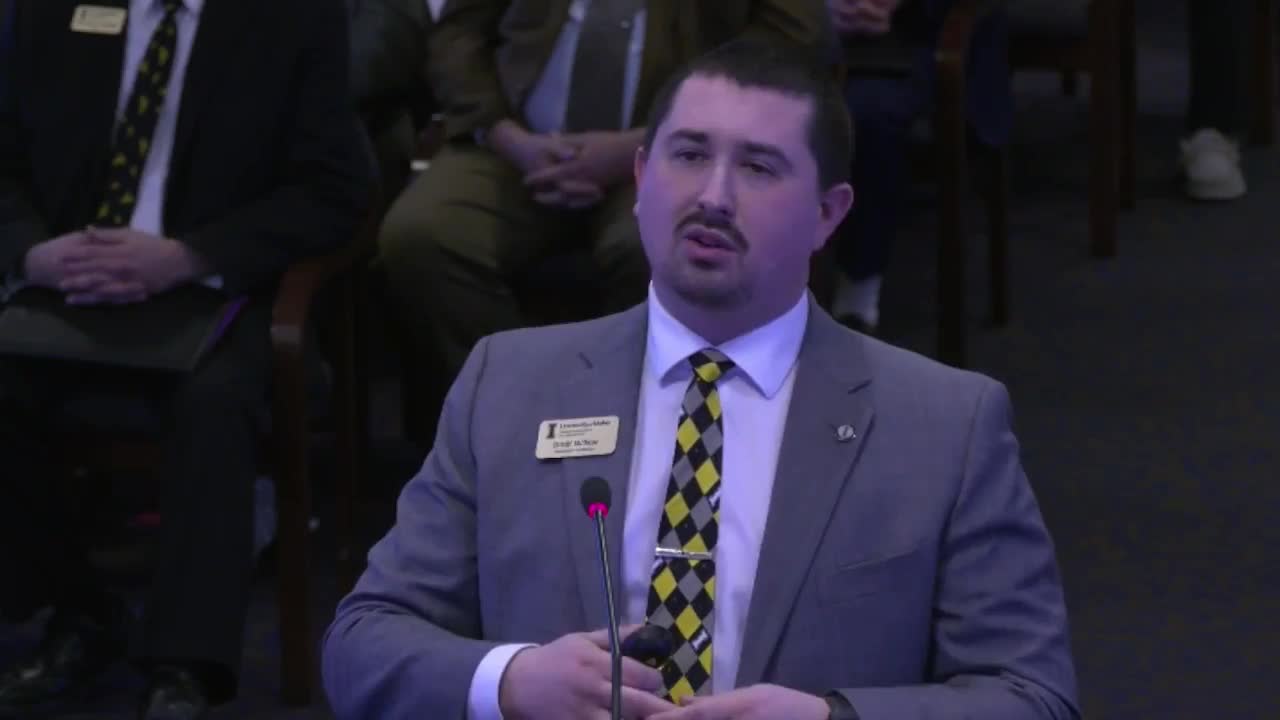
Kendra Keiser, the newly installed director of the Idaho Water Resources Research Institute (IWIRI), told the House Agriculture Affairs Committee that she is rebuilding the institute’s outreach and research advisory structure and prioritizing projects driven by local stakeholders.
Keiser said IWIRI was established by the federal Water Resources Research Act of 1964 and that the institute’s statutory charge includes planning, coordinating and conducting water research for the state, workforce development and disseminating results to affected communities. She said IWIRI has 54 sister institutes nationwide and is commonly aligned with land‑grant institutions because of overlapping mission and outreach responsibilities.
Keiser said she and staff have focused on listening to stakeholders across Idaho — noting that water concerns differ significantly between northern Idaho (lake levels and water quality) and southern Idaho (quantity, groundwater and urbanization). To guide priorities, she said IWIRI is forming a new executive board that will include state and federal agency representatives, industry and nonprofits, and a research advisory committee that will include surface and groundwater users, irrigation districts, watershed groups and other stakeholders.
She described recent and planned technical work, including tools developed for the Big Wood watershed and an NSF‑funded proposal (under development) aimed at better integrating datasets. Keiser emphasized that integrated water data is a high priority: she said communities need consolidated, accessible datasets rather than having to consult multiple sources. "It is one of my biggest priorities because once we have integrated water data, then all of the other research projects that we need to do across the state will be that much easier to do," she told the committee.
Keiser said IWIRI has staff in Boise and Coeur d'Alene, including an assistant director and outreach personnel, and she invited legislators to contact IWIRI about local water research needs. Committee members from northern Idaho welcomed a state‑level resource for lake and reservoir issues and representatives discussed past local data efforts and the need to make multiple agency datasets usable for county planning.
Ending
Keiser said IWIRI will publish tools and seek funding to continue data integration work, and that the institute will aim to make data and visualization tools publicly accessible.