Get Full Government Meeting Transcripts, Videos, & Alerts Forever!
Get email alerts on the Alternative Animal Protein Labeling topic
No spam. Unsubscribe anytime.
Idaho lawmaker introduces bill to require labeling for lab-grown meat and insect proteins
Summary
Representative Heather Scott introduced RS31941 to require clear, front-of-package labeling and Department of Agriculture oversight for cultivated (lab-grown) meat and insect-based proteins; committee voted to introduce the proposal for further consideration.
Representative Heather Scott of District 2 introduced RS31941, a proposed bill to require transparent front-of-package labeling for alternative animal proteins including cultured (lab-grown) meat and insect-based proteins, and to give the Idaho Department of Agriculture oversight to enforce those requirements.
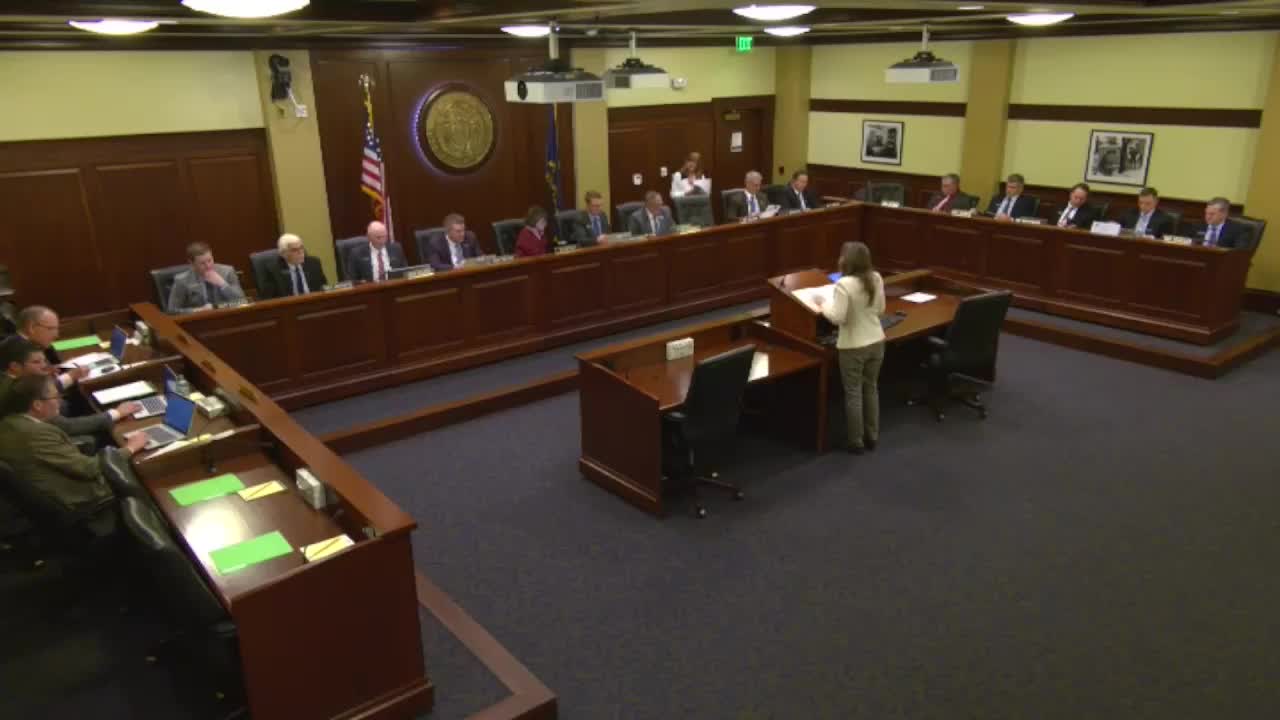
Scott told the House Agriculture Committee that RS31941 would add a new chapter to Title 37 and require labeling that makes the common name of the product clear on packaging and in restaurant displays. “I think Idahoans have the right to know what’s in the food they eat,” Scott said. The bill also includes a civil penalty provision; Scott described a $500-per-item penalty as “a start.” The fiscal note, she said, shows the department can implement the rule with existing staff.
Nut graf: Scott framed the bill as a transparency measure rather than a ban. She said the measure aims to distinguish traditional livestock products from emerging alternatives — such as insect protein powders and cultivated meat — so consumers and institutional purchasers can make informed choices. The committee voted to introduce the proposal and will set a hearing date if leaders direct it to proceed.
Scott described examples of products she said fall into the categories covered by the bill, citing cricket-based flours and bars and companies that use insect proteins in snack foods and baking mixes. She described cultured meat as animal cells grown in vitro to create consumable products and said the cultivated-meat industry is an emerging global market. Scott told the committee the bill does not ban these products but would require clear labeling and allow the department to enforce compliance.
Committee members asked how the proposal would apply in institutional settings and whether common names would be sufficient on menus. Representative Levitt asked explicitly whether labeling would apply to public school lunches and correctional facilities; Scott said she would check language and ensure those settings would be covered if the committee wants that. Representative Nelson asked how seafood and crustaceans would be treated; Scott said the bill is written to require common names that would allow consumers to recognize items such as “shrimp” on a menu.
Members also asked whether producer groups have been consulted. Scott said she had spoken with the Farm Bureau and would reach out to other producer organizations and cattle interests before a hearing. Representative Carlson asked about the risk of multiple overlapping labels and whether businesses producing these items had been consulted; Scott said the goal was a “soft touch” to create minimal, clear baseline standards rather than California-style warning labels.
A motion to introduce RS31941 was made by Representative Garner; the committee approved it by voice vote. The committee did not record a roll-call tally at the meeting. If the bill proceeds, Scott said she would return with amendments and additional drafting clarifications based on committee questions.
Ending: The bill will be scheduled for a hearing at the committee’s discretion; Scott and staff signaled they would provide follow-up materials on labeling language, federal oversight, and safety/testing practices prior to any formal hearing.