Get Full Government Meeting Transcripts, Videos, & Alerts Forever!
Get email alerts on the School Choice topic
No spam. Unsubscribe anytime.
Senate hearing on school‑choice bill draws sharp opposition over constitutional, accountability and special‑education concerns
Summary
Senate Bill 1025 would expand the Empowering Parents grant, add eligibility for ages 3–18, raise grant amounts and set program caps and accreditation and nondiscrimination requirements. The committee heard dozens of pro and con witnesses and ultimately voted to send the bill to the Senate floor with no recommendation.
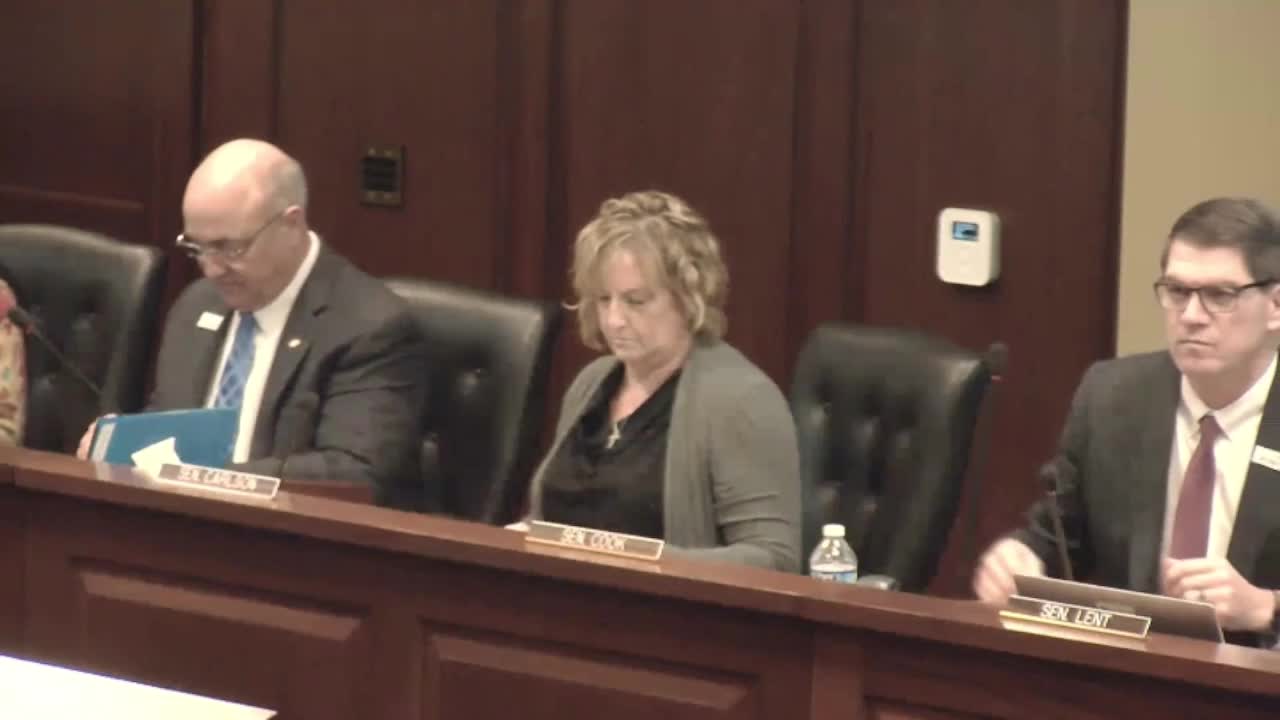
Senate Bill 1025, a proposal to expand Idaho's Empowering Parents grants and impose accountability rules for any nonpublic schools that take public dollars, drew extended debate at a Senate Education Committee hearing where witnesses sharply disagreed on constitutionality, special‑education impact and family equity.
What the bill would do: sponsor Senator Dave Lent told the committee SB1025 would expand the existing Empowering Parents program, increase per‑student grant amounts, prioritize low‑ and moderate‑income families, set accreditation and nondiscrimination requirements for participating private schools, direct new funding toward special education and reduce state reporting requirements that apply to public schools.
"This legislation was created and written to provide a threshold of accountability," sponsor Senator Dave Lent said at the start of his presentation, adding the package aims to make participation by private providers of public funding contingent on minimum transparency and non‑discrimination standards.
Major provisions described by the sponsor and staff during the hearing included: - Expansion of Empowering Parents eligibility to children ages 3–18 (the bill uses age‑3 eligibility for certain licensed early‑childhood providers but clarifies child care is not an eligible expense). - A stated increase of the per‑grant allocation (the sponsor described increases in the grant structure, including a per‑student grant valuation and family caps that phase upward to a maximum per household amount described in the bill). - Prioritization by income: the sponsor described a tiered distribution where 75 percent of funds are intended to go to families with adjusted gross income under $60,000, 20 percent to households $60k–$80k and 5 percent above $80k. - New accreditation and basic accountability conditions for participating nonpublic schools (background checks for staff, nondiscrimination, special education access and required assessments). - Legislative intent language directing $30 million in additional special‑education spending and a $50 million annual cap on the grants with a five‑year sunset on the statutory program expansion. - A red‑tape‑reduction provision that would have the State Department of Education review and recommend which state reports beyond federal requirements could be eliminated or sunset.
Concerns raised by witnesses and several senators echoed across testimony: Constitutionality and diversion of public funds: multiple witnesses and Senator Ward Engelking said the bill risks violating Article IX of the Idaho Constitution prohibiting public funds for religious instruction. "I believe this bill is unconstitutional," Engelking said, citing Article IX and Colorado precedent. Stoney Winston, superintendent of Fruitland School District, told the committee the bill "diverts public education dollars to private schools" and described the concern as a shift away from Idaho's constitutional duty to fund a public school system.
Impact on public school resources and special education: several public‑school special‑education administrators testified that Idaho's K–12 special‑education system is underfunded and urged any expansion not to reduce funding for existing special‑education services. Dr. Joy Jansen, director of special services and federal programs for Lake Pend Oreille School District, told the committee her district had added dozens of high‑need students and faces millions in added costs; Letha Blick of Valley View School District provided specific per‑student cost examples for medically fragile students and for services such as ASL interpreters and behavioral intervention.
Accreditation, testing and standards: advocates for private schools and homeschool groups raised practical concerns about the bill's accreditation requirement, saying some private schools use accrediting bodies not recognized by the State Board and that new rules could exclude classical Christian and smaller private schools. The Idaho Freedom Foundation and others said the bill’s accreditation-language could be used to exclude certain private providers.
Homeschool definition and administrative burden: Homeschool Idaho and other witnesses said SB1025's proposed definition of "homeschool" would be inconsistent with existing Idaho law and create confusion between parents who direct education at home and parents who enroll in public or private programs that provide instruction at home.
Accountability and background checks: several supporters of accountability standards pressed the committee to require background checks and minimum oversight. Sheriff Morgan Ballas, a former school resource officer, urged a firm requirement that "all employees and individuals who have unsupervised contact with students submit a criminal background and history check," calling it "non‑negotiable." Several proponents of the bill argued a regulated program with a cap and accreditation requirements is preferable to unregulated expansions seen in other states.
Equity and family caps: opponents argued the bill discriminates against large families by imposing a family cap (the bill limits total household grants). The Idaho Freedom Foundation testified the family cap (a $15,000-per‑household cap in the bill text) would effectively exclude some children in large families from participation.
Public testimony: more than 40 individuals signed up to testify; testimony included public‑school educators and administrators, rural superintendents, homeschool leaders, private‑school advocates, civil‑liberties organizations, education policy groups and law‑enforcement representatives. Testimony divided broadly along predictable lines — many public‑school administrators and special‑education directors opposed the diversion of funds and urged greater funding for public schools; several parent‑choice and accountability advocates said the bill provides an acceptable, accountable structure if the legislature decides to fund nonpublic options.
Committee action: after oral and written testimony the committee debated multiple motions. A motion to send SB1025 to the Senate floor with no recommendation was offered and carried by roll call in committee (final record: motion passed by a narrow margin; recorded tally 5–4). The vote will allow the full Senate to consider the bill.
Speakers
[{"name":"Dave Lent","role_title":"Senator, Sponsor","affiliation_type":"government","affiliation_name":"Idaho Senate (District 33)"},{"name":"Ward Engelking","role_title":"Senator","affiliation_type":"government","affiliation_name":"Idaho Senate"},{"name":"Stoney Winston","role_title":"Superintendent","affiliation_type":"government","affiliation_name":"Fruitland School District"},{"name":"Morgan Ballas","role_title":"Sheriff (former school resource officer)","affiliation_type":"government","affiliation_name":"Blaine County Sheriff's Office"},{"name":"Letha Blick","role_title":"Director of Special Services","affiliation_type":"government","affiliation_name":"Valley View School District"},{"name":"Joy Jansen","role_title":"Director of Special Services & Federal Programs","affiliation_type":"government","affiliation_name":"Lake Pend Oreille School District"},{"name":"Robin Sickman","role_title":"Advocate","affiliation_type":"nonprofit","affiliation_name":"Decoding Dyslexia Idaho"},{"name":"Audra Talley","role_title":"Board Member","affiliation_type":"nonprofit","affiliation_name":"Homeschool Idaho"},{"name":"Samuel Lair","role_title":"Senior Policy Analyst","affiliation_type":"nonprofit","affiliation_name":"Idaho Freedom Foundation"},{"name":"Cassie Horner","role_title":"Public school teacher","affiliation_type":"government","affiliation_name":"Boise School District"}]
Authorities
[{"type":"other","name":"Idaho Constitution, Article IX","citation":"Idaho Const. art. IX","referenced_by":["Ward Engelking","Stoney Winston"]},{"type":"other","name":"Idaho Code (homeschool and school funding references)","citation":"Idaho Code title 33, section 2 0 2","referenced_by":["Audra Talley"]}]
Actions
[{"kind":"motion","identifiers":{"agenda_item_id":"SB1025"},"motion":"Send Senate Bill 1025 to the Senate floor with no recommendation","mover":"Senator Woodward","second":"Senator Burton Shaw","vote_record":[],"tally":{"yes":5,"no":4,"abstain":0,"absent":0,"recused":0},"legal_threshold":{"met":true,"notes":"Simple majority in committee required"},"outcome":"approved","notes":"Motion passed by roll call; committee will send the bill to the floor with no recommendation."}]
Discussion_decision
{"discussion_points":["Whether public funds may be used for private or religious education and constitutional limits","How to ensure accountability, accreditation and nondiscrimination when public dollars are used","Risk that Empowering Parents expansion could divert funding from public special education","Whether a family cap unfairly disadvantages large families","Definition of homeschool and conflict with existing Idaho law"],"directions":["Bill to be placed on Senate calendar for floor consideration (committee vote to send with no recommendation)","Legislative fiscal staff to track appropriations and fiscal notes for the program"],"decisions":["Committee voted to send SB1025 to the Senate floor with no recommendation (tally 5–4)"]}
Clarifying_details
[{"category":"grant_cap","detail":"SB1025 places a $50,000,000 annual cap on the expanded grant program and a five‑year sunset on the statute","value":50000000,"units":"USD","approximate":false,"source_speaker":"Dave Lent"},{"category":"income_priority","detail":"Sponsor described a tiered prioritization: 75% to families under $60,000 AGI, 20% to $60k–$80k, 5% above $80k","source_speaker":"Dave Lent"},{"category":"special_education_funding","detail":"Sponsor's intent language directs an additional $30,000,000 for special education","value":30000000,"units":"USD","source_speaker":"Dave Lent"},{"category":"family_cap","detail":"Bill text caps household total at $15,000 (per the sponsor's description)","value":15000,"units":"USD","source_speaker":"Dave Lent"},{"category":"accreditation_requirement","detail":"Participating private schools must hold accreditation recognized by the State Board or meet comparable standards; testimony raised concerns about which accrediting bodies qualify","source_speaker":"multiple"}]
Proper_names
[{"name":"Empowering Parents grant program","type":"program"},{"name":"Idaho Freedom Foundation","type":"organization"},{"name":"League of Women Voters of Idaho","type":"nonprofit"},{"name":"Decoding Dyslexia Idaho","type":"nonprofit"}]
Community_relevance
{"geographies":["statewide"],"funding_sources":["state general funds (proposed cap $50M)","existing Empowering Parents continuous appropriation"],"impact_groups":["low‑income families","private school families","students with disabilities","large families"]}
Meeting_context
{"engagement_level":{"speakers_count":40,"duration_minutes":420,"items_count":1},"implementation_risk":"high","history":[{"date":"2025-01-28","note":"Floor consideration expected after committee action"}]}
Searchable_tags:["SB1025","school-choice","empowering-parents","vouchers","special-education"],
Provenance
{"transcript_segments":[{"block_id":"block_4874.27","local_start":0,"local_end":140,"evidence_excerpt":"Senator Lent, District 33, Idaho Falls... I'd like to start out with I've had great success trying to have straight talk. So I just like to kind of frame what we're what I'm going to talk about today in the sense of straight talk.","global_start":4874,"global_end":5014,"tc_start":"01:21:14","tc_end":"01:23:34","reason_code":"topicintro"},{"block_id":"block_11581.1045","local_start":0,"local_end":240,"evidence_excerpt":"Ready? Alright Senator Cook. Aye. Senator Woodward. Aye. Senator Nichols. Yes. Senator Carlson. No. Senator Burton Shaw? Aye. Senator Zito? No. Senator Ward Engle King? No. Senator Semmelroth? Aye. K. And Senator Lam. Aye.","global_start":11581,"global_end":11621,"tc_start":"03:13:01","tc_end":"03:13:41","reason_code":"topicfinish"}]}
Salience
{"overall":0.88,"overall_justification":"High civic salience: bill would change who may receive public funds and touch K–12 funding, special education and constitutional questions.","impact_scope":"statewide","impact_scope_justification":"Program would apply throughout Idaho and affect public budgets and private schools statewide.","attention_level":"high","attention_level_justification":"Significant public debate and potential legal risk; budgetary consequences." ,"novelty":0.60,"novelty_justification":"Expands an existing grant program and adds new statutory accountability terms and a special‑education funding directive.","timeliness_urgency":0.78,"timeliness_urgency_justification":"Bill considered during the legislative session with budget implications.","legal_significance":0.85,"legal_significance_justification":"Multiple witnesses cited potential conflicts with Idaho Constitution (Article IX) and prior court precedent on public funding for religion.","budgetary_significance":0.82,"budgetary_significance_justification":"Creates a capped but sizeable new appropriation stream ($50M cap) and directs $30M for special education in intent language.","public_safety_risk":0.02,"public_safety_risk_justification":"Not a direct safety issue, but background‑check provisions relate to student safety.","environmental_impact":0.0,"environmental_impact_justification":"Not relevant.","affected_population_estimate":50000,"affected_population_estimate_justification":"Estimate of potentially eligible students if program enrolls widely; illustrative only.","affected_population_confidence":0.10,"affected_population_confidence_justification":"Wild‑order estimate pending appropriation and rule design.","decision_deadline":"2025-03-31","decision_deadline_justification":"Budget and scheduling for the legislative session.","policy_stage":"proposal","policy_stage_justification":"Bill under committee consideration and now headed to floor with no recommendation.","follow_up_priority":10,"follow_up_priority_justification":"High: floor action and potential fiscal trailer bills expected.","fact_check_risk":0.30,"fact_check_risk_justification":"Some testimony included competing claims about funding levels and constitutional outcomes; legal and fiscal review recommended.","uncertainty":0.45,"uncertainty_justification":"Many details depend on later rulemaking, accrediting‑body lists and appropriations.","source_diversity":0.85,"source_diversity_justification":"Committee heard testimony from public‑school leaders, homeschool advocates, private‑school advocates, law enforcement and policy groups.","stakeholder_balance":0.50,"stakeholder_balance_justification":"Both proponents (accountability advocates, some parents) and opponents (public school administrators, special‑education directors, civil‑liberties and homeschool groups) testified.","alert_flags":["legal_challenge","large_budget","high_uncertainty"],"alert_flags_justification":"Concerns about constitutionality, a $50M cap and many details to be resolved."}