Get Full Government Meeting Transcripts, Videos, & Alerts Forever!
Get email alerts on the Employee Benefits topic
No spam. Unsubscribe anytime.
State analyst outlines benefits costs, health insurance proposal and PERSI rates ahead of compensation decisions
Summary
Legislative Services Office staff briefed JFAC on the composition of employee benefits: health insurance, PERSI pension rates, and how benefits are budgeted per full-time position. The governor recommended a slightly higher per-FTP health appropriation to reduce reliance on plan reserves.
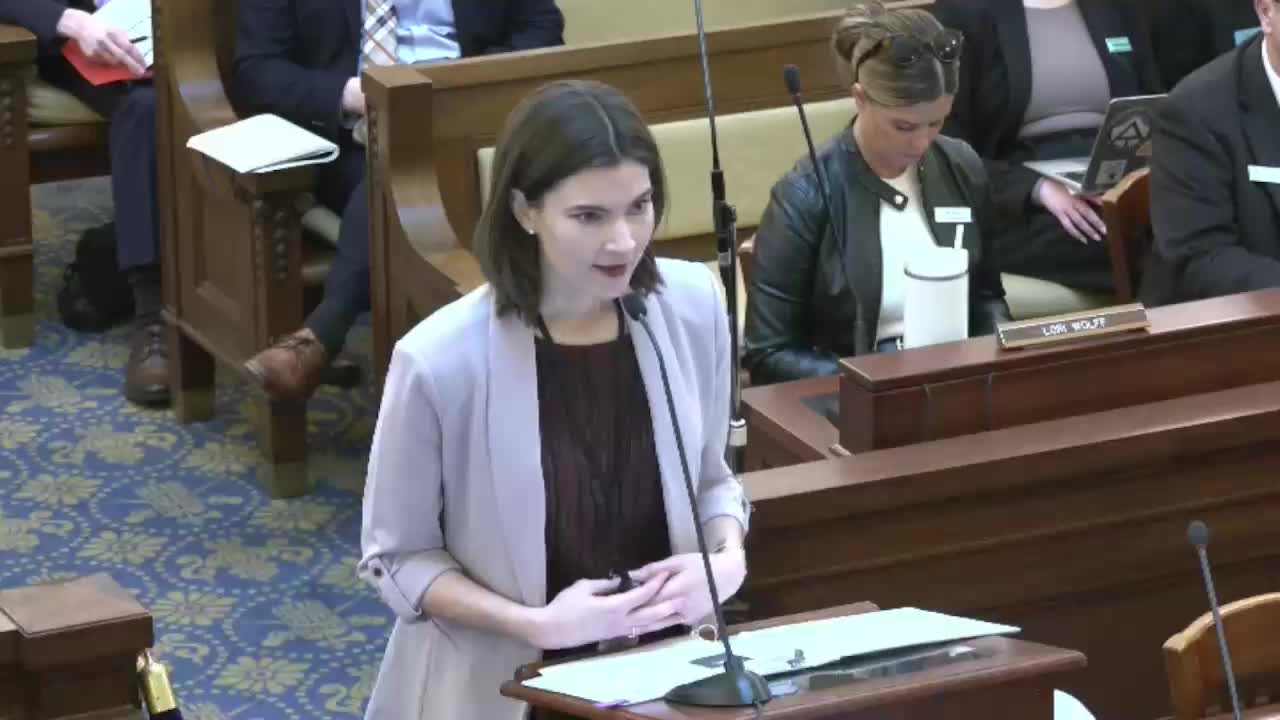
Frances Lippitt, budget and policy analyst with the Legislative Services Office, told the Joint Finance-Appropriations Committee that benefits account for about one-quarter of the state's personnel costs and described how health insurance and pension contributions are budgeted.
Lippitt summarized the package: health and dental insurance, pension contributions to the Public Employee Retirement System of Idaho (PERSI), Social Security and Medicare, life insurance, and workers compensation. "Benefits generally account for about a quarter of the state's overall personal cost expenditures," she said.
Health insurance: Lippitt explained that the state budgets health insurance as an appropriation per full-time position (FTP). She said the actuarial recommendation led the governor to request a per-FTP appropriation of $14,300 for FY2026, compared with a lower estimate that would rely more heavily on plan reserves. "The governor's recommendation is to appropriate at $14,300 per FTP, which reflects the actuarial recommendation designed to cover 100% of plan costs in 90 percent of cases," she said. Lippitt reported the change would cost about $56.6 million.
PERSI and variable rates: Lippitt noted employer contribution rates used in the FY2025 budgets: 11.96% for general members, 14.65% for public safety employees, and 13.47% for teachers. She noted that PERSI and other variable benefits are budgeted as percentages of salary and summarized how benefit loads vary with wage levels: lower-paid positions require a higher percentage of salary budgeted for benefits.
Process and committee role: Lippitt described the Change in Employee Compensation (CEC) committee's role in reviewing DHR recommendations and agency testimony and presenting compensation proposals to JFAC. Changes to the benefits package, salary structure, or merit system typically flow from that review into JFAC's appropriation decisions.
What this means for JFAC: The committee will consider whether to adopt the governor's recommended per-FTP appropriation for health insurance or an alternative that would use more plan reserves. Changes in the health appropriation and any decision about PERSI employer rates will affect agency program-maintenance calculations and the program-maintenance bills JFAC must approve.