Get Full Government Meeting Transcripts, Videos, & Alerts Forever!
Get email alerts on the Education Funding topic
No spam. Unsubscribe anytime.
House Education Committee urges deeper review of funding, raises concerns about virtual programs and rural facilities
Summary
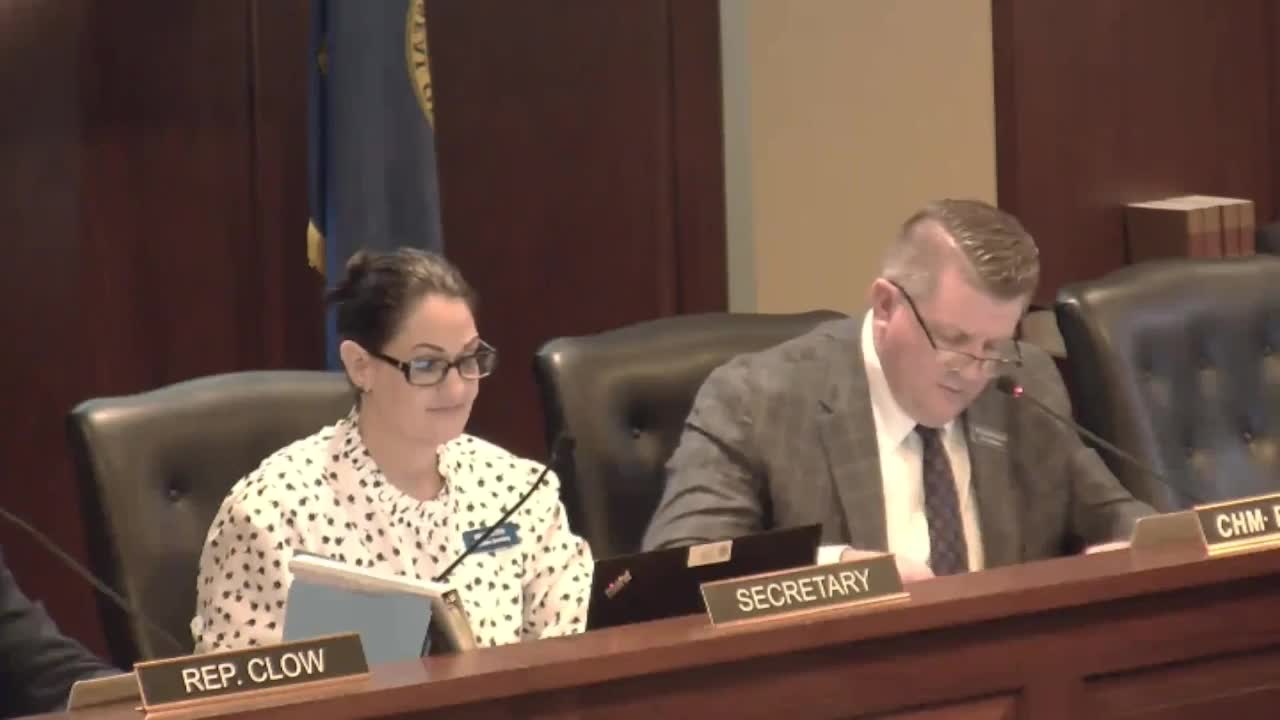
After finalizing action on Senate Bill 1092, the House Committee on Education spent the remainder of its March 6, 2025 meeting reviewing education budget issues and asking members to prepare recommendations for JFAC.
After completing business on Senate Bill 1092, the House Committee on Education used the remainder of its March 6, 2025 meeting to discuss budget priorities and ask members to forward recommendations for the Joint Finance‑Appropriations Committee (JFAC). Chairman Pickett opened a broad conversation in which representatives raised concerns about virtual-program funding, rural facilities financing, special-education reporting, teacher recruitment and retention, and the complexity of the state funding formula.
Representative Harris drew attention to the budget book and asked why several line items had been rolled together; he also flagged a potential overlap between an approximately $3,000,000 transportation line related to Idaho Virtual Academy and a $24,900,000 line for the Idaho Digital Learning Academy (IDLA) shown in the budget book. Representative Clow explained that Idaho Virtual Academy is a charter school funded through the school funding formula, while the Idaho Digital Learning Academy is a separate state program offering online classes to districts and is treated as a separate line item.
Representative Mathias and others raised concerns about the growing reliance on loans rather than grants to finance rural school facility projects. Mathias noted the state’s prior legal history involving school facilities financing and urged that any budget proposals avoid overreliance on loans so rural districts are not disproportionately burdened. Representative Tanner, Representative Ehart and others requested an off‑session, in‑depth briefing or series of presentations so committee members can better understand how funding programs interact and where funds are targeted.
Representative Nelson urged the committee to review district property‑value differences to understand local ability to raise funds, noting that some districts have very limited tax bases. Representative Thius highlighted higher‑education residency funding, saying Idaho currently spends about $28 million annually on residency administration for roughly 46 residents and that increasing residency slots will likely require additional funding. Several members also discussed community college staffing pressures, career‑technical education (CTE) capacity, and competition with private‑sector pay for instructors in fields such as nursing.
Discussion included federal policy risks and opportunities. Representative Mathias noted press reporting about potential U.S. Department of Education changes that could increase block‑granting to states; members said they want to be prepared to pass federal funds through to intended local beneficiaries if that occurs while balancing reporting and compliance needs. Representative Clow suggested the committee consider federal waivers in areas such as special education reporting to reduce administrative burden while ensuring services.
Chairman Pickett asked committee members to submit any additional recommendations to him for incorporation into the committee’s presentation to JFAC; that presentation was scheduled for the next morning. Several members urged scheduling deeper, multi‑day interim briefings on the funding formula, weighted/student‑based funding proposals, and program performance to give new legislators more context before major budget votes.