Get Full Government Meeting Transcripts, Videos, & Alerts Forever!
Get email alerts on the State Budget Overview topic
No spam. Unsubscribe anytime.
Legislative services office projects $338 million year-end cash for FY2025, governor's budget keeps roughly $700 million structural surplus
Summary
Legislative Services Office presented the governor's FY2025 and FY2026 budget picture to the Joint Finance-Appropriations Committee, showing a projected $338 million FY2025 ending cash balance, a structural surplus near $700 million in the near term, and policy choices ahead on transfers, tax relief and school bonding.
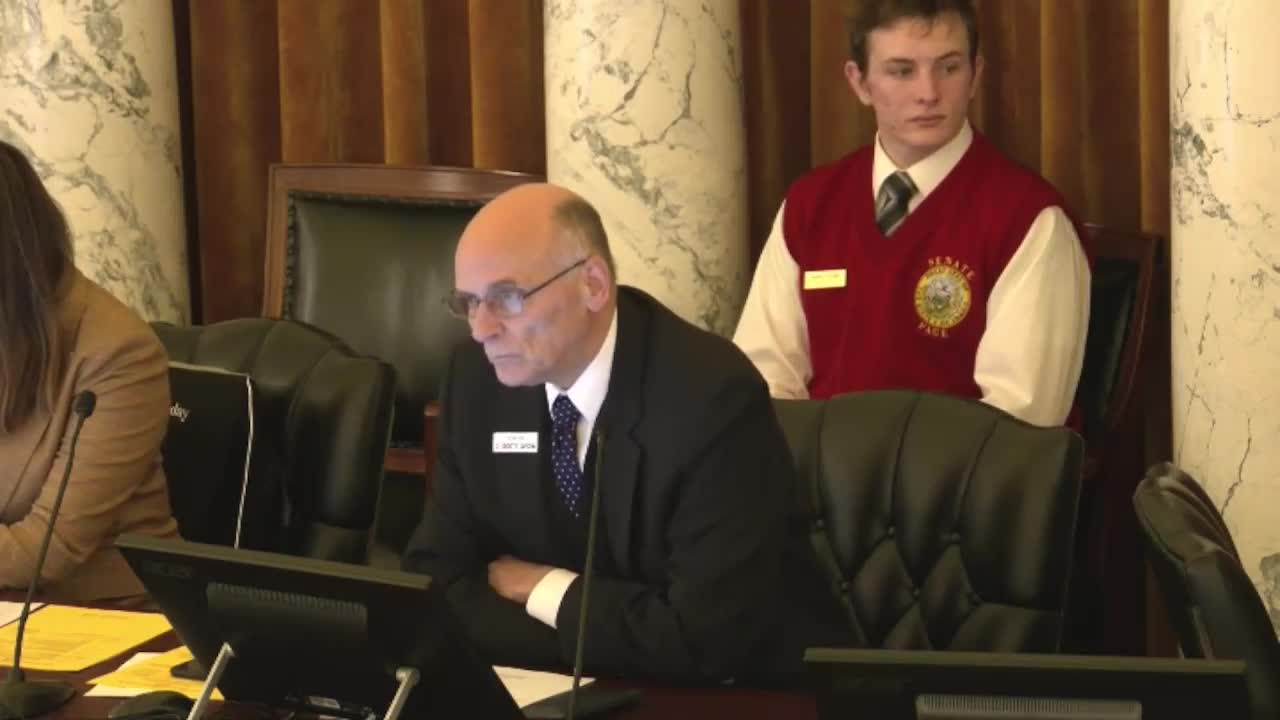
Keith Bybee, division manager of budget policy analysis at the Legislative Services Office, told the Joint Finance-Appropriations Committee that the governor's recommended budget projects a $338 million ending cash balance for fiscal year 2025 and uses a mix of ongoing and one-time resources to fund the 2026 proposal.
Bybee said the state's revenue picture remains well above pre-pandemic trend lines because of population growth and residual federal pandemic support that boosted incomes. "For fiscal 2025, you're seeing a structural balance of almost $700,000,000 with the current revenue forecast," he said, describing the gap between projected revenues and projected expenditures as a policy choice for the legislature.
Why it matters: the difference between running a balanced program maintenance budget and a larger set of enhancements will determine how much of the structural surplus is returned to taxpayers, saved in reserves, or spent on ongoing programs. Bybee noted the governor's recommendations include transfers out of the general fund for road and transportation projects, wildfire response, and housing initiatives; those transfers and the governor's revenue forecast together produce the administration's ending cash estimates.
Key numbers and mechanics: Bybee walked committee members through the front-end cash reconciliation in the legislative budget book. He showed the governor's baseline revenue forecast at about $5.9 billion for FY2025 and explained line-item items that affect the available cash: reappropriations and executive carry forward (cash authorities from prior-year obligations), previously authorized transfers to transportation projects, and a planned transfer of about $60 million to fire suppression deficiency warrants. He also identified a $62.8 million transfer from the closed bond-levy equalization fund that the controller is expected to return to the general fund following House Bill 521.
Committee questions raised timing and legal-structure points. A committee member asked how returning $62.8 million of prior bond-levy-equalization cash would affect the state's longer-term obligation for school facility bonding; Bybee explained HB521 closed the old bond-levy-equalization program and established a new state bonding approach that will be distributed by average daily attendance (ADA) rather than the old equalization mechanism.
Program maintenance and enhancements: Bybee summarized the governor's program-maintenance proposal as roughly a 3.4% increase over FY2025 original appropriations, and enhancements totaling about $242 million (4.6% year-over-year on the general fund), producing a recommended FY2026 general-fund total of about $5.65 billion and a projected FY2026 ending cash of roughly $227 million.
Outlook and trade-offs: Bybee emphasized the policy choices ahead: "If a budget is a statement of your values, your previous legislatures have done you a big favor, by setting you up for success for this legislative session," he said, but added the legislature faces trade-offs among tax relief, sustaining ongoing services, and maintaining reserves.
What happens next: JFAC staff and agency analysts will move from this high-level reconciliation to program-by-program hearings and the committee's program-maintenance work groups next week; Bybee said those working sessions will refine the baseline and present specific decisions on inflation adjustments, benefit changes, statewide cost allocations and employee compensation.