Get Full Government Meeting Transcripts, Videos, & Alerts Forever!
Get email alerts on the Pharmacy Regulation topic
No spam. Unsubscribe anytime.
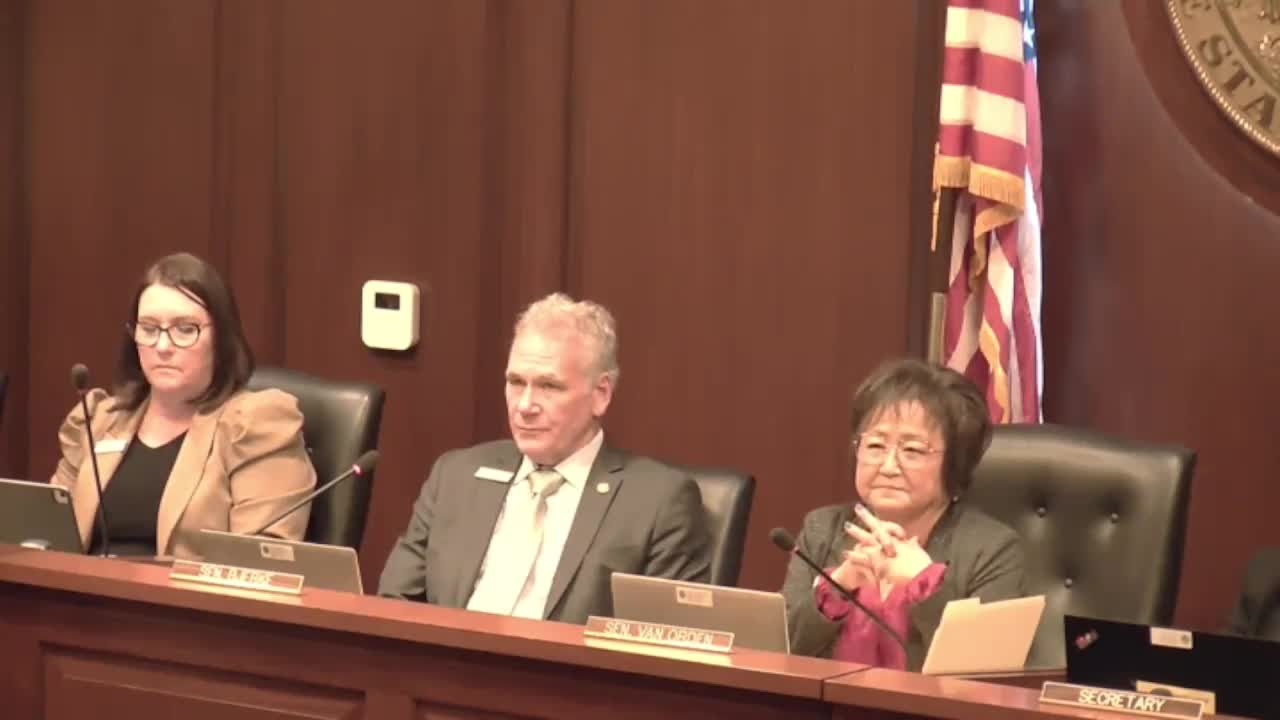
Senate panel approves pharmacy rule rewrite but removes state compounding labeling language
Summary
The Senate Health and Welfare Committee approved a broad rewrite of Idaho Board of Pharmacy rules but voted to strike specific state labeling language for distributed compounded drug products amid stakeholder concern and federal uncertainty.
The Senate Health and Welfare Committee voted to approve a comprehensive rewrite of Idaho State Board of Pharmacy rules (docket 24-3601-2402) on a motion that removed a narrow compounding-labeling provision after committee members raised concerns about regulatory conflict with unsettled federal guidance.
The committee earlier took no action on the temporary rule docket (24-3601-2401), allowing those temporary rules to expire. That motion was moved by Senator Harris and seconded by Senator Wintrow and carried on voice vote.
Why it matters: The pending rule package is a broad “zero-based review” (ZBR) rewrite intended to remove duplicative or outdated text from pharmacy rules after legislative changes (House Bill 527 was cited as moving several provisions to statute). Committee debate focused on a subsection in the pending chapter that sets state labeling requirements for distributed compounded drug products. Proponents of striking the lines argued the federal position is unsettled and that strict state labeling could create access and cost consequences for patients; opponents emphasized safety and existing industry support for the language.
Ms. Nikki Chopsky, bureau chief for health professions at the Division of Occupational and Professional Licenses and executive officer for the Idaho State Board of Pharmacy, explained the rewrite and stakeholder engagement. She told the committee the board removed duplicative statute-language from the rules, reorganized definitions, and moved many provisions to align with statute. On the compounding issue she said stakeholders raised late questions about how Idaho’s requirements intersect with federal guidance and that the board is committed to continuing stakeholder work: “The board stands committed to working transparently with these stakeholders and others for a workable solution in an environment that is unsettled at this time.”
Senator Lenny urged striking the state labeling subsections, saying the federal guidance is still a draft and Idaho could be “the teacher saying, I know the principal said we can have snacks on campus, but we're gonna enforce this no snack rule,” an analogy Ms. Chopsky agreed captured the concern: “Yes. You nailed it.” Senator Wintrow urged caution on public-safety grounds, saying when the item involves drugs “I guess what I'm thinking is siding on the... more cautious side.”
The committee approved the pending pharmacy rewrite with an amendment to strike the identified labeling language (rule 214 subsections e(i) and e(ii)). The roll-call result reported by the committee chair was 7 yeas and 2 nays. The committee also allowed the temporary rules to expire by taking no action on that docket.
What was decided (summary): - Temporary rule docket 24-3601-2401: take no action (temporary rules expire). - Pending ZBR docket 24-3601-2402: approved as amended; subsections on distributed compounded-product labeling (214 e(i) and e(ii)) were struck by committee vote.
Next steps: The pending rules, as amended by the committee, will proceed according to legislative process. Ms. Chopsky said the board will continue stakeholder engagement and revisit language if federal rules change.
Ending note: Committee members emphasized both access concerns and patient safety; staff pointed to existing legal pathways for compounded products and said Idaho’s approach can be revisited through the board’s rule process if federal guidance is finalized.