Get Full Government Meeting Transcripts, Videos, & Alerts Forever!
Get email alerts on the Statewide Budget Decisions topic
No spam. Unsubscribe anytime.
Budget staff outline revenue options and competing compensation proposals ahead of committee votes
Summary
Legislative budget staff briefed the committee on statewide decisions that will be voted on this week, including two revenue forecasts and competing change‑in‑employee‑compensation (CEC) proposals that differ by a few million dollars and will affect agency budgets and the state’s benefits reserve calculations.
Legislative budget staff on Thursday presented a packet of statewide decisions to the Joint Finance-Appropriations Committee, including two alternative general‑fund revenue forecasts, personnel‑benefit cost adjustments, contract inflation, statewide cost allocation changes and competing recommendations for change‑in‑employee‑compensation (CEC).
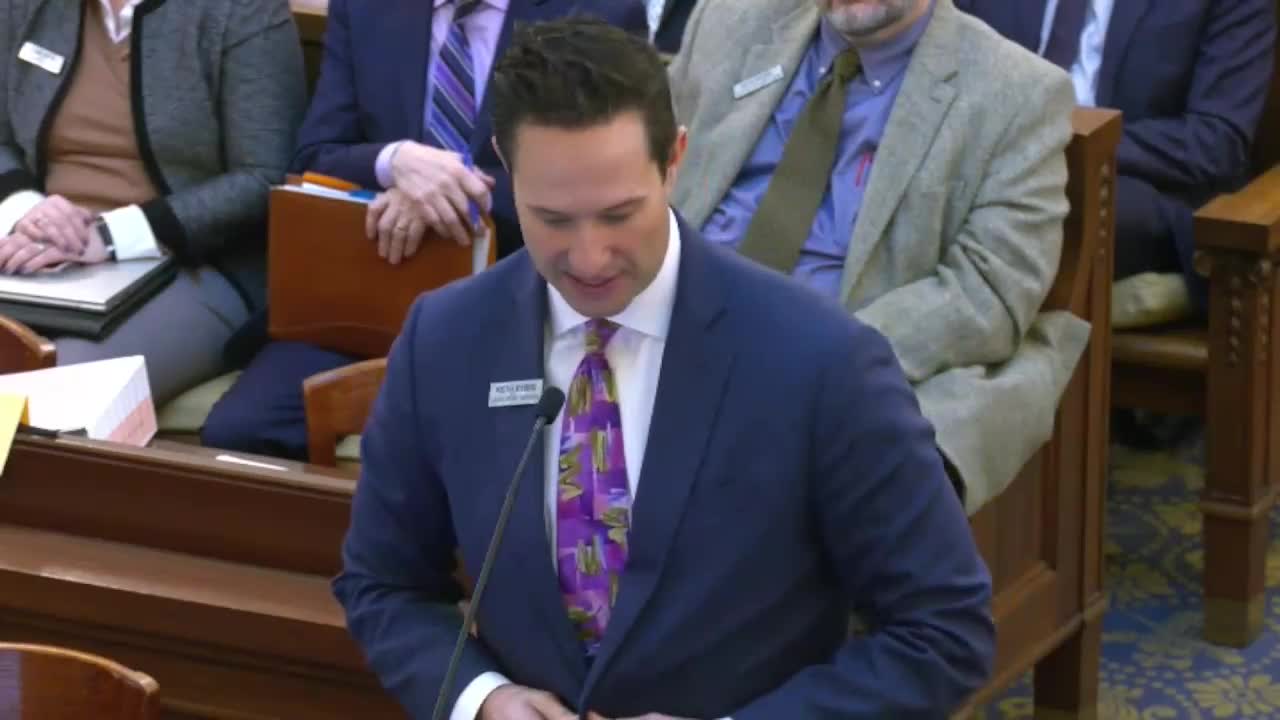
Keith Bybee, Division Manager for Budget Policy Analysis in the Legislative Services Office, told the committee the packet lays out options the committee will vote on this week. He said the governor’s recommended FY2026 general‑fund revenue estimate for budgeting purposes is about $6.26 billion, while the Economic Outlook and Revenue Assessment Committee recommended $6.4 billion for FY2026.
Benefit-cost adjustments: Bybee said one of the statewide decisions covers personnel benefit-cost adjustments, most notably a health‑insurance funding change that the governor’s proposal would fund at about $56.3 million statewide. The CEC committee proposed a smaller funding level for the health-insurance estimate — roughly $40.7 million — a difference the staff said reflects different actuarial assumptions and reserve policies.
Statewide allocations and contract inflation: The packet includes a $3.3 million statewide contract inflation item to fund increases such as lease rates and a $5.5 million statewide cost allocation increase, mainly driven by higher charges for the state controller and information-technology services.
CEC proposals: The governor’s compensation proposal includes three elements, Bybee said: a $1.55‑per‑hour merit equivalent (described as the 5% or equivalent dollar amount) for permanent eligible employees (estimated at $91.8 million), a salary-schedule shift averaging 3.2% ($4.3 million) for regular schedules and a 5% equivalent for public‑school support units ($83.5 million), bringing the governor’s total CEC package to about $179.7 million statewide. The CEC committee presented an alternative that would fund merit at the same $1.55‑per‑hour equivalent but is slightly lower in total cost — about $174.7 million — and staff cautioned the committee that some salary-schedule numbers may be adjusted before Thursday’s vote.
Questions and context: Senators and representatives asked staff to explain reasons for variance in the statewide cost allocation rates and for the state controller’s billing increase; staff said last year’s LUMA implementation and payroll adjustments contributed to a catch-up in the controller’s rate. Senator Janie Ward‑Engelking asked whether the CEC recommendation would leave highly skilled, high‑paid employees without a true cost‑of‑living increase; she said she wants staff to produce options that better protect those workers while staying within the packet’s aggregate numbers.
Group insurance reserves: The committee also discussed actuarial assumptions for the state’s group health reserves. Division of Financial Management Administrator Laurie Wolf said the actuarial report arrives in May and October each year and described the trade-offs between funding at the 90th percentile or funding at a lower, federally allowed minimum; she warned that underfunding the health plan could require a larger per‑employee increase the following year.
Next steps: Bybee said the committee will take votes on statewide decision items on Thursday and then consider program maintenance budgets on Friday, with agency program material available for the committee tomorrow.
Ending: Committee leaders urged members to review the packet and told staff to provide requested follow-up materials, such as the controller-rate calculation, actuarial reserve details and CEC distribution impacts by agency before Thursday’s votes.