Get Full Government Meeting Transcripts, Videos, & Alerts Forever!
Get email alerts on the Extended Foster Care topic
No spam. Unsubscribe anytime.
Senate committee backs voluntary extension of foster‑care support to age 23
Summary
House Bill 2 45, which would extend voluntary foster‑care services from age 21 to 23 and streamline relative‑placement licensing, was sent to the Senate floor with a do‑pass recommendation after testimony from foster youth, child‑welfare advocates and the Department of Health and Welfare.
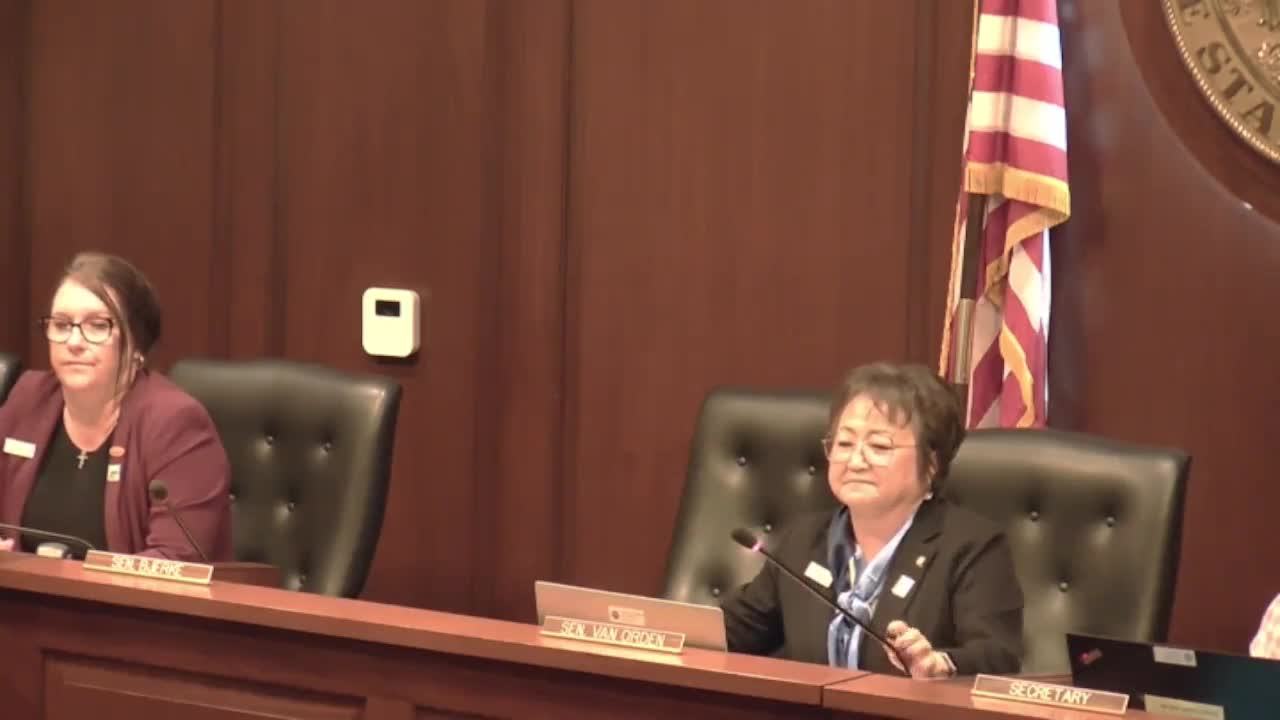
The Senate Health and Welfare Committee voted to send House Bill 2 45 to the Senate floor with a do‑pass recommendation after hours of testimony from foster youth, providers and department officials about extending voluntary foster‑care supports from age 21 to 23.
Senator Carl Bjerke (Senate District 5) opened the presentation for the bill, saying it would “extend[ ]” the age‑out date from 21 to 23 and “streamline the ability for kindred care.” He cited research and fiscal arguments during his remarks: “Research shows that extended foster care reduces food insecurity by 21%, homelessness by 19%, and arrest by 28%,” and he told the committee that “It costs about $80 a day in the corrections institutions and about $16 a day if we keep somebody in foster care.”
Department officials and advocates described program mechanics and supports available under the bill. Monty Pro, deputy director for support and child welfare at the Department of Health and Welfare, said extended foster care requires participants to have an independent‑living or transition plan with regular case management and access to financial support. “If they're living on their own, they're gonna get that full $876 a month, or if they're living with a foster parent, that foster payment goes straight to that foster parent still,” Pro said. The department described the extension as voluntary: a young person could still leave foster care at 18, 21, or remain with services through 23 if they choose.
Foster‑youth testimony was a central part of the hearing. Ivy Smith, who identified herself as a former foster youth and an advocate with Idaho Voices for Children, told senators she was denied campus housing at 17 because it was not a licensed foster placement and described long‑term barriers faced by former foster youth. Smith cited national research by Chapin Hall showing reduced homelessness, lower pregnancy and arrest rates, and higher college persistence for jurisdictions with extended foster‑care programs. “Please help Idaho's foster youth have a fighting chance,” she told the committee.
Other witnesses included nonprofit leaders and foster families. Sarah Betweiser (Family Advocates), Shane Hanson (Freedom Youth Foundation), Marissa Franklin (former foster youth), and Norm Baron (foster parent and adoptive parent) each described how additional time and supports could reduce homelessness, incarceration and other negative outcomes and help young people obtain education and employment.
Committee members expressed a range of views during floor discussion. Senator Shippy said he would vote no and said he worried extension could delay independence; he stated, “I will be a no on this.” Several other senators described an initial hesitation but ultimately voted to advance the bill after hearing personal testimony and department support.
Senator Harris moved the motion to send House Bill 2 45 to the floor with a due‑pass recommendation; Senator Melissa Wintrow seconded. The committee approved the motion by voice vote and the chair announced the bill would go to the Senate floor for further consideration.