Get Full Government Meeting Transcripts, Videos, & Alerts Forever!
Get email alerts on the Geologic Survey Database topic
No spam. Unsubscribe anytime.
Geological survey seeks partial general-fund support to preserve a grant-funded database manager post
Summary
The Idaho Geological Survey asked for additional general-fund support to make a grant-funded database manager position permanent, citing the role’s contribution to federal matching dollars and the risk to ongoing programs if the role were lost.
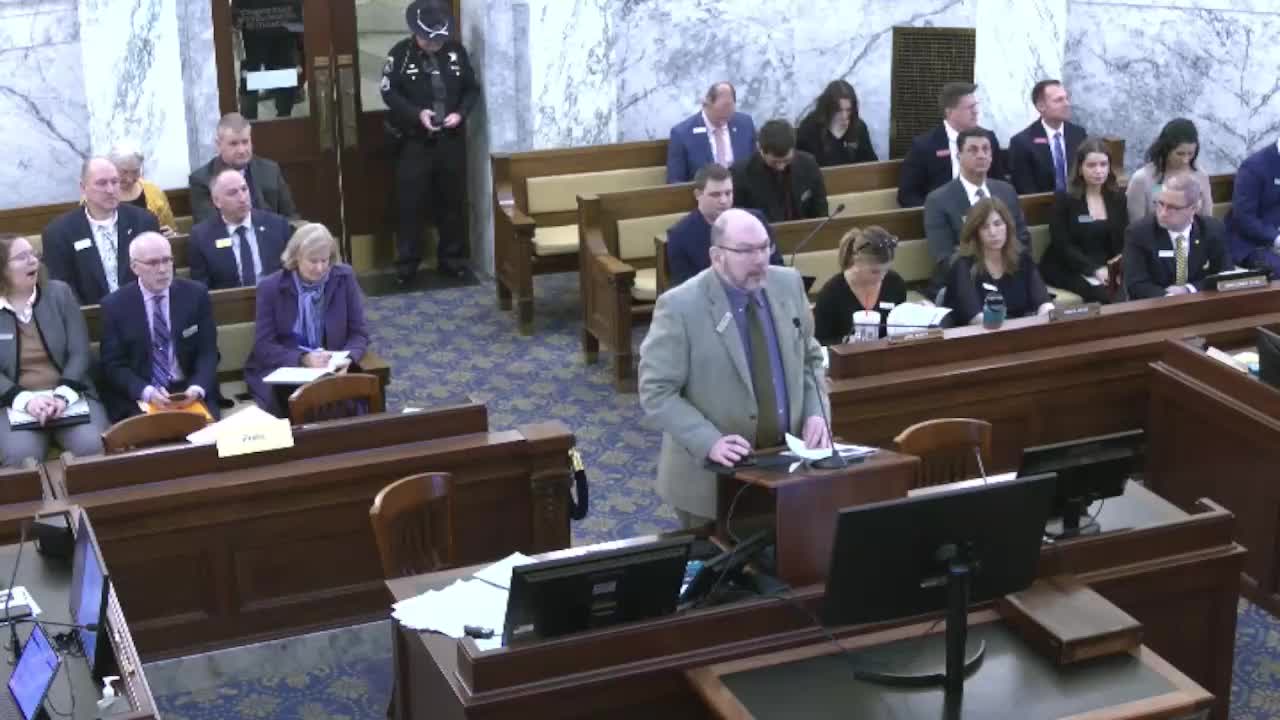
The Joint Finance-Appropriations Committee heard a presentation from the Idaho Geological Survey on Thursday seeking partial FY2026 general-fund support to continue a database manager position that has been paid by grants.
Kevin Campbell of the Legislative Services Office presented the survey’s budget and said the Idaho Geological Survey (IGS) has 12.47 authorized full-time positions; at the time of the report several positions were vacant and in the process of being filled.
Claudio Berti, state geologist and director of the Idaho Geological Survey, told the committee the database manager role has historically been grant-funded and is integral to maintaining Idaho’s geologic data systems. He said the position enables the survey to leverage federal grants at a 2-to-1 matching rate and that losing the position would “be catastrophic for the survey.”
Budget details and recent purchases: Mr. Campbell said personnel costs accounted for about 76.5% of IGS expenditures in 2024. The survey has invested in research-grade microscopes and a seismometer for the Idaho Seismic Network; capital outlay in 2024 included about $122,880 in equipment.
Data preservation, cores and exploration: Berti told the committee the survey curates a large public database of geologic information and would like to expand physical data preservation, including a repository for drill core and other samples, which he said other states maintain. He said such a repository would preserve data from private-sector exploration and federal surveys and would reduce the need to re-permit or re-drill in the future.
Funding history and match: Berti said the position has been supported with abandoned-mine‑lands funds administered through the Department of Lands and with other grant sources; those sources may not be stable in the future, he said, and the request is intended to protect the survey’s ability to match federal grants and sustain its data programs.
Next steps: The survey offered to provide additional information requested by the committee; no final appropriation decision was made during the hearing.