Get Full Government Meeting Transcripts, Videos, & Alerts Forever!
Get email alerts on the K12 Funding topic
No spam. Unsubscribe anytime.
JFAC hears public school budget overview as support-unit counts fall and facilities funding shifts
Summary
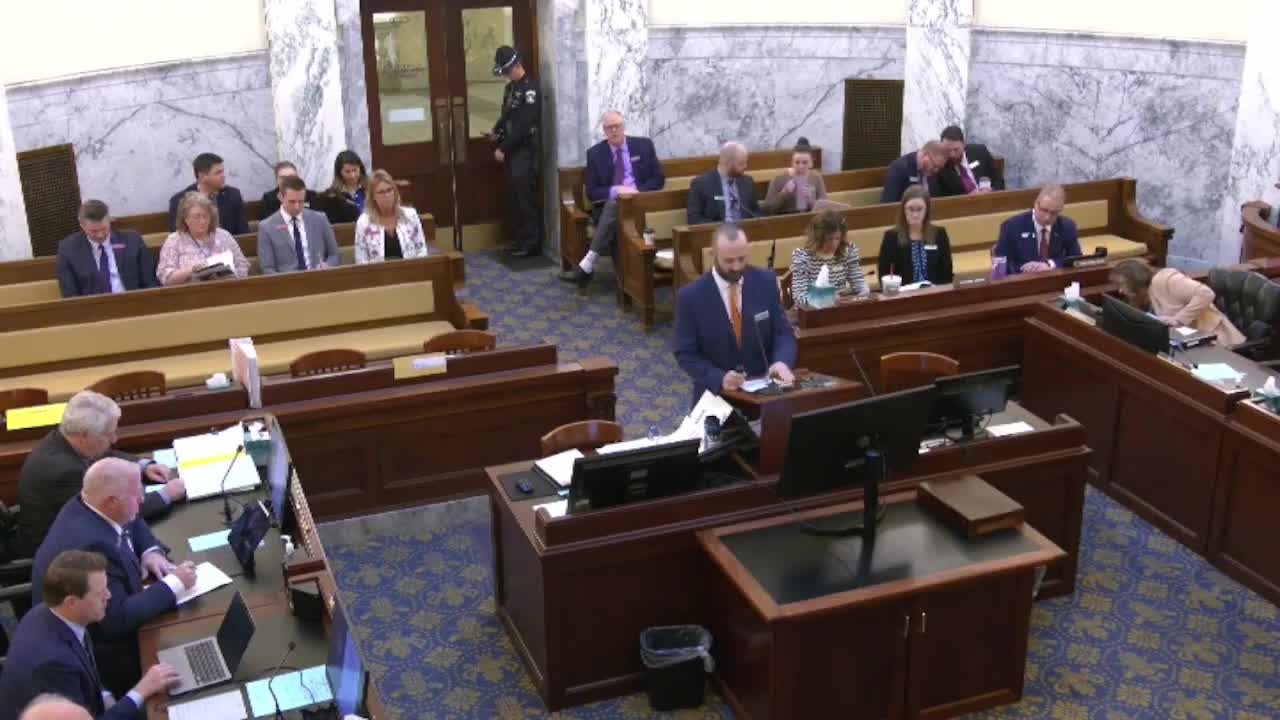
The Joint Finance‑Appropriations Committee heard a high‑level briefing March 4 on the state’s public school support budget, the formulas that drive distributions and several legislative proposals that could change how districts receive facilities and enrollment‑linked funding.
The Joint Finance‑Appropriations Committee heard a high‑level briefing March 4 on the state’s public school support budget, the formulas that drive distributions and several legislative proposals that could change how districts receive facilities and enrollment‑linked funding.
Jared Tetrault, deputy division manager with the Legislative Services Office’s Budget and Policy Analysis Division, told the committee the public school support program covers roughly 115 local school districts and about 75 charter schools and that most school funding rules are found in Title 33 of Idaho Code and the Idaho Constitution, Article IX, Section 1. “Staff allowance for every support unit the state will fund 1.55 full time equivalent positions,” Tetrault said, explaining the basic unit the state uses to allocate school dollars.
Why it matters: Many line items that appear to shrink year‑to‑year are driven not by cuts in per‑unit funding but by changes in support‑unit counts and other statutory formulas. Committee members pressed analysts and State Superintendent Debbie Critchfield on the consequences of shifting enrollment and federal aid, and on how recently created facilities funding should be treated in the budget process.
Major points from the briefing
- Support units and per‑unit funding: Tetrault explained that most state distributions flow through support units and that the staff allowance per unit is 1.55 full‑time equivalent positions. He said the statewide average dollar value for a support unit is about $147,000. Because Idaho funds many items by support‑unit counts, a drop in units can look like a cut even when per‑unit allocations remain steady.
- Unit declines and population forecast adjustments: Analysts told the committee the budget includes an estimated net decrease of roughly 200 support units for the coming year. Tetrault said that results in a roughly $15.7 million decrease tied to fewer teacher units, partially offset by roughly $17.3 million from teachers moving on the career ladder, producing a modest net increase in that line overall.
- Career ladder and change‑in‑employee‑compensation (CEC): Committee members reviewed recent CEC actions. Tetrault and Critchfield described last session’s maintenance CEC actions (an initial 1 percent maintenance CEC and a later 2 percent supplemental CEC for some staff), and the packet before the committee includes a separate 5 percent CEC on some cells in the current proposal. Career ladder “equivalents” remain a separate line for employees who are not on the typical district ladder.
- Public Education Stabilization Fund (PSIF): Tetrault described PSIF as the reconciliation tool that receives deposits when appropriations exceed distributions and can be drawn from when distributions exceed appropriations.
- Facilities funding and pending bills: The committee reviewed the School District Facilities Fund established in House Bill 292 (2024). Tetrault explained that if House Bill 374 (now pending) becomes law it would change the fund to a continuous appropriation; the committee would then need to consider removing those dollars from the annual HB‑2 appropriation. The committee discussed last session’s one‑time $1 billion allocations (referred to in testimony as House Bill 521) that districts received for maintenance, renovation and new construction and the requirement districts submitted 10‑year plans to access that money.
- Transportation formula and other formula changes: Tetrault said a pupil‑transportation request of $7.7 million is based on Idaho Code section cited in the packet (33‑1006, transportation allowances that rely on prior‑year actuals). He also said a request exists to shift $10 million of transportation funding from the general fund to the “other income” (dedicated) fund because of additional interest and royalty revenue.
- Federal ARPA/ESSER funds and homelessness funding: The packet shows the final tranche of federal COVID/ARPA/ESSER dollars in the public schools budget at roughly $99.9 million for the current year. Superintendent Debbie Critchfield told the committee the Department of Education did receive a federal offer to extend allowable use of some federal dollars but that she did not request an extension: “I did not do that. I sent a letter back saying we would not extend the period, for usage of those dollars,” Critchfield said. She and staff reviewed how districts used one‑time federal funding and said many districts used some ESSER/ARP funds for personnel before those funds expired. Tetrault and the superintendent described McKinney‑Vento homelessness funds (federal title funding) that districts use for services such as temporary housing or supports for students experiencing housing instability.
What committee members asked for and next steps
- Distribution detail: Senators and representatives asked staff to provide district‑level distributions for facility funds and the School District Facilities Fund and copies of district 10‑year plans. Tetrault said distribution tables are available in the fiscal facts publication and that he would provide further district‑by‑district breakdowns to the committee.
- Local levy and local revenue detail: Several members asked for the split between state, local and federal funding. Critchfield provided a high‑level share: about 65 percent state, 24 percent local (levies), and 11 percent federal. Tetrault and department staff offered to provide detailed levy and county tax data.
- Pending legislation: Multiple items the committee reviewed require statutory change to take effect (for example, formula changes and the potential continuous appropriation for the School District Facilities Fund). Staff noted bills are still pending in separate committees and that any appropriation decisions by JFAC may need follow‑up amendments if the underlying statutes change.
Committee context and caution
The presenters repeatedly cautioned that apparent declines in some budget lines are driven by unit‑count changes rather than across‑the‑board reductions in per‑unit funding. Tetrault emphasized the difference between state allocations and local payroll decisions: the state sets allocation formulas and state funding for salary cells; actual local salaries remain a local district determination.
Ending
Committee members signaled interest in follow‑up materials (district facility allocations, breakdown of federal professional‑development funding, local levy detail) before taking final appropriation votes. Staff and the Department of Education agreed to provide those materials to help the committee reconcile statutory distribution rules with the appropriation decisions it will make later in the session.