Get Full Government Meeting Transcripts, Videos, & Alerts Forever!
Get email alerts on the Childcare Regulation topic
No spam. Unsubscribe anytime.
Senate committee advances bill to shift Idaho daycare rules to providers; opponents warn of safety risks
Summary
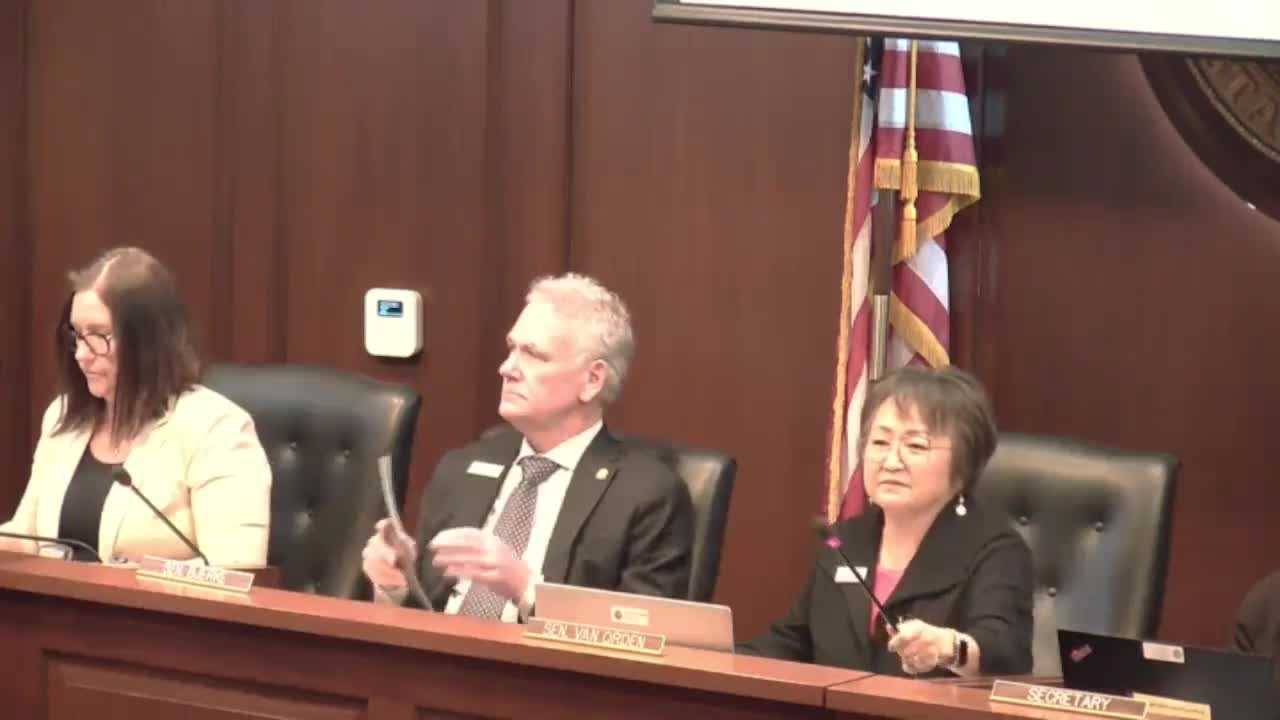
The Idaho Senate Health and Welfare Committee voted to send House Bill 243 to the floor with a “do pass” recommendation after nearly three hours of testimony and public comment on whether loosening statutory ratio rules and centralizing licensing with the state will expand childcare capacity.
The Idaho Senate Health and Welfare Committee voted to send House Bill 243 to the floor with a “do pass” recommendation after nearly three hours of testimony and public comment on whether loosening statutory ratio rules and centralizing licensing with the state will expand childcare capacity.
Rep. Rod Furnace, District 31, who sponsored the bill, told the committee that H.B. 243 “helps providers the Idaho way by reducing onerous regulations and helping parents and students find affordable daycare.” He framed the measure as a market-driven response to what he and proponents described as a shortage of licensed childcare seats and a workforce bottleneck.
The bill would remove specific child-to-staff numbers from statute and instead require each licensed facility to establish a child-to-staff ratio “appropriate to ensure the health, safety, and welfare of all children in attendance,” publish that policy for parents, and adhere to it. The measure also moves the current rule definition of “supervision” into statute and adds language that for children 5 and younger a provider must be “within sight or normal hearing and near enough to render immediate assistance,” while for older children providers must use judgment appropriate to the child’s age, needs and capabilities. H.B. 243 would also repeal a statute authorizing local childcare ordinances in some Idaho cities and retains misdemeanor penalties for operating without a license.
Nut graf: The bill splits parents, providers and local officials. Supporters, including business and free-market groups, say removing statutory number caps and consolidating licensing at the state level will lower barriers to opening childcare providers and thereby increase available slots. Opponents — including childcare professionals, child-advocacy groups, municipal officials and public safety authorities — warned the change would reduce enforceable safety standards and increase risks to children.
Committee testimony and details
Kate Oz of Kestrel West, who answered procedural and drafting questions for the sponsor, said the bill “actually enhances [the definition of supervision] by making sure that it is active supervision being done,” and described specific supervision language the bill would add. Oz also said the bill does not remove all oversight: background checks, fire and health inspections, and a misdemeanor for operating without a license remain in place, and the department must move rules into statute by 2026.
Opponents gave repeated examples of safety and capacity concerns. Christine Tiddens, executive director of Idaho Voices for Children, said the bill “falls short of this intent at the expense of children's safety,” and argued that letting providers set their own ratios could increase incidents of abuse, neglect, and fatalities. Pocatello Police Chief Roger Shy described local enforcement work and cited a 2023 criminal case in which investigators found staff routinely over maximum allowed ratios and discovered video evidence of physical abuse; he warned the bill would push low-income families toward unlicensed care.
A number of childcare providers and former providers spoke against the bill. Mark Kirby recounted a family tragedy: he said his sister-in-law’s son, Logan, was found dead at a daycare and that “an investigation into this tragic incident found the child to staff ratio exceeded the current limits set by [Idaho] law and the daycare provider was negligent in not following safe sleeping practices and supervision requirements.” Sabrina Dunn, an in-home provider, testified that understaffing and underpaying are already problems and that removing enforceable ratios would “directly lead to injuries and even deaths.”
Local-government officials asked the committee to pause. Kathy Grismeyer, director of policy and government affairs for the city of Boise, said the city has used local reforms and incentives — property tax rebates, worker incentive pay funded with ARPA dollars, zoning changes and reduced licensing fees — to support providers without weakening safety rules. She raised concern about a fiscal note of $0 and asked how state Health and Welfare would absorb licensing and oversight for facilities previously overseen locally.
Supporters said deregulation is necessary to expand seats and lower costs. Nicholas Kleinworth, policy director at the Idaho Freedom Foundation, said Idaho faces a shortage “nearing 21,000 seats” and contended that subsidies and expanded funding have not solved the problem. Chris Cargill, president of Mountain States Policy Center, argued the bill would reduce obstacles to starting providers and is not intended to eliminate safety requirements.
Implementation and remaining questions
Proponents said federal funding rules will still apply to providers that accept subsidies and that those providers would have to meet any federal conditions. Kate Oz told the committee the department would need to adopt rules by 2026 and that how federal-subsidized providers are handled will be part of that rulemaking.
The bill contains several other provisions described in testimony: an application abandoned if not completed within six months (instead of an unspecified prior practice that could be treated as a denial and require a year to reapply), repeal of local ordinance authority in some cities, maintenance of criminal history check requirements (including for in‑home providers caring for four or more children), and a change to the statutory requirement to display a license (the misdemeanor for operating without a license remains).
Votes and next steps
Sen. Leddy moved and Sen. Keiser seconded a motion to send H.B. 243 to the floor with a due-pass recommendation. The committee voted to advance the bill. A roll-call recording of individual votes was not fully audible in the transcript; committee members recorded “do pass” and the chair declared the motion passed. The committee adjourned for the floor.
Why it matters
Idaho lawmakers confront a statewide childcare shortage while weighing trade-offs between safety standards and regulations that may limit the number of available providers. The bill centralizes licensing at the state level, removes numeric ratios from statute, and asks providers to publish their own ratio policies — changes advocates say will spur new providers and opponents say will remove baseline, enforceable safety limits.
What to watch next
If the full Senate takes up the bill, debate is likely to center on whether the statutory removal of numeric ratios can be reconciled with the safety concerns raised by providers, municipal officials and child-safety advocates. The department’s 2026 rulemaking timetable and any amendments restoring specific ratio language will be key to how the law would function in practice.