Get Full Government Meeting Transcripts, Videos, & Alerts Forever!
Get email alerts on the Wildlife Depredation Compensation topic
No spam. Unsubscribe anytime.
Temporary rule sets framework for wolf and grizzly depredation compensation; agency to refine through negotiated rulemaking
Summary
Docket 210820401 implements a temporary rule to allow compensation for livestock losses from wolves and grizzly bears in line with House Bill 592; the Office of Species Conservation will process claims and the agencies plan a negotiated rulemaking to develop a permanent program.
The committee approved a temporary rule (docket 210820401) to implement a compensation framework for livestock losses from wolf and grizzly bear depredations following passage of House Bill 592.
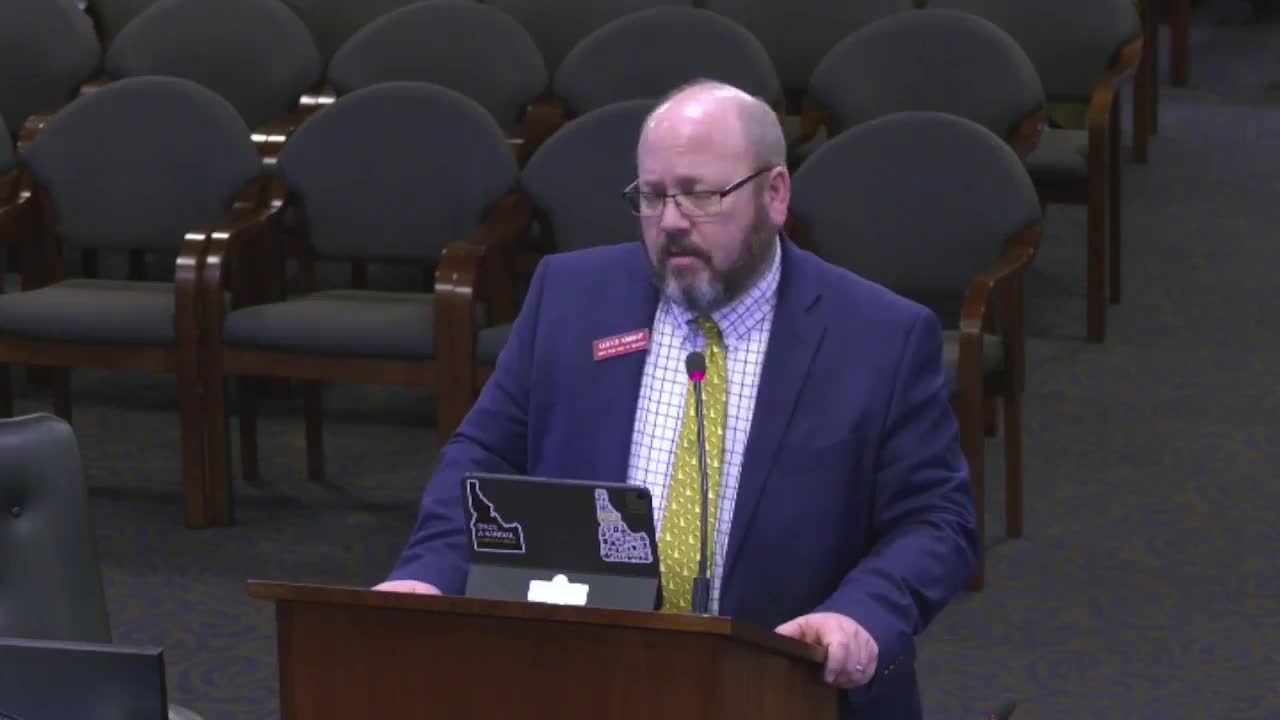
Lloyd Knight, deputy director of the Idaho State Department of Agriculture, said the temporary rule establishes definitions and a process to accept claims and disburse funds. He said the Office of Species Conservation (OSC) commonly uses a December 31 cutoff for claims when processing other compensation programs; the agency will review claims submitted before that date and coordinate payments with Fish and Game and OSC.
Knight said the rule allows reimbursement of certain expenses, noting OSC’s common practice to reimburse a portion rather than full veterinary bills. A committee question identified language allowing reimbursement “up to 70% of market rate of veterinarian care”; Knight said that percentage followed OSC practice for similar programs. The department and OSC will reconcile submitted claims and issue payments, and the agencies plan a negotiated rulemaking process next year to refine the permanent program.
The committee approved the temporary docket on a voice vote. Representatives and department leadership emphasized interagency coordination and noted additional stakeholder discussion will occur during the planned rulemaking process.