Get Full Government Meeting Transcripts, Videos, & Alerts Forever!
Get email alerts on the Blood Supply topic
No spam. Unsubscribe anytime.
Blood‑supply groups urge committee to hold bill requiring vaccine‑status labeling; sponsors say disclosure supports informed consent
Summary
The Senate Health and Welfare Committee considered House Bill 131, which would require donation centers to note donors' self‑reported mRNA COVID vaccination status and allow patients in nonemergency cases to request labeled blood. Major blood suppliers and clinicians urged the committee to hold the bill because no laboratory test can verify vaccine material in donated blood and federal rules limit labeling to verifiable medical data.
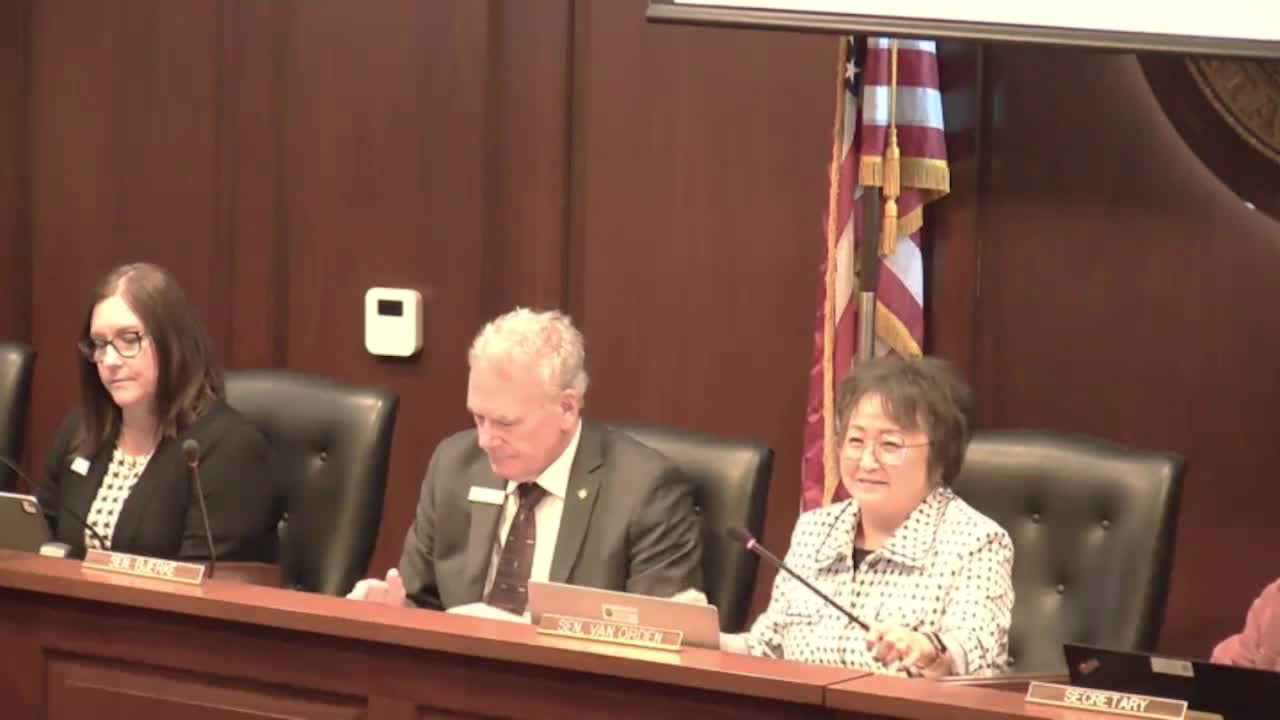
The Senate Health and Welfare Committee heard extensive testimony on House Bill 131, which would require donation centers to ask donors about mRNA COVID vaccination status and allow patients in nonemergency situations to request blood labeled according to donors' reported vaccine history.
Representative Bruce, sponsor of the bill, framed it as an informed‑consent provision that would let patients choose labeled blood for nonemergency transfusions. "I'm not challenging the safety of the vaccination... I'm just saying that people have the right to choose," Bruce said.
Hospital and blood‑supply organizations urged the committee to hold the bill. Toni Lawson of the Idaho Hospital Association said the state already experiences periodic blood shortages and warned HB 131 could exacerbate collection and processing burdens: "Our concern is the potential for this legislation to exacerbate the blood shortage challenges and the negative impact on patient care."
Major blood suppliers told the committee they could not comply with the bill's labeling requirement because no test exists to detect mRNA vaccine material in donated blood and federal regulations limit labeling to verifiable, medically‑relevant information. Michael Martinez, regional director for Vitalant in Idaho, told lawmakers that labeling blood by self‑reported vaccine history would "unduly complicate the management of the already limited blood supply for patients" and could raise costs.
Representatives of the American Red Cross and Red Cross medical staff made the same point: "If we can't verify it, we can't label it," Nicole Erwin, CEO of the American Red Cross of Idaho, said. Red Cross and Vitalant witnesses told the committee the FDA and accreditation standards require donor screening and laboratory testing that together produce the current, highly regulated labeling and traceability system; they argued HB 131 would require labeling based on unverifiable self‑report and could mislead recipients about safety.
Local clinicians and transfusion medicine specialists warned of operational strain and potential supply loss if donors are required to disclose vaccine status or if some donors decline to give when asked. Dr. Jessica Corian, a transfusion medicine physician, said directed donations and complex inventory management already exist for rare patient needs and that adding vaccine‑status segregation would increase waste and complicate distribution to hospitals across state lines.
Proponents, including some committee members and private citizens who had sought physician‑directed donations in the past, said the bill is about patient choice and directed donation precedent. Representative Bruce cited federal regulatory sections governing donor questionnaires and directed donations and argued the FDA sets minimums and states can add local requirements.
After extended testimony and debate the committee voted on a motion to send HB 131 to the floor with a due pass recommendation. The motion failed on a voice vote.
What's next: With the committee motion to advance the bill failing, HB 131 will not go to the Senate floor from this committee. Sponsors and proponents may revise the proposal or pursue alternate pathways to address patient requests for donor‑preference transfusions.
Speakers on the record included Representative Bruce (sponsor), Toni Lawson (Idaho Hospital Association), Michael Martinez (Vitalant), Melinda Merrill (Red Cross counsel), Nicole Erwin (American Red Cross of Idaho), Dharma Nichols (Red Cross blood services), Dr. Jessica Corian (transfusion medicine physician), and Dr. Cole Elliott (Red Cross medical director).