Get Full Government Meeting Transcripts, Videos, & Alerts Forever!
Get email alerts on the Refugee Services topic
No spam. Unsubscribe anytime.
Committee narrows refugee medical assistance eligibility; debate centers on cost and humanitarian concerns
Summary
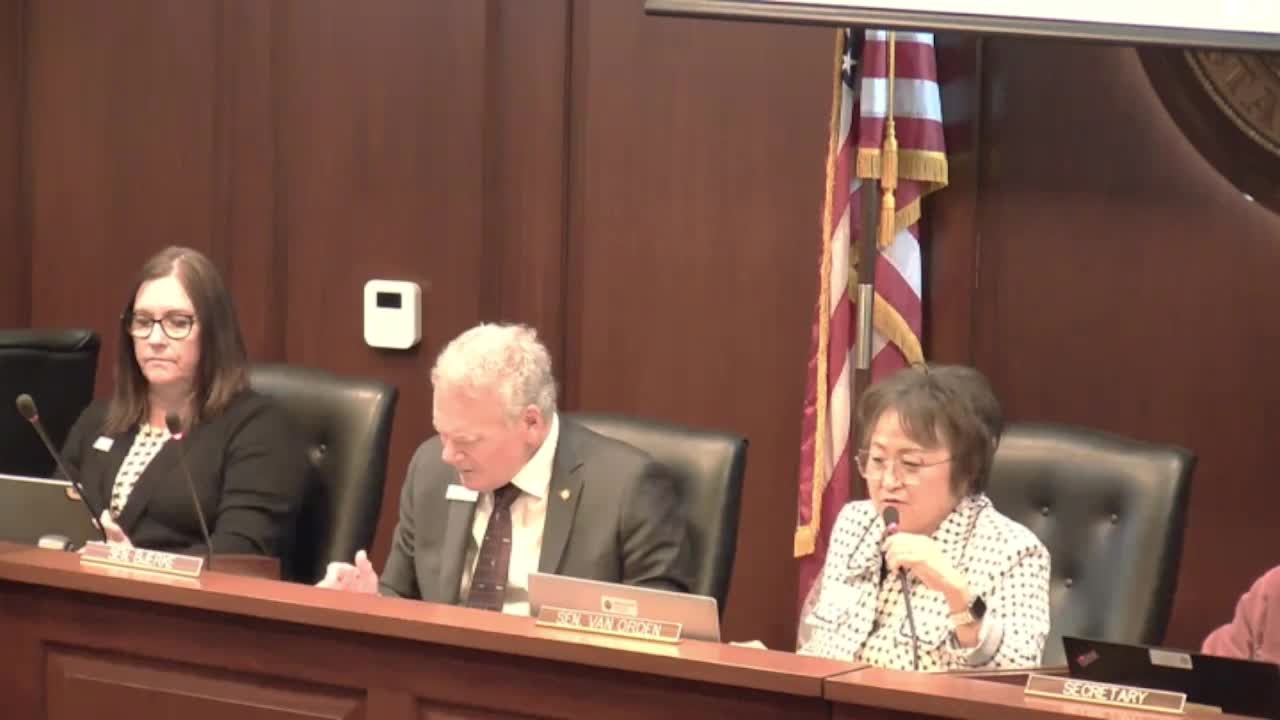
The Senate Health and Welfare Committee voted to send House Bill 199 to the Senate floor with a due pass recommendation after a debate over whether to reduce an extra income allowance in the Refugee Medical Assistance program.
The Senate Health and Welfare Committee advanced House Bill 199 to the Senate floor with a due pass recommendation after debate about program cost and humanitarian impact.
Sponsor Senator Keiser told the committee the bill moves an existing refugee medical assistance rule into statute and removes an extra income allowance that previously allowed certain refugees to qualify for program benefits at up to 150% of the federal poverty guideline. "When moving this rule into statute, catching that disparity, this got lowered down to 133% to match what other Idahoans get," Senator Keiser said.
Keiser cited program figures during his presentation: Idaho takes in approximately 1,000 refugees per year; "currently, only 19 are actually eligible for this extra benefit program," he said. Keiser told the committee total medical costs covered through the refugee medical assistance program in 2024 were about $223,000 while the total cost to run the program exceeded $1,100,000.
Opponents, including refugee services staff and local clinicians, urged the committee to preserve the broader eligibility. Holly Beach, communications manager for the Office for Refugees, urged the committee to consider the contributions refugees make in local economies and the role of early access to care in attaining self‑sufficiency. "Refugee resettlement is not new to Idaho... We provide critical services from picking them up at the airport... to helping them find housing and their first jobs," Beach said.
Dr. Angela Banks, a family medicine physician in Boise, told the committee that for many recently arrived refugees the Medicaid benefit represents their first access to medical care in years. "Losing Medicaid funding would be absolutely devastating for the small and vulnerable group of new Americans and Idahoans. Please do not make it harder for people fleeing war and persecution to access basic health care once they finally make it to safety," Dr. Banks said.
Caseworkers and refugee medical case managers described clients who arrive with interrupted or no prior access to care and said early medical coverage supported rehabilitation and workforce participation. Hannah Havineza, a refugee medical case manager at Foseco Health who is herself a former refugee, said continued access to care is essential for rapid entry into employment and taxpaying roles in the community.
Committee members split along fiscal and humanitarian lines. Senator Lenny, who moved the motion to send the bill to the floor, emphasized limited program reach and administrative inefficiency: "Currently, we're spending $1,100,000 to administer $223,000. That seems very inefficient to me," Lenny said. Senator Wintrow opposed the motion, describing the affected people as a vulnerable group that merits the additional support and noting the short 12‑month period in which refugees must secure stability.
A voice vote advanced the bill to the floor with a due pass recommendation. Senator Wintrow asked to be recorded as opposed.
Practical effect and next steps: If enacted, the bill would match refugee medical assistance income eligibility to the same 133% federal poverty guideline applied to other Idahoans. The committee record shows the move was framed as aligning administrative rules with statute and reducing what proponents called an unnecessary extra allowance for a small number of recipients. Opponents argued the change could remove an early safety net that aids recovery and entry to the workforce.
Speakers from the committee hearing included Senator Keiser (sponsor), Senator Lenny (mover), Senator Wintrow (opponent), Holly Beach (Office for Refugees), Dr. Angela Banks (family medicine physician), and Hannah Habineza (refugee medical case manager).