Get Full Government Meeting Transcripts, Videos, & Alerts Forever!
Get email alerts on the State Revenue Fy2026 topic
No spam. Unsubscribe anytime.
JFAC fails to adopt FY2026 revenue forecast after split votes; decision postponed
Summary
The committee debated competing FY2026 general fund forecasts — the Economic Outlook committee's $6.4 billion, a substitute $6.33 billion and the governor's lower forecast — but did not obtain a majority from both houses and postponed a final decision.
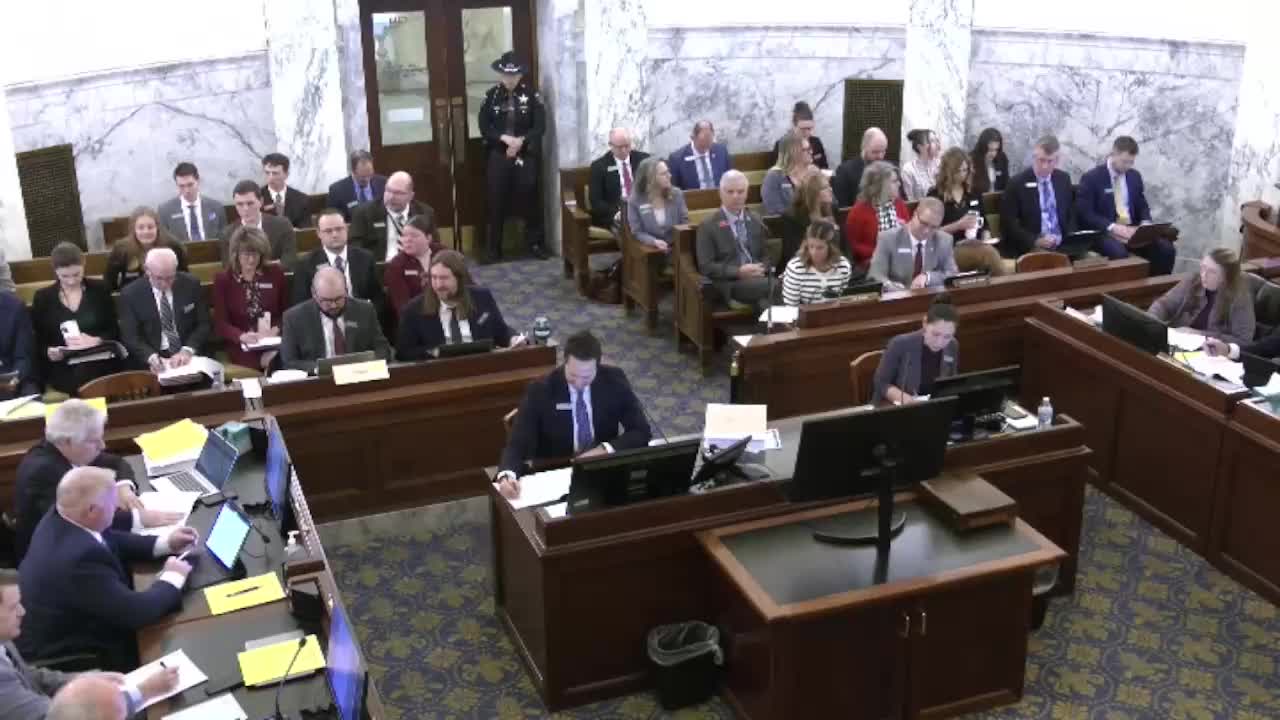
The Joint Finance‑Appropriations Committee considered multiple general fund revenue forecasts for fiscal year 2026 but did not adopt any figure after competing motions failed to secure a majority in both the House and the Senate delegations on the committee.
Representative Petsky moved to adopt the Economic Outlook and Revenue Assessment Committee recommendation of $6,400,000,000 for FY2026. Senator Woodward offered a substitute motion of $6,330,000,000, which supporters described as a compromise between the committee recommendation and the governor's lower forecast. Members debated the relative conservatism of each number and whether to favor the committee's estimate or a lower, more cautious figure.
Votes: The substitute motion (the $6.33 billion figure) failed to obtain the required majority from both chambers (final committee tally reported as 8 ayes, 12 nays overall). Committee members then voted on the original $6.4 billion motion; that motion likewise failed because it did not receive the required majority from both the House and the Senate delegations. Committee leadership said the matter will be taken up again at a later time.
Why it matters: The FY2026 revenue number is the baseline used to set spending limits for agency budgets. Not choosing a number at this meeting postpones that baseline decision and may affect the timing of further budget decisions.
Context from the meeting: Members who favored the $6.4 billion forecast said EORAC's work produced a conservative, evidence‑based number. Senators and representatives who supported a lower figure cited uncertainty in near‑term receipts and argued it would avoid repeated supplemental requests. Several members described the result as a compromise failure and acknowledged the committee must readdress the choice before advancing the rest of the budget.
Next steps: Committee staff said voting on the FY2026 revenue projection will be delayed and reconvened later, following additional information and deliberation.