Get Full Government Meeting Transcripts, Videos, & Alerts Forever!
Get email alerts on the Health Insurance topic
No spam. Unsubscribe anytime.
Committee deadlocks on health-insurance premium increase after debate over reserve risk and employer costs
Summary
The committee debated whether to set the state health-insurance base at $14,300 per eligible position (governor's recommendation) or $13,960 (CEC recommendation). Both the substitute and original motions failed to secure a majority in both chambers; analysts warned of reserve and contractual risk if the contingency falls below 10%.
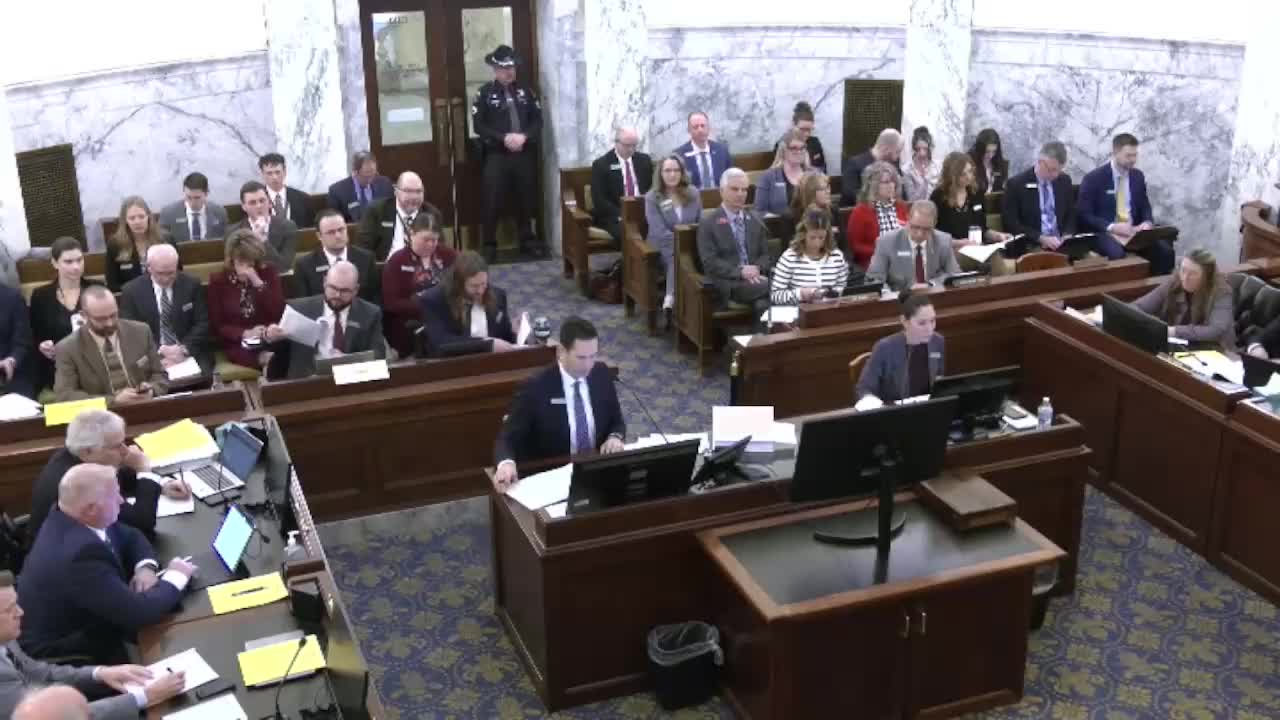
Lawmakers debated and then failed to reach agreement on a statewide adjustment to the base amount for employee health insurance for FY2026, with both proposed motions falling short of the committee’s bicameral-majority rule.
Keith Bybee, the budget analyst, explained two competing options: the CEC (Change in Employee Compensation) committee recommended increasing the base to $13,960 per eligible full‑time position, which analysts projected would require $29,996,000 from the general fund (and additional dedicated and federal dollars) for a total increase of about $40,261,200; the governor’s recommendation raised the base to $14,300, producing a larger net cost (Bybee cited a total increase of approximately $56,315,200 across funds).
Analysts and administrators discussed the contingency reserve that backs the Office of Group Insurance plan. Bybee said Milliman actuarial projections indicate the CEC recommendation would reduce the reserve to about the contractual minimum (projected at roughly $51.6 million, or the 10% floor) while the governor’s recommendation would leave roughly $61.4 million, a larger cushion. "The current projections from the Milliman report suggest ... it would pull the reserve balance down to, effectively, the statutory minimum of 10% of the total plan amount," Bybee said when describing the CEC recommendation.
Laurie Wolf, administrator for the Division of Financial Management, and Faith Knowlton, administrator for the office of group insurance, warned of contract consequences if reserves fall below the 10% contingency. Knowlton said, "If we fall below the 10% contingency reserve, then a risk charge can be assessed to the state." Wolf added that the 10% contingency is effectively a contractual minimum and explained the actuarial projections show only about a 50% chance of meeting that level if the CEC figure were adopted.
Committee members traded views on appropriate risk tolerance. Representative Furness (speaking from financial/actuarial experience) and others urged adopting the lower CEC number to avoid overfunding reserves; other members stressed the value of the additional cushion and the contractual and operational risks of falling too low. Two separate roll-call votes were held on the competing motions:
- The substitute motion to adopt the CEC recommendation ($13,960) failed on a joint tally (9 ayes, 11 nays) because it did not secure a majority in the House. The Senate recorded 6 ayes and 4 nays; the House recorded 3 ayes and 7 nays.
- The original motion to adopt the governor’s recommendation ($14,300) later failed to advance because it did not obtain a majority in the Senate even though the House recorded 10 ayes and 0 nays; the joint tally was 14 ayes and 6 nays but the Senate vote was 4 ayes and 6 nays.
Ending: With neither motion achieving the committee’s bicameral-majority threshold, the committee did not set a new base amount for health insurance in this session. Analysts noted that choosing a lower funding level this year could require a larger increase next year if claims materialize above projections; conversely, a higher funding level puts more dollars into reserves today but increases current agency and school budget pressure.