Get Full Government Meeting Transcripts, Videos, & Alerts Forever!
Get email alerts on the Medicaid Reform topic
No spam. Unsubscribe anytime.
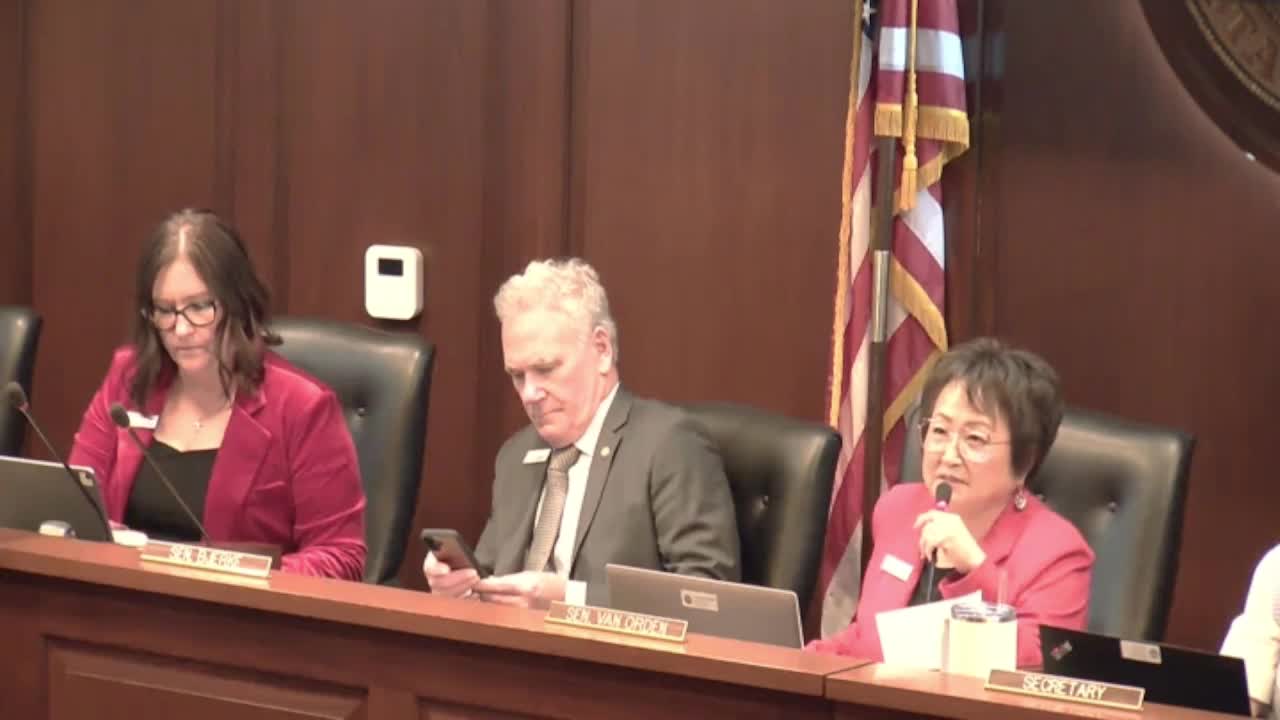
Senate panel advances HB 345 after hours of testimony on Medicaid managed care, work requirements and rule changes
Summary
The Senate Health & Welfare Committee voted to send House Bill 345 to the floor with a due-pass recommendation after hearing hours of testimony for and against a package of Medicaid reforms that would add managed care, work requirements for the expansion population, co-pays and rule changes affecting disability services.
The Idaho Senate Health & Welfare Committee voted to send House Bill 345 — the Medicaid Affordability and Healthcare Access Act — to the Senate floor with a due-pass recommendation after more than three hours of testimony and questions from committee members.
Representative Jordan Redmond, R-Kootenai County, presented the bill to the committee, saying HB 345 aims to curb cost growth across Medicaid by introducing comprehensive managed care, limited cost sharing, provider practice-authority protections and site-neutral payments. "This bill truly does offer immediate savings to the taxpayers as well as substantial long term savings and stability to the Medicaid budget," Representative Redmond said. He told the committee the proposal removes some provisions from a prior House bill and adds reforms to the broader Medicaid program.
The bill drew extensive public comment, mostly opposed. Disability advocates, medical providers and families warned HB 345 could disrupt care for people with disabilities and seniors, jeopardize specialized waivers and add administrative burdens that would lead to coverage losses. Christine Pisani, director of the Idaho Council on Developmental Disabilities, said, "It is imperative that the disability community be included in the development of managed care" and raised questions about the interaction between proposed changes and the ongoing KW v. Armstrong litigation. Several speakers asked that rules tied to disability programs, including references to rule sections 16.03.09 and 16.03.10, remain intact or be amended only after stakeholder input.
Representative Redmond and Department of Health and Welfare officials said the bill does not repeal Medicaid expansion or waive the Katie Beckett program. Juliette Sharon, deputy director at the Department of Health and Welfare, told the committee the department would issue temporary rules if the bill becomes law and aims to have those rules in place by July 1 to avoid any coverage gap. Sharon said, "In many cases, I think that will be very minimal change to how the rules read today."
Key provisions described by Representative Redmond include: a move to comprehensive managed care with capitated rates and oversight by the Medicaid legislative review panel; a work requirement for the expansion population (20 hours per week of work, volunteering or education, with specified exemptions); twice-yearly eligibility verification; limited Medicaid cost sharing (small copays); site-neutral payments to prevent higher facility charges when services move from private practices to hospital-owned entities; and carve-outs and protections for federally qualified health centers.
Committee members pressed for specifics about implementation and costs. Representative Redmond said the fiscal note accounts for anticipated administrative costs and that the Department of Health and Welfare expects to add 17 FTEs to administer work requirements and eligibility changes. He cited net savings on the fiscal note and ongoing savings estimates but acknowledged the department will incur startup costs. He also said the bill includes language allowing the department to make offsets if the federal matching rate changes.
Opponents pointed to experiences in other states where work requirements and frequent reporting led to coverage losses and increased administrative expenses. Hillary Hagen of Idaho Voices for Children cited Arkansas’s experience and studies showing substantial coverage losses for people who remained eligible but were disenrolled for paperwork or reporting problems. Emergency and primary care physicians warned that adding reporting and monitoring requirements would increase missed care and downstream emergency costs.
Committee discussion ahead of the vote highlighted the budget stakes. Supporters framed HB 345 as a needed reform to ensure long-term sustainability of Medicaid as costs rise, while opponents urged written, enforceable guarantees that affected communities — particularly people with disabilities — will be included in rulemaking and that front-line customer-service capacity will be expanded so eligible people are not erroneously disenrolled.
The committee motion to send HB 345 to the floor with a due-pass recommendation was moved and seconded; the committee approved the motion by voice vote. The committee did not record a roll-call tally in the transcript.
The Senate floor will now receive the bill; if enacted it would authorize managed care contracts, permit limited cost sharing and require the Department of Health and Welfare to implement eligibility and reporting changes outlined in the bill text and associated rules. Advocates for the disability community and several health-care providers asked legislators to require explicit, documented stakeholder engagement and transparent oversight mechanisms before major programmatic shifts take effect.