Get Full Government Meeting Transcripts, Videos, & Alerts Forever!
Get email alerts on the Foster Care Extension topic
No spam. Unsubscribe anytime.
Senate panel advances bill to extend foster-care support to age 23 after survivors and officials testify
Summary
After testimony from foster youth, foster parents and department officials, the Senate Health and Welfare Committee voted to send House Bill 245 to the Senate floor with a "do pass" recommendation. The bill would make voluntary extended foster care available up to age 23 and streamline relative-placement licensing.
The Senate Health and Welfare Committee advanced House Bill 245 to the Senate floor with a "do pass" recommendation after multiple foster-care alumni, foster parents and Department of Health and Welfare officials described the program as a low-cost intervention that can reduce homelessness, arrests and early pregnancy among youth who age out of care.
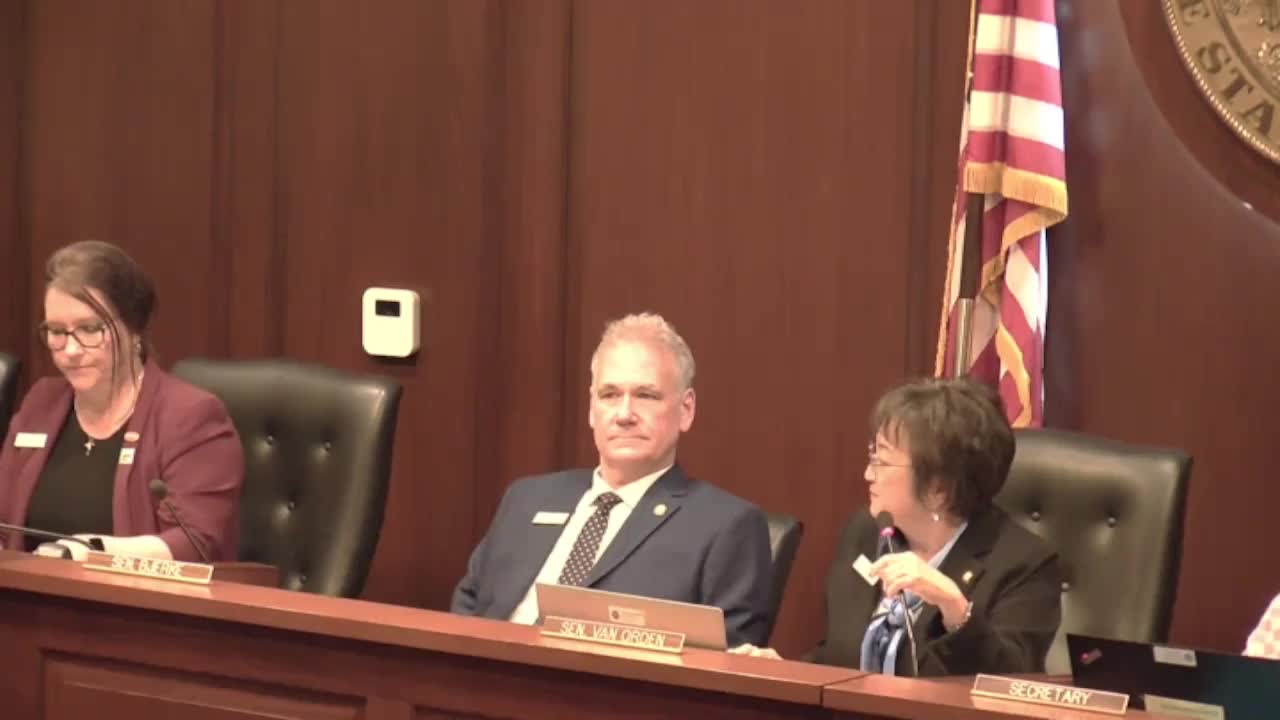
Sen. Carl Bjerke, who presented the measure, said the bill would extend the optional age at which young people may remain in foster-care services from 21 to 23 and "streamlines ability for kindred care." Reading language from the bill, Bjerke told the committee: "Notwithstanding the provisions of subsections 1 of this section, the department may expedite placement with a relative, issue a foster care license, and grant a limited variance or waiver of a licensing standard requirement, or establish separate standards or requirements for licensure for relatives." The bill as described by Bjerke keeps participation voluntary.
Monty Prow, deputy director for child welfare at the Department of Health and Welfare, described extended foster care as giving "emerging adults a little bit of a longer runway" to learn day-to-day adult skills such as budgeting, completing job applications and keeping medical appointments. Prow said participants would be placed on an independent-living or transition plan and a case manager would check in periodically; roughly half of participants currently choose to live with foster families while the others live independently. He said a young person in independent living could receive $876 per month; foster payments for those who live with a foster parent would continue to go to the foster parent.
Several people with lived experience urged lawmakers to approve the change. Ivy Smith, who testified as a former foster youth and on behalf of Idaho Voices for Children, described being removed from campus housing at 17 because the dorm placement was not licensed as a foster placement; she said advocates convinced a judge to allow her to remain on campus until she turned 18. Smith cited a national Chapin Hall study that she said found extended foster care reduced homelessness by about 30 percent, reduced pregnancy by 28 percent by age 21, and reduced odds of arrest and conviction by roughly 40 percent while increasing the likelihood of completing a year of college.
Other witnesses — including a foster-parent advocate, representatives of nonprofit family-advocacy organizations and alumni who described surviving abuse and psychiatric conditions — urged the committee to approve the bill as a modest, evidence-based investment in preventing homelessness and other negative outcomes.
Senators asked several operational questions during the hearing. Committee members were told the program is voluntary; that about 88 youth were currently in the relevant age cohort (up to age 21) and that extending eligibility to 23 could change caseloads; and that most states use hybrid models for extended foster care, with roughly eight states allowing up to age 23. Committee discussion included supporters who said the program was an appropriate investment and at least one member who said he opposed increasing the age but voted to advance the bill after hearing testimony.
Sen. Harris moved to send the bill to the floor with a due-pass recommendation; the motion passed by voice vote with no opposing roll-call recorded. The bill now goes to the full Senate for consideration.